

A ₹22,000-crore insolvency case has hit a fresh roadblock as the NCLT seeks the CBI's response over allegations linked to Subhash Chandra's financial disclosures.
In August, the National Company Law Tribunal (NCLT) approved a repayment plan that drew attention for the enormous gap between Chandra's admitted liabilities and the amount offered to creditors.
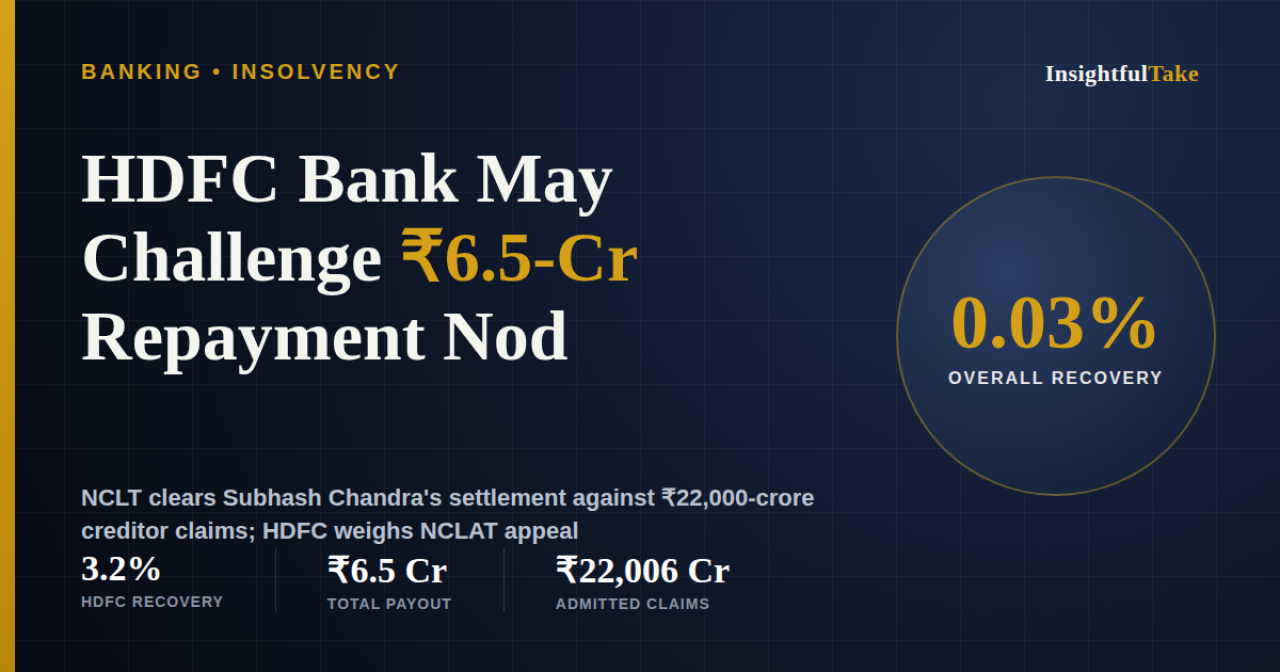
Against admitted claims of about ₹22,006.57 crore, the repayment plan proposed just ₹6.25 crore for creditors, along with another ₹25 lakh towards insolvency process costs. That translates into a recovery of roughly 0.03% of the admitted claims, or a haircut of nearly 99.97%.
The Insolvency and Bankruptcy Code does not prescribe a minimum recovery percentage for personal guarantors. The tribunal was therefore not deciding whether ₹6.25 crore represented a fair recovery in absolute terms. The key question was whether the repayment plan had received the required approval from creditors.
It had. Creditors representing 80.81% of the value approved the plan, although major lenders including LIC Housing Finance and Axis Bank did not support it.
That approval is now on hold.
On September 23, a special five-member NCLT bench stayed the implementation of the plan and directed that the Central Bureau of Investigation (CBI) be brought into the proceedings. The move follows a criminal investigation involving allegations that could have a direct bearing on Chandra's declared financial position.
Where the CBI Probe Comes From
The criminal investigation originated from a complaint by LIC Housing Finance Ltd (LICHFL), one of the lenders that opposed the proposed settlement.
The CBI registered an FIR on August 31, 2026, alleging that Chandra inflated his personal net worth to obtain loan facilities worth ₹980 crore from LICHFL. The agency is examining allegations that the lender suffered a loss of ₹1,322 crore.
According to the allegations, the net-worth certificates used to secure the facilities in 2018 did not reflect Chandra's actual financial position, and the loan facilities subsequently went into default.
The CBI is examining the allegations under provisions relating to cheating, criminal conspiracy and criminal breach of trust.
The issue has particular relevance to the insolvency proceedings because Chandra's repayment plan was based on a declared net worth of ₹31.79 crore.
That creates a direct point of tension in the case. The financial position presented in the insolvency proceedings is now being examined alongside allegations that a different net-worth assessment may have been used to obtain loans.
The NCLT has therefore sought the CBI's response before allowing the insolvency process to move ahead.
What the NCLT Ordered
Following submissions from Solicitor General Tushar Mehta, the five-member bench, headed by NCLT President Justice Anupinder Singh, directed that notice be served on the CBI Director.
The agency has been given four weeks to respond on issues connected with the criminal investigation and Chandra's liabilities as a personal guarantor.
The tribunal also raised a separate institutional concern. It noted that continuing the matter before a special five-member bench could have implications for the NCLT's wider functioning, particularly at a time when tribunal benches across the country are facing capacity constraints.
The parties have been directed to file their responses before the next hearing.
Meanwhile, Chandra remains subject to a September 1 restraint order that prevents him from selling or transferring his personal assets, either directly or indirectly.
A Parallel Challenge Over the NCLT Bench
The CBI's involvement is not the only issue being contested.
Chandra has also approached the National Company Law Appellate Tribunal (NCLAT), challenging the constitution of the special five-member NCLT bench hearing his insolvency case.
The NCLAT has admitted the plea and is scheduled to hear it on September 28.
That means the case is now moving on two parallel tracks. One concerns the role of the CBI and the effect of its investigation on the repayment plan. The other concerns the constitution of the NCLT bench itself.
Why the Case Matters
The proceedings are becoming an important test for India's personal-guarantor insolvency framework under the Insolvency and Bankruptcy Code.
The case raises several questions about how insolvency proceedings should interact with parallel criminal investigations. One concerns whether financial disclosures and asset valuations used in an insolvency resolution can be relied upon when investigators are examining allegations involving the same financial claims.
Another concerns the weight of creditor approval when a large majority supports a settlement but major secured lenders oppose it.
There is also a practical question. With NCLT benches already dealing with substantial caseloads, the addition of criminal-investigation issues and a separate challenge to the constitution of the bench could further extend the proceedings.
For now, the proposed ₹6.25-crore settlement against more than ₹22,000 crore in admitted claims remains in limbo. The CBI's response over the coming weeks could become a key factor in determining how the insolvency proceedings proceed.
In August, the National Company Law Tribunal (NCLT) approved a repayment plan that drew attention for the enormous gap between Chandra's admitted liabilities and the amount offered to creditors.
Against admitted claims of about ₹22,006.57 crore, the repayment plan proposed just ₹6.25 crore for creditors, along with another ₹25 lakh towards insolvency process costs. That translates into a recovery of roughly 0.03% of the admitted claims, or a haircut of nearly 99.97%.
The Insolvency and Bankruptcy Code does not prescribe a minimum recovery percentage for personal guarantors. The tribunal was therefore not deciding whether ₹6.25 crore represented a fair recovery in absolute terms. The key question was whether the repayment plan had received the required approval from creditors.
It had. Creditors representing 80.81% of the value approved the plan, although major lenders including LIC Housing Finance and Axis Bank did not support it.
That approval is now on hold.
On September 23, a special five-member NCLT bench stayed the implementation of the plan and directed that the Central Bureau of Investigation (CBI) be brought into the proceedings. The move follows a criminal investigation involving allegations that could have a direct bearing on Chandra's declared financial position.
Where the CBI Probe Comes From
The criminal investigation originated from a complaint by LIC Housing Finance Ltd (LICHFL), one of the lenders that opposed the proposed settlement.
The CBI registered an FIR on August 31, 2026, alleging that Chandra inflated his personal net worth to obtain loan facilities worth ₹980 crore from LICHFL. The agency is examining allegations that the lender suffered a loss of ₹1,322 crore.
According to the allegations, the net-worth certificates used to secure the facilities in 2018 did not reflect Chandra's actual financial position, and the loan facilities subsequently went into default.
The CBI is examining the allegations under provisions relating to cheating, criminal conspiracy and criminal breach of trust.
The issue has particular relevance to the insolvency proceedings because Chandra's repayment plan was based on a declared net worth of ₹31.79 crore.
That creates a direct point of tension in the case. The financial position presented in the insolvency proceedings is now being examined alongside allegations that a different net-worth assessment may have been used to obtain loans.
The NCLT has therefore sought the CBI's response before allowing the insolvency process to move ahead.
What the NCLT Ordered
Following submissions from Solicitor General Tushar Mehta, the five-member bench, headed by NCLT President Justice Anupinder Singh, directed that notice be served on the CBI Director.
The agency has been given four weeks to respond on issues connected with the criminal investigation and Chandra's liabilities as a personal guarantor.
The tribunal also raised a separate institutional concern. It noted that continuing the matter before a special five-member bench could have implications for the NCLT's wider functioning, particularly at a time when tribunal benches across the country are facing capacity constraints.
The parties have been directed to file their responses before the next hearing.
Meanwhile, Chandra remains subject to a September 1 restraint order that prevents him from selling or transferring his personal assets, either directly or indirectly.
A Parallel Challenge Over the NCLT Bench
The CBI's involvement is not the only issue being contested.
Chandra has also approached the National Company Law Appellate Tribunal (NCLAT), challenging the constitution of the special five-member NCLT bench hearing his insolvency case.
The NCLAT has admitted the plea and is scheduled to hear it on September 28.
That means the case is now moving on two parallel tracks. One concerns the role of the CBI and the effect of its investigation on the repayment plan. The other concerns the constitution of the NCLT bench itself.
Why the Case Matters
The proceedings are becoming an important test for India's personal-guarantor insolvency framework under the Insolvency and Bankruptcy Code.
The case raises several questions about how insolvency proceedings should interact with parallel criminal investigations. One concerns whether financial disclosures and asset valuations used in an insolvency resolution can be relied upon when investigators are examining allegations involving the same financial claims.
Another concerns the weight of creditor approval when a large majority supports a settlement but major secured lenders oppose it.
There is also a practical question. With NCLT benches already dealing with substantial caseloads, the addition of criminal-investigation issues and a separate challenge to the constitution of the bench could further extend the proceedings.
For now, the proposed ₹6.25-crore settlement against more than ₹22,000 crore in admitted claims remains in limbo. The CBI's response over the coming weeks could become a key factor in determining how the insolvency proceedings proceed.


























Leave a Comment