
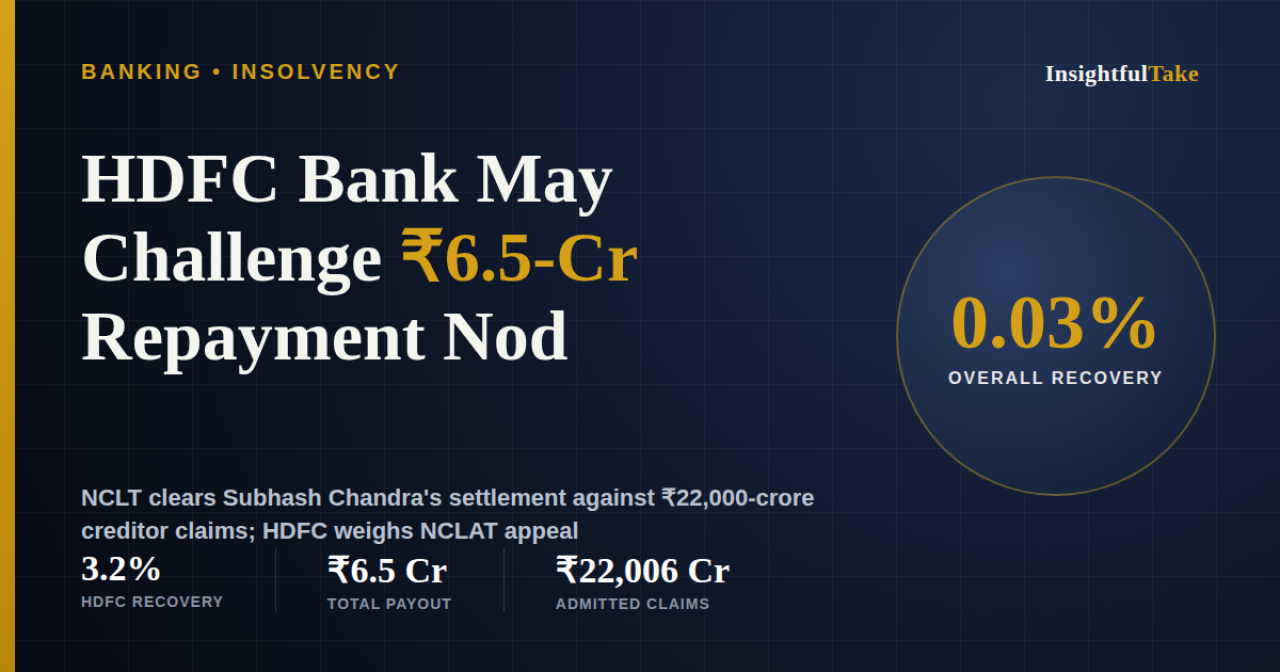
HDFC Bank’s NCLAT challenge puts Subhash Chandra’s ₹6.5-crore settlement against ₹22,006 crore in claims under fresh scrutiny.
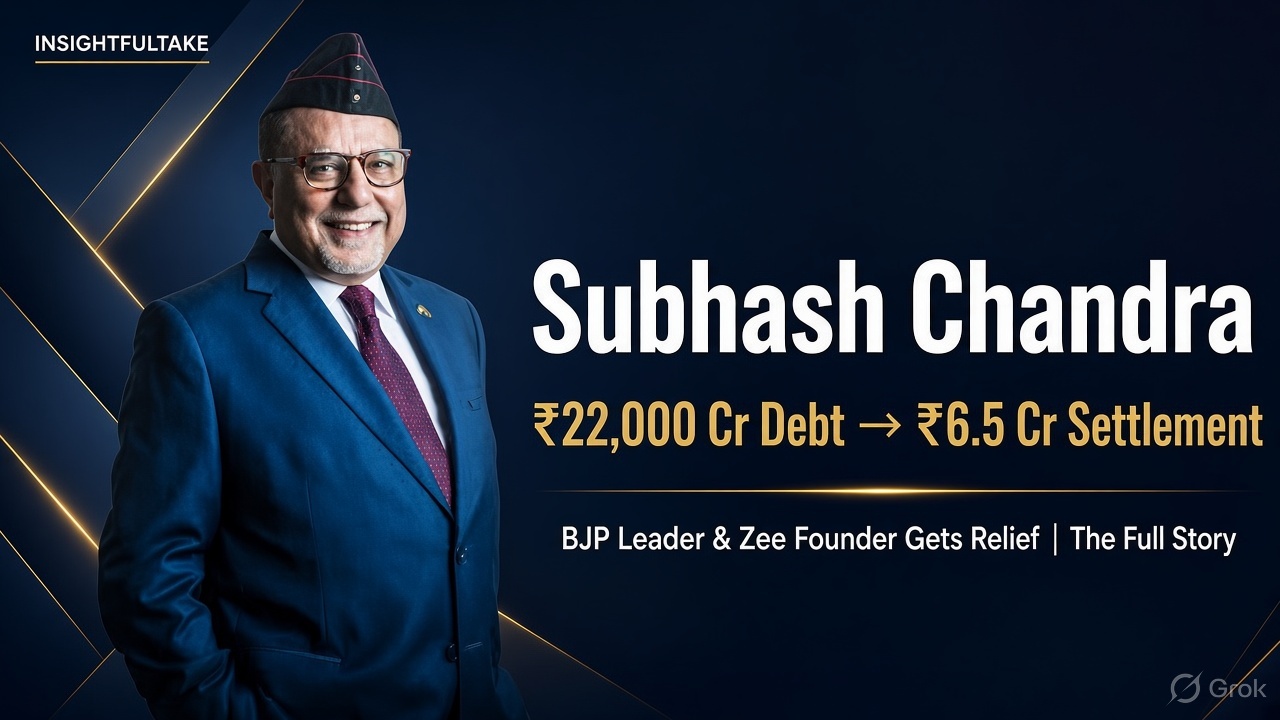
HDFC Bank is considering an appeal before the National Company Law Appellate Tribunal (NCLAT) against an NCLT order approving a repayment plan under which Zee Group founder Subhash Chandra will pay ₹6.25 crore to creditors and ₹25 lakh towards insolvency process costs, against admitted claims of about ₹22,006 crore.
HDFC Bank has opposed the plan and said it expects to recover only about 3.2 per cent of its admitted claim under the arrangement. The bank had voted against the proposal and is now examining its legal options before the appellate tribunal.
The National Company Law Tribunal (NCLT) approved Chandra's repayment plan on August 25, 2026, bringing his personal insolvency proceedings closer to a conclusion. The case originated after Indiabulls Housing Finance, now Sammaan Capital, approached the tribunal over a ₹170-crore loan default involving Vivek Infracon, for which Chandra had provided a personal guarantee.
NCLT Bench Split Over Repayment Plan
The order followed a difference of opinion between the original two-member NCLT bench. The matter was subsequently referred to judicial member Nilesh Sharma, who acted as the tie-breaker and approved the repayment plan under Section 114 of the Insolvency and Bankruptcy Code (IBC).
Under the approved plan, Chandra is required to contribute ₹6.25 crore to creditors, while another ₹25 lakh is earmarked towards the insolvency resolution process costs. Together, the amount comes to ₹6.5 crore.
The admitted claims against Chandra stood at approximately ₹22,006.57 crore. The proposed recovery from his personal insolvency estate therefore amounts to roughly 0.03 per cent of the admitted claims, implying a haircut of nearly 99.97 per cent.
However, the headline figure requires an important distinction. The ₹22,006-crore amount does not represent money personally borrowed by Chandra. Much of the liability arose from personal guarantees he had provided for loans taken by companies associated with the Essel and Zee groups.
Major Lenders Opposed the Plan
HDFC Bank voted against the repayment proposal.
Other lenders and financial institutions have also raised objections. These include LIC Housing Finance, Canara Bank and Union Bank of India, with several lenders now preparing or considering challenges before the NCLAT.
The dissenting lenders have questioned the size and viability of the proposed recovery. LIC Housing Finance, for instance, had argued against the plan, while its admitted claim was substantially larger than the amount it would receive under the proposal.
The tribunal, however, approved the plan after considering the objections raised by creditors. The NCLT's decision also reflected the fact that the repayment proposal had secured the required voting support from creditors.
The plan received approval from creditors representing 80.814 per cent of the votes cast. However, there is an important distinction: 77.48 per cent of the total voting share voted in favour, 18.42 per cent voted against and creditors representing 4.10 per cent did not vote.
Subhash Chandra Defends the Settlement
Chandra has rejected the portrayal of the case as a ₹22,000-crore personal debt settlement.
In a statement, he said he had not personally borrowed money from the lenders involved in the proceedings. Instead, he had provided personal guarantees for loans taken by companies associated with the Essel and Zee groups.
Chandra said these companies had collectively borrowed close to ₹45,000 crore as of January 2019, of which around ₹43,000 crore had subsequently been repaid by the borrowing entities themselves.
He has also disclosed the limited value of his personal assets, arguing that the repayment plan was based on what he could realistically contribute from his own estate rather than on the much larger borrowings of the companies whose loans he had guaranteed.
Why the ₹22,000-Crore Figure Needs Context
The ₹22,006-crore figure has become the centre of the controversy, but it does not mean that Chandra personally borrowed ₹22,000 crore.
Government sources have pointed out that only around ₹2,574 crore of the admitted claims relate to guarantees provided by Chandra when the loans were originally sanctioned. Most of the other guarantees were reportedly provided later as additional security.
The approved repayment plan also involves a separate contribution of approximately ₹1,494 crore from the principal borrowing companies. That amount is distinct from the ₹6.25 crore contribution proposed from Chandra's personal assets.
This distinction is important because the principal borrowers remain separately liable for their underlying debts. The NCLT-approved arrangement therefore concerns Chandra's liability as a personal guarantor and does not, by itself, extinguish the underlying obligations of the borrowing companies.
HDFC Bank Challenge Could Extend the Dispute
The NCLT's approval has not ended the controversy.
HDFC Bank is considering an appeal before the NCLAT, while other dissenting lenders have also indicated that they intend to challenge the tribunal's decision.
The dispute raises a broader question about the treatment of personal guarantors under India's insolvency framework: how much should a guarantor be required to contribute when the underlying corporate borrowings run into thousands of crores but the guarantor's own recoverable assets are considerably smaller?
The case also highlights the tension between the commercial decision of creditors, the legal framework governing personal guarantor insolvency and the limited assets available for recovery.
For Chandra, the NCLT's approval represents a significant step towards exiting the insolvency process. For dissenting lenders, however, the proposed NCLAT challenges could open a fresh legal chapter in a case that has already exposed sharp differences over creditor recovery, personal guarantees and the limits of insolvency resolution.
HDFC Bank is considering an appeal before the National Company Law Appellate Tribunal (NCLAT) against an NCLT order approving a repayment plan under which Zee Group founder Subhash Chandra will pay ₹6.25 crore to creditors and ₹25 lakh towards insolvency process costs, against admitted claims of about ₹22,006 crore.
HDFC Bank has opposed the plan and said it expects to recover only about 3.2 per cent of its admitted claim under the arrangement. The bank had voted against the proposal and is now examining its legal options before the appellate tribunal.
The National Company Law Tribunal (NCLT) approved Chandra's repayment plan on August 25, 2026, bringing his personal insolvency proceedings closer to a conclusion. The case originated after Indiabulls Housing Finance, now Sammaan Capital, approached the tribunal over a ₹170-crore loan default involving Vivek Infracon, for which Chandra had provided a personal guarantee.
NCLT Bench Split Over Repayment Plan
The order followed a difference of opinion between the original two-member NCLT bench. The matter was subsequently referred to judicial member Nilesh Sharma, who acted as the tie-breaker and approved the repayment plan under Section 114 of the Insolvency and Bankruptcy Code (IBC).
Under the approved plan, Chandra is required to contribute ₹6.25 crore to creditors, while another ₹25 lakh is earmarked towards the insolvency resolution process costs. Together, the amount comes to ₹6.5 crore.
The admitted claims against Chandra stood at approximately ₹22,006.57 crore. The proposed recovery from his personal insolvency estate therefore amounts to roughly 0.03 per cent of the admitted claims, implying a haircut of nearly 99.97 per cent.
However, the headline figure requires an important distinction. The ₹22,006-crore amount does not represent money personally borrowed by Chandra. Much of the liability arose from personal guarantees he had provided for loans taken by companies associated with the Essel and Zee groups.
Major Lenders Opposed the Plan
HDFC Bank voted against the repayment proposal.
Other lenders and financial institutions have also raised objections. These include LIC Housing Finance, Canara Bank and Union Bank of India, with several lenders now preparing or considering challenges before the NCLAT.
The dissenting lenders have questioned the size and viability of the proposed recovery. LIC Housing Finance, for instance, had argued against the plan, while its admitted claim was substantially larger than the amount it would receive under the proposal.
The tribunal, however, approved the plan after considering the objections raised by creditors. The NCLT's decision also reflected the fact that the repayment proposal had secured the required voting support from creditors.
The plan received approval from creditors representing 80.814 per cent of the votes cast. However, there is an important distinction: 77.48 per cent of the total voting share voted in favour, 18.42 per cent voted against and creditors representing 4.10 per cent did not vote.
Subhash Chandra Defends the Settlement
Chandra has rejected the portrayal of the case as a ₹22,000-crore personal debt settlement.
In a statement, he said he had not personally borrowed money from the lenders involved in the proceedings. Instead, he had provided personal guarantees for loans taken by companies associated with the Essel and Zee groups.
Chandra said these companies had collectively borrowed close to ₹45,000 crore as of January 2019, of which around ₹43,000 crore had subsequently been repaid by the borrowing entities themselves.
He has also disclosed the limited value of his personal assets, arguing that the repayment plan was based on what he could realistically contribute from his own estate rather than on the much larger borrowings of the companies whose loans he had guaranteed.
Why the ₹22,000-Crore Figure Needs Context
The ₹22,006-crore figure has become the centre of the controversy, but it does not mean that Chandra personally borrowed ₹22,000 crore.
Government sources have pointed out that only around ₹2,574 crore of the admitted claims relate to guarantees provided by Chandra when the loans were originally sanctioned. Most of the other guarantees were reportedly provided later as additional security.
The approved repayment plan also involves a separate contribution of approximately ₹1,494 crore from the principal borrowing companies. That amount is distinct from the ₹6.25 crore contribution proposed from Chandra's personal assets.
This distinction is important because the principal borrowers remain separately liable for their underlying debts. The NCLT-approved arrangement therefore concerns Chandra's liability as a personal guarantor and does not, by itself, extinguish the underlying obligations of the borrowing companies.
HDFC Bank Challenge Could Extend the Dispute
The NCLT's approval has not ended the controversy.
HDFC Bank is considering an appeal before the NCLAT, while other dissenting lenders have also indicated that they intend to challenge the tribunal's decision.
The dispute raises a broader question about the treatment of personal guarantors under India's insolvency framework: how much should a guarantor be required to contribute when the underlying corporate borrowings run into thousands of crores but the guarantor's own recoverable assets are considerably smaller?
The case also highlights the tension between the commercial decision of creditors, the legal framework governing personal guarantor insolvency and the limited assets available for recovery.
For Chandra, the NCLT's approval represents a significant step towards exiting the insolvency process. For dissenting lenders, however, the proposed NCLAT challenges could open a fresh legal chapter in a case that has already exposed sharp differences over creditor recovery, personal guarantees and the limits of insolvency resolution.



















Leave a Comment