
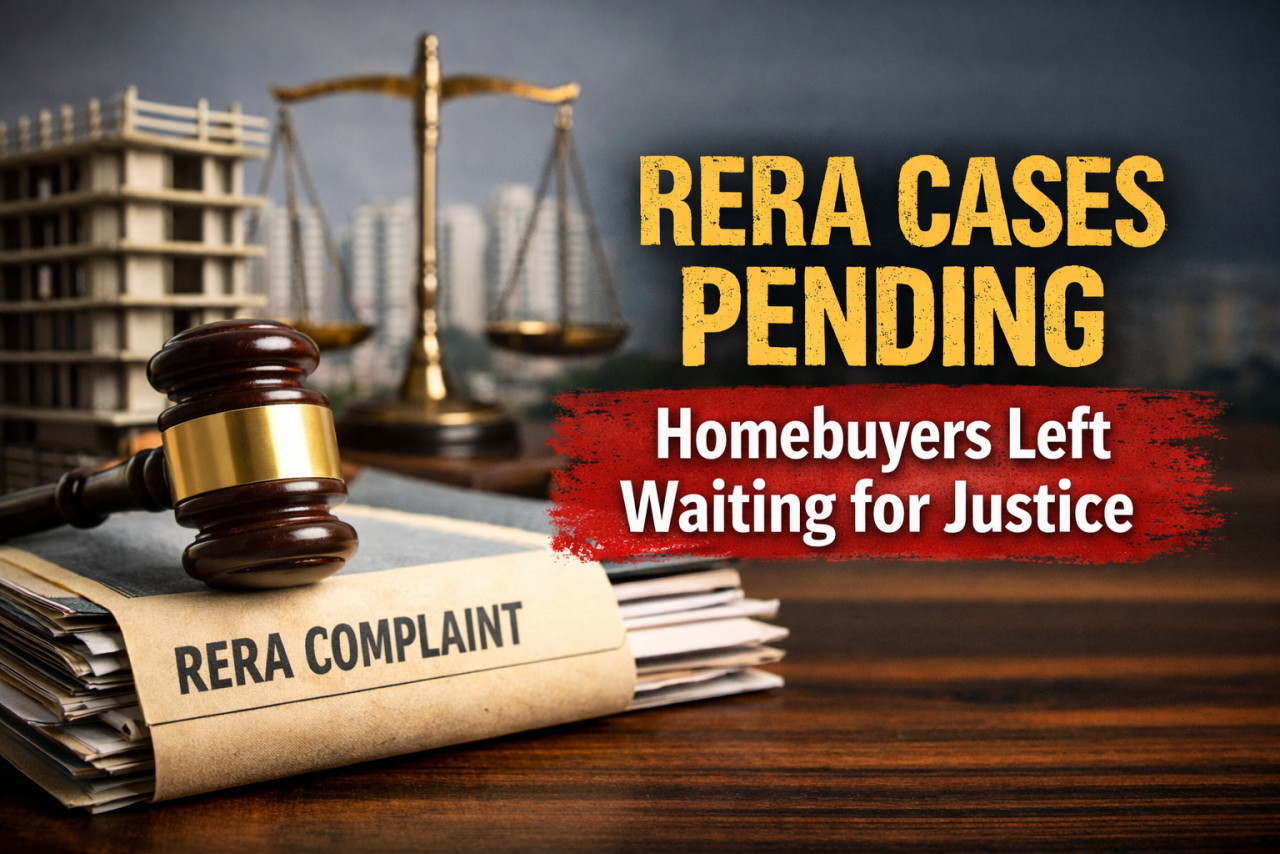
Years after paying for their homes, buyers are still waiting as RERA cases pile up.
The Real Estate (Regulation and Development) Act, known as RERA, was introduced to protect homebuyers and improve transparency in India’s property sector. The law promised faster approvals, time-bound dispute resolution, and strict accountability for builders. Nearly a decade later, many homebuyers continue to face delays and uncertainty. As of early 2026, pending registrations and unresolved complaints remain a major concern across several states.
One of the key problems lies in the slow approval of real estate projects. RERA rules require every project to be registered before it is marketed or sold. This process is meant to protect buyers by ensuring legal and financial checks. However, regulatory authorities in many states have failed to clear applications on time.
In Punjab, several project registration applications were still pending as of January 2, 2026. These delays were reported across districts such as Amritsar, Barnala, and Bathinda. Builders continue to operate in a grey zone while buyers remain unsure about the legal status of projects. The delay weakens buyer confidence and defeats the purpose of the law.
In Delhi, the issue has drawn judicial attention. The Real Estate Appellate Tribunal recently warned RERA officials against keeping registration applications pending for long periods. The tribunal stated that such delays raise concerns of corruption and misconduct. It also reminded authorities of their legal responsibility to act within the prescribed time.
Section 5 of the RERA Act states that authorities must accept or reject a project registration application within 30 days. If no decision is taken, the promoter becomes eligible for deemed registration. In reality, many applications remain stuck in a pending category for months. This creates confusion and allows projects to continue without clear regulatory approval.
Homebuyers who file complaints under RERA face similar delays. The law states that complaints should be resolved within 60 days. This timeline is meant to provide fast relief. In practice, the promise often remains unfulfilled.
In several states, cases remain pending for years. Shortage of staff and frequent adjournments slow down the process. Builders also use procedural tactics to delay hearings. In some instances, a single complaint has taken more than five years without a final decision. This has caused financial stress for buyers who are paying both rent and home loan instalments.
Recent data from Odisha shows several pending execution and compensation cases against housing boards and private developers. Many buyers are still waiting for refunds or possession despite favourable orders. The delay has reduced trust in the dispute resolution system.
Even when buyers win their cases, enforcement remains a challenge. RERA issues a Recovery Certificate when a builder fails to comply with an order. The responsibility to recover the amount then shifts to state revenue authorities. These officials already handle multiple administrative tasks. They often lack specialised training in real estate recovery. As a result, the process moves very slowly.
Developers also file appeals to delay payments. Although rules now require builders to deposit the full awarded amount before an appeal is admitted, the legal process still takes time. During this period, the buyer’s money remains locked. This further adds to financial pressure.
To address these issues, discussions are underway to improve enforcement in 2026. Proposed steps include better digital systems for complaint tracking, fixed hearing schedules, and stricter monitoring of project progress. Regular audits of developers are also being considered.
RERA was designed to protect consumers and bring discipline to the real estate sector. However, weak enforcement and mounting backlogs have reduced its effectiveness. Until timelines are strictly followed and recovery systems are strengthened, many homebuyers will continue to struggle for justice.





























Leave a Comment