
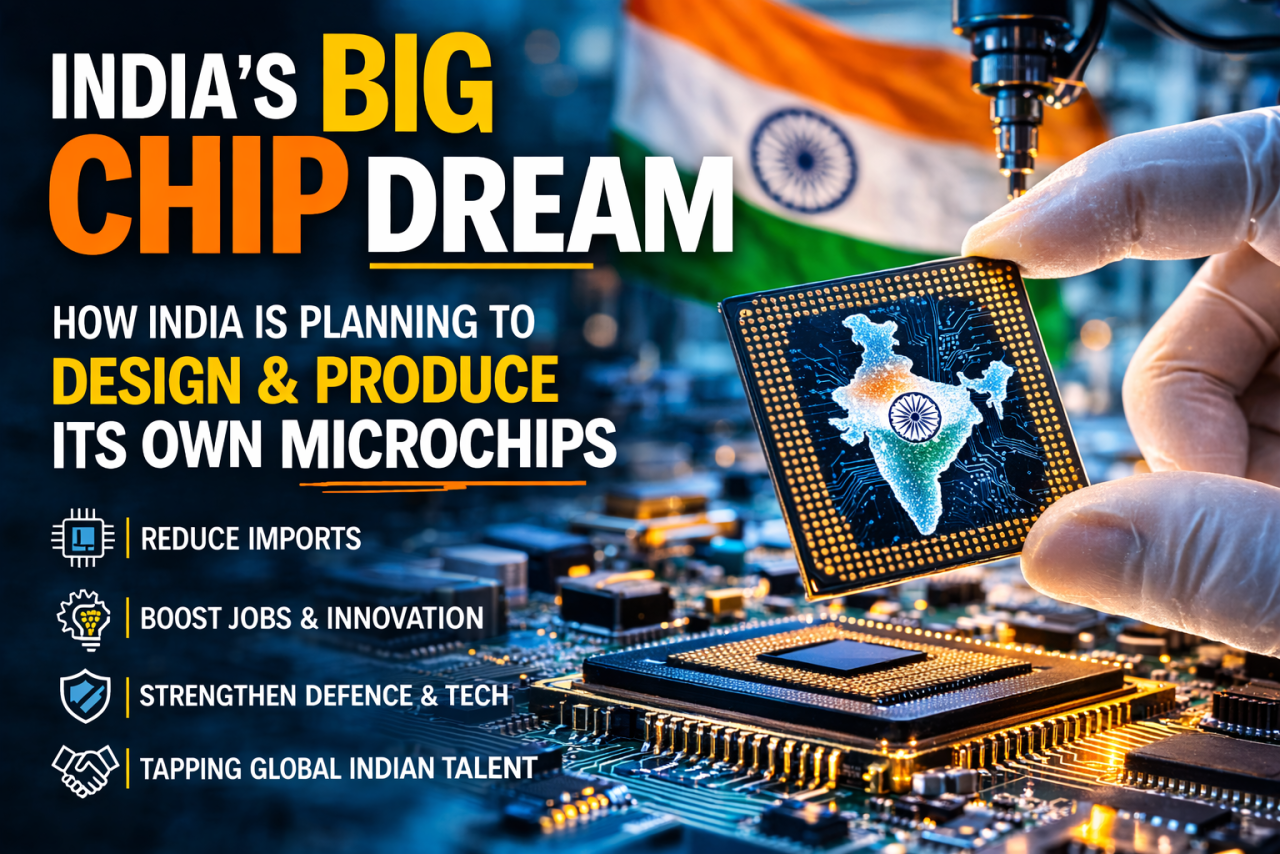
India wants to control the tiny chips that power the modern world. From smartphones to defence systems, microchips are the backbone of technology—and the country is now racing to design and produce them at home.
India is taking a major step toward becoming self-reliant in one of the most critical technologies of the modern world—semiconductors. These tiny microchips power almost everything we use today, from smartphones and laptops to cars, satellites, and advanced defence systems. Now, the government wants India not just to use them, but to design and produce them independently.
According to policy discussions around the country’s semiconductor mission, India is trying to reduce its dependence on foreign chip supplies and build a strong domestic ecosystem for chip design and manufacturing.
Why Microchips Matter So Much
Microchips are often called the “brains” of modern electronics.” Every digital device relies on them to process information and perform tasks. In today’s technology-driven world, countries that control semiconductor production also gain significant economic and strategic power.
Recent global events have made this clearer than ever. Supply disruptions and export restrictions on advanced chips have shown how vulnerable countries can become when they depend heavily on imports.
Because of this, India has decided to strengthen its capabilities in the semiconductor sector.
India Already Has the Talent
One interesting fact often overlooked is that Indian engineers already play a huge role in global chip design. Experts say Indian designers contribute to the development of a large portion of microchips used worldwide.
However, most of these engineers currently work for multinational technology companies. Their work usually focuses on specific components of chips rather than designing an entire system independently.
India now wants to bring that expertise together to build complete chip design capabilities within the country.
Tapping Global Indian Talent
To achieve this, the government and policy institutions are looking at Indian professionals working abroad who have experience in semiconductor design and manufacturing. The idea is to attract them to collaborate with Indian institutions, startups, and research centres.
By using this global talent pool, India hopes to develop the capability to design entire chip systems from scratch.
This effort is part of the broader India Semiconductor Mission, a long-term plan to build a strong chip industry in the country.
Government’s Semiconductor Push
The government has already launched a large financial support programme to promote semiconductor manufacturing and design.
The first phase of the initiative included ₹76,000 crore in incentives to attract companies to set up chip-related facilities in India. In the Union Budget 2026, Finance Minister Nirmala Sitharaman announced that the mission will move into a second phase, with additional incentives to strengthen the supply chain.
This next phase focuses on several areas:
- Chip design
- Equipment and materials
- Intellectual property development
- Manufacturing and packaging
- Research and innovation
Together, these steps aim to create a complete semiconductor ecosystem within India.
Reducing Dependence on Other Countries
Another important part of the strategy is securing critical minerals required for semiconductor production. Many of these minerals are currently sourced from other countries.
Even though some of them exist in India in smaller quantities and may be expensive to extract, the government is exploring domestic production to avoid potential supply disruptions in the future.
Building a Full Semiconductor Ecosystem
Industry leaders say this effort cannot succeed without collaboration. The semiconductor mission involves government agencies, private companies, research institutions, universities, and skilled professionals working together.
Experts describe it as an “all-hands-on-deck” approach, meaning everyone—from policymakers to engineers—must contribute.
At the same time, India also needs to develop more expertise in chip fabrication, testing, assembly, and packaging, areas where the country currently has limited workforce experience.
A Long Journey Ahead
Building a semiconductor ecosystem is not an overnight task. Even leading chip-producing nations took decades to reach their current position.
However, India’s large pool of engineers, growing technology market, and government support give it a strong starting point.
If the country succeeds, it could not only strengthen its economic and technological independence but also become an important player in the global semiconductor industry.
For ordinary citizens, this effort may seem distant, but its impact will eventually be felt everywhere—from cheaper electronics to stronger digital infrastructure and new high-tech job opportunities.
India’s chip dream is still in its early stages, but it represents a major step toward technological self-reliance in the 21st century.





























Leave a Comment