
What happens when a sitarist wears armour, mehendi, and meaning on stage? Rishab Rikhiram Sharma is quietly rewriting the rules of Indian classical music.
For generations, the image of a sitar player followed a familiar script. A calm figure in simple attire, seated cross-legged, letting the music carry all the weight. The focus stayed on discipline and restraint. Visual expression was secondary, almost discouraged.
That image is beginning to change.
Rishab Rikhiram Sharma represents a shift that is both visual and cultural. Following his 2026 India tour, he has emerged as a musician who treats performance not just as sound, but as a complete sensory experience. His approach does not dilute tradition. It reframes it.
A Language of Appearance
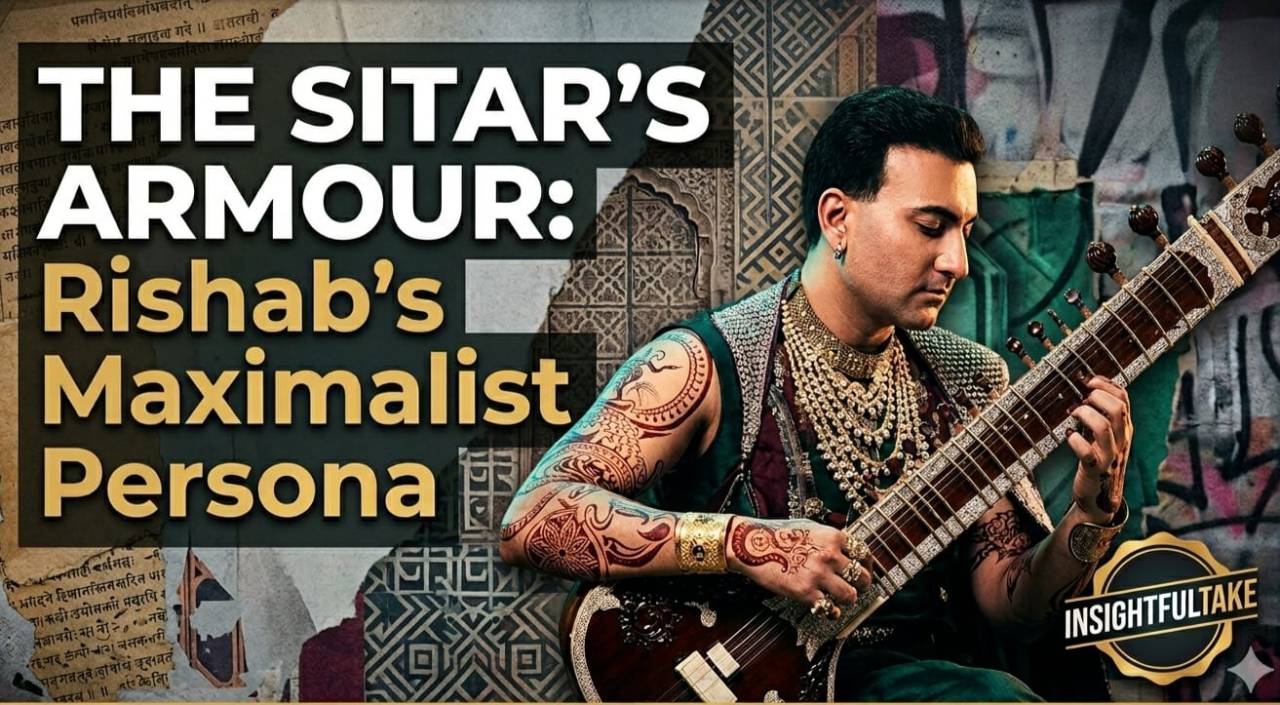
Sharma’s stage presence is deliberate. His clothing is not casual styling but part of preparation. He draws from the idea of shringar, where adornment is linked to readiness and inner focus.
One of his most striking choices is the use of structured, armour-like elements in his attire. Inspired by imagery associated with Indraprastha and epics like the Mahabharata, these pieces create a visual identity that feels both ancient and contemporary. Metallic textures, layered jewellery, and sculpted silhouettes echo influences from global fashion houses such as Schiaparelli, yet remain rooted in Indian symbolism.
For Sharma, this “armour” is not about spectacle alone. It serves as a way to remain grounded during performance. The visual weight mirrors the emotional intensity of live music.
Rewriting Cultural Codes
Another defining element of his appearance is his full-sleeve mehendi. Traditionally associated with weddings and feminine rituals, mehendi occupies a specific cultural space. Sharma moves it into a different context.
His designs include motifs like Nataraja, references to Mount Kailash, and natural patterns that reflect movement and rhythm. These are not ornamental choices alone. They extend the narrative of his music onto his body.
When he plays, the movement of his hands across the sitar strings blends with the patterns on his skin. The effect is subtle but noticeable. The musician and the instrument begin to feel visually connected.
This shift also challenges long-held ideas around gender and presentation in classical spaces. Without making overt statements, Sharma expands what is considered acceptable or traditional.
Between Stage and Street
Off stage, the image changes. Sharma describes his everyday style as relaxed and rooted in streetwear. Sneakers, boots, and loose silhouettes replace the structured forms seen during performances.
This contrast is intentional. It separates the individual from the performer. The stage becomes a defined space where he can step into a heightened version of himself. Outside it, he returns to something more personal and unguarded.
At the same time, his interest in Indian textiles remains visible. He often speaks about crafts like Banarasi weaves, Kanjivaram silk, and chikankari embroidery. These traditions find their way into his performance wardrobe, not as nostalgia, but as living elements that can evolve.
Expanding the Audience
The visual dimension of Sharma’s work serves a clear purpose. It draws attention, especially from younger audiences who may not have grown up with Indian classical music.
But the appeal does not rest on appearance alone. The structure of the music remains intact. Raga, discipline, and technique continue to anchor his performances. What changes is the entry point for the listener.
By combining sound with a strong visual identity, Sharma creates access without oversimplifying the art form. He shows that tradition can adapt without losing its core.
In this approach, the sitarist is no longer confined to a fixed image. The role becomes more fluid. It can carry history and still respond to the present.
That balance may define the next phase of Indian classical music.
For generations, the image of a sitar player followed a familiar script. A calm figure in simple attire, seated cross-legged, letting the music carry all the weight. The focus stayed on discipline and restraint. Visual expression was secondary, almost discouraged.
That image is beginning to change.
Rishab Rikhiram Sharma represents a shift that is both visual and cultural. Following his 2026 India tour, he has emerged as a musician who treats performance not just as sound, but as a complete sensory experience. His approach does not dilute tradition. It reframes it.
A Language of Appearance
Sharma’s stage presence is deliberate. His clothing is not casual styling but part of preparation. He draws from the idea of shringar, where adornment is linked to readiness and inner focus.
One of his most striking choices is the use of structured, armour-like elements in his attire. Inspired by imagery associated with Indraprastha and epics like the Mahabharata, these pieces create a visual identity that feels both ancient and contemporary. Metallic textures, layered jewellery, and sculpted silhouettes echo influences from global fashion houses such as Schiaparelli, yet remain rooted in Indian symbolism.
For Sharma, this “armour” is not about spectacle alone. It serves as a way to remain grounded during performance. The visual weight mirrors the emotional intensity of live music.
Rewriting Cultural Codes
Another defining element of his appearance is his full-sleeve mehendi. Traditionally associated with weddings and feminine rituals, mehendi occupies a specific cultural space. Sharma moves it into a different context.
His designs include motifs like Nataraja, references to Mount Kailash, and natural patterns that reflect movement and rhythm. These are not ornamental choices alone. They extend the narrative of his music onto his body.
When he plays, the movement of his hands across the sitar strings blends with the patterns on his skin. The effect is subtle but noticeable. The musician and the instrument begin to feel visually connected.
This shift also challenges long-held ideas around gender and presentation in classical spaces. Without making overt statements, Sharma expands what is considered acceptable or traditional.
Between Stage and Street
Off stage, the image changes. Sharma describes his everyday style as relaxed and rooted in streetwear. Sneakers, boots, and loose silhouettes replace the structured forms seen during performances.
This contrast is intentional. It separates the individual from the performer. The stage becomes a defined space where he can step into a heightened version of himself. Outside it, he returns to something more personal and unguarded.
At the same time, his interest in Indian textiles remains visible. He often speaks about crafts like Banarasi weaves, Kanjivaram silk, and chikankari embroidery. These traditions find their way into his performance wardrobe, not as nostalgia, but as living elements that can evolve.
Expanding the Audience
The visual dimension of Sharma’s work serves a clear purpose. It draws attention, especially from younger audiences who may not have grown up with Indian classical music.
But the appeal does not rest on appearance alone. The structure of the music remains intact. Raga, discipline, and technique continue to anchor his performances. What changes is the entry point for the listener.
By combining sound with a strong visual identity, Sharma creates access without oversimplifying the art form. He shows that tradition can adapt without losing its core.
In this approach, the sitarist is no longer confined to a fixed image. The role becomes more fluid. It can carry history and still respond to the present.
That balance may define the next phase of Indian classical music.

























Leave a Comment