
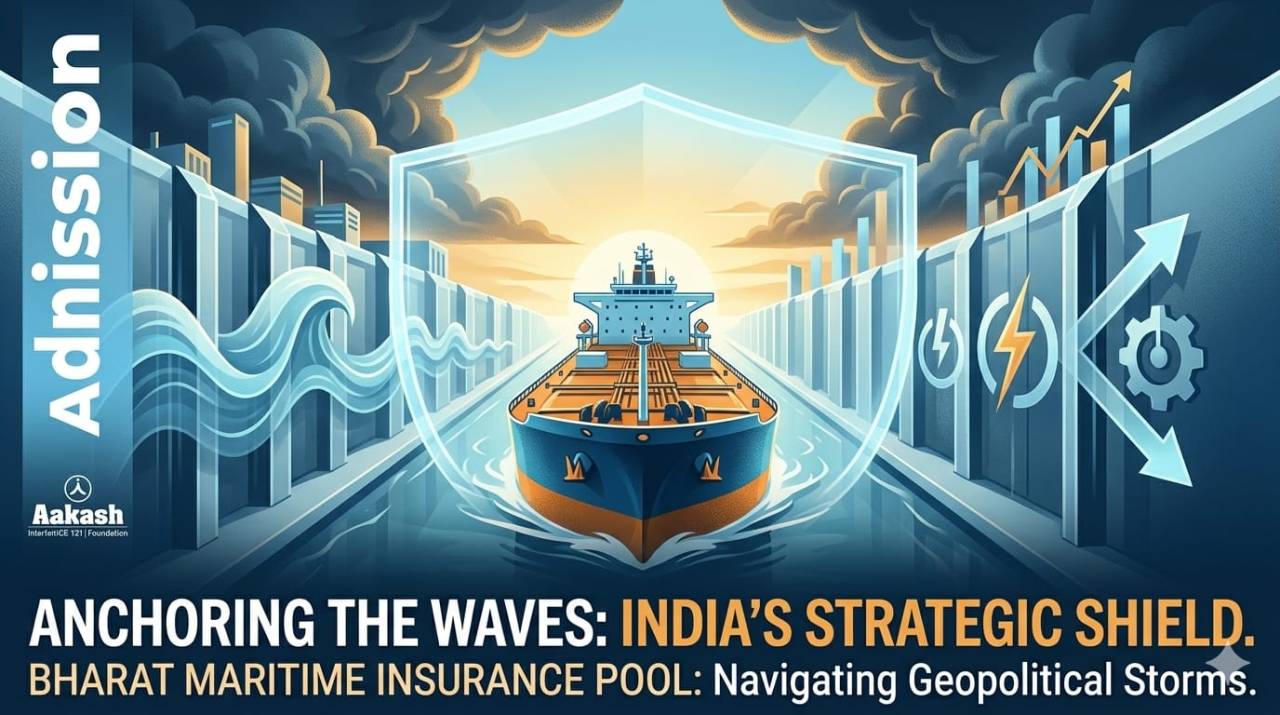
When global oil routes turn volatile, India isn’t waiting for relief—it’s building its own shield to keep fuel prices and economic stability intact.
The global energy landscape is passing through a period of deep uncertainty, where geopolitics and economics are increasingly intertwined. As tensions persist in West Asia—especially around the strategically critical Strait of Hormuz—the stability of global oil supply chains is under constant strain. For India, which imports more than 80% of its crude oil needs, even minor disruptions in these waters can translate into major economic consequences.
Against this backdrop, the Indian government’s rollout of the Bharat Maritime Insurance Pool (BMIP) marks a decisive and forward-looking intervention. It is not merely a financial mechanism but a strategic instrument designed to insulate the domestic economy from external volatility.
The Strait That Shapes Global Energy
The Strait of Hormuz remains the world’s most crucial oil transit chokepoint. A significant portion of global petroleum passes through this narrow corridor, making it highly sensitive to geopolitical tensions. Even the perception of risk—whether due to conflict, sanctions, or maritime threats—can trigger sharp reactions in global markets.
One of the first sectors to respond to such uncertainty is the insurance industry. Global insurers and reinsurance firms tend to raise "war risk" premiums significantly when tensions escalate. These increased costs are ultimately borne by importing nations like India, as they get embedded into the final price of crude oil and petroleum products. The ripple effect is immediate—higher fuel prices, increased transportation costs, and inflationary pressure across sectors.
A Sovereign Response: The Bharat Maritime Insurance Pool
To counter this vulnerability, the government has introduced the Bharat Maritime Insurance Pool, backed by a sovereign guarantee of approximately ₹13,000 crore. The idea is simple yet powerful: provide an alternative to expensive global insurance markets by creating a domestic risk-sharing mechanism.
Under this framework, ship operators transporting essential commodities to India can rely on state-backed insurance instead of paying steep premiums to international Protection and Indemnity (P&I) clubs. By stepping in as an "insurer of last resort," the government is effectively reducing the cost burden on maritime trade.
This intervention delivers multiple benefits. It helps stabilize the landed cost of crude oil, ensuring that fuel prices remain relatively insulated from global insurance shocks. It also reassures shipping companies that routes involving higher geopolitical risks will remain economically viable. Most importantly, it achieves this without immediate fiscal strain—since the guarantee only translates into expenditure if claims are actually made.
Balancing Risk with Diplomacy
The success of the BMIP will depend not only on financial structuring but also on strategic trust-building. Many global shipping firms are accustomed to established Western insurance frameworks, and convincing them to shift toward an Indian alternative may require sustained policy clarity and credibility.
At the same time, India’s diplomatic engagement in the region plays a crucial role. Continued dialogue with key players in West Asia, including energy suppliers, can help reduce the probability of disruptions. In that sense, the insurance pool complements India’s broader approach of maintaining strategic autonomy—balancing economic interests without overdependence on any single geopolitical bloc.
A Bridge to Long-Term Resilience
While the BMIP is an effective short-term safeguard, it also highlights a deeper structural challenge. India’s merchant shipping fleet is not yet large enough to independently handle its vast trade requirements. Until that capacity is significantly expanded, dependence on foreign vessels and global systems will persist.
The insurance pool, therefore, acts as a bridge—buying time for India to strengthen its domestic shipping capabilities and diversify its energy sources. It is a mitigating tool, not a permanent solution, but one that significantly enhances resilience in the present moment.
Securing Stability in an Unstable World
The timing of this initiative is particularly significant. With global energy markets remaining volatile and geopolitical fault lines far from settled, having a domestic buffer mechanism offers India a crucial advantage. It reduces exposure to unpredictable external shocks while preserving economic stability.
By taking control of a key variable—maritime insurance—the government has addressed a hidden but powerful driver of energy costs. The Bharat Maritime Insurance Pool may not eliminate risks entirely, but it ensures that those risks are managed on India’s terms.
In a world where uncertainty often dictates outcomes, this move reflects a clear strategic intent to anchor India’s energy security even as global waters grow increasingly turbulent.
The global energy landscape is passing through a period of deep uncertainty, where geopolitics and economics are increasingly intertwined. As tensions persist in West Asia—especially around the strategically critical Strait of Hormuz—the stability of global oil supply chains is under constant strain. For India, which imports more than 80% of its crude oil needs, even minor disruptions in these waters can translate into major economic consequences.
Against this backdrop, the Indian government’s rollout of the Bharat Maritime Insurance Pool (BMIP) marks a decisive and forward-looking intervention. It is not merely a financial mechanism but a strategic instrument designed to insulate the domestic economy from external volatility.
The Strait That Shapes Global Energy
The Strait of Hormuz remains the world’s most crucial oil transit chokepoint. A significant portion of global petroleum passes through this narrow corridor, making it highly sensitive to geopolitical tensions. Even the perception of risk—whether due to conflict, sanctions, or maritime threats—can trigger sharp reactions in global markets.
One of the first sectors to respond to such uncertainty is the insurance industry. Global insurers and reinsurance firms tend to raise "war risk" premiums significantly when tensions escalate. These increased costs are ultimately borne by importing nations like India, as they get embedded into the final price of crude oil and petroleum products. The ripple effect is immediate—higher fuel prices, increased transportation costs, and inflationary pressure across sectors.
A Sovereign Response: The Bharat Maritime Insurance Pool
To counter this vulnerability, the government has introduced the Bharat Maritime Insurance Pool, backed by a sovereign guarantee of approximately ₹13,000 crore. The idea is simple yet powerful: provide an alternative to expensive global insurance markets by creating a domestic risk-sharing mechanism.
Under this framework, ship operators transporting essential commodities to India can rely on state-backed insurance instead of paying steep premiums to international Protection and Indemnity (P&I) clubs. By stepping in as an "insurer of last resort," the government is effectively reducing the cost burden on maritime trade.
This intervention delivers multiple benefits. It helps stabilize the landed cost of crude oil, ensuring that fuel prices remain relatively insulated from global insurance shocks. It also reassures shipping companies that routes involving higher geopolitical risks will remain economically viable. Most importantly, it achieves this without immediate fiscal strain—since the guarantee only translates into expenditure if claims are actually made.
Balancing Risk with Diplomacy
The success of the BMIP will depend not only on financial structuring but also on strategic trust-building. Many global shipping firms are accustomed to established Western insurance frameworks, and convincing them to shift toward an Indian alternative may require sustained policy clarity and credibility.
At the same time, India’s diplomatic engagement in the region plays a crucial role. Continued dialogue with key players in West Asia, including energy suppliers, can help reduce the probability of disruptions. In that sense, the insurance pool complements India’s broader approach of maintaining strategic autonomy—balancing economic interests without overdependence on any single geopolitical bloc.
A Bridge to Long-Term Resilience
While the BMIP is an effective short-term safeguard, it also highlights a deeper structural challenge. India’s merchant shipping fleet is not yet large enough to independently handle its vast trade requirements. Until that capacity is significantly expanded, dependence on foreign vessels and global systems will persist.
The insurance pool, therefore, acts as a bridge—buying time for India to strengthen its domestic shipping capabilities and diversify its energy sources. It is a mitigating tool, not a permanent solution, but one that significantly enhances resilience in the present moment.
Securing Stability in an Unstable World
The timing of this initiative is particularly significant. With global energy markets remaining volatile and geopolitical fault lines far from settled, having a domestic buffer mechanism offers India a crucial advantage. It reduces exposure to unpredictable external shocks while preserving economic stability.
By taking control of a key variable—maritime insurance—the government has addressed a hidden but powerful driver of energy costs. The Bharat Maritime Insurance Pool may not eliminate risks entirely, but it ensures that those risks are managed on India’s terms.
In a world where uncertainty often dictates outcomes, this move reflects a clear strategic intent to anchor India’s energy security even as global waters grow increasingly turbulent.















Leave a Comment