
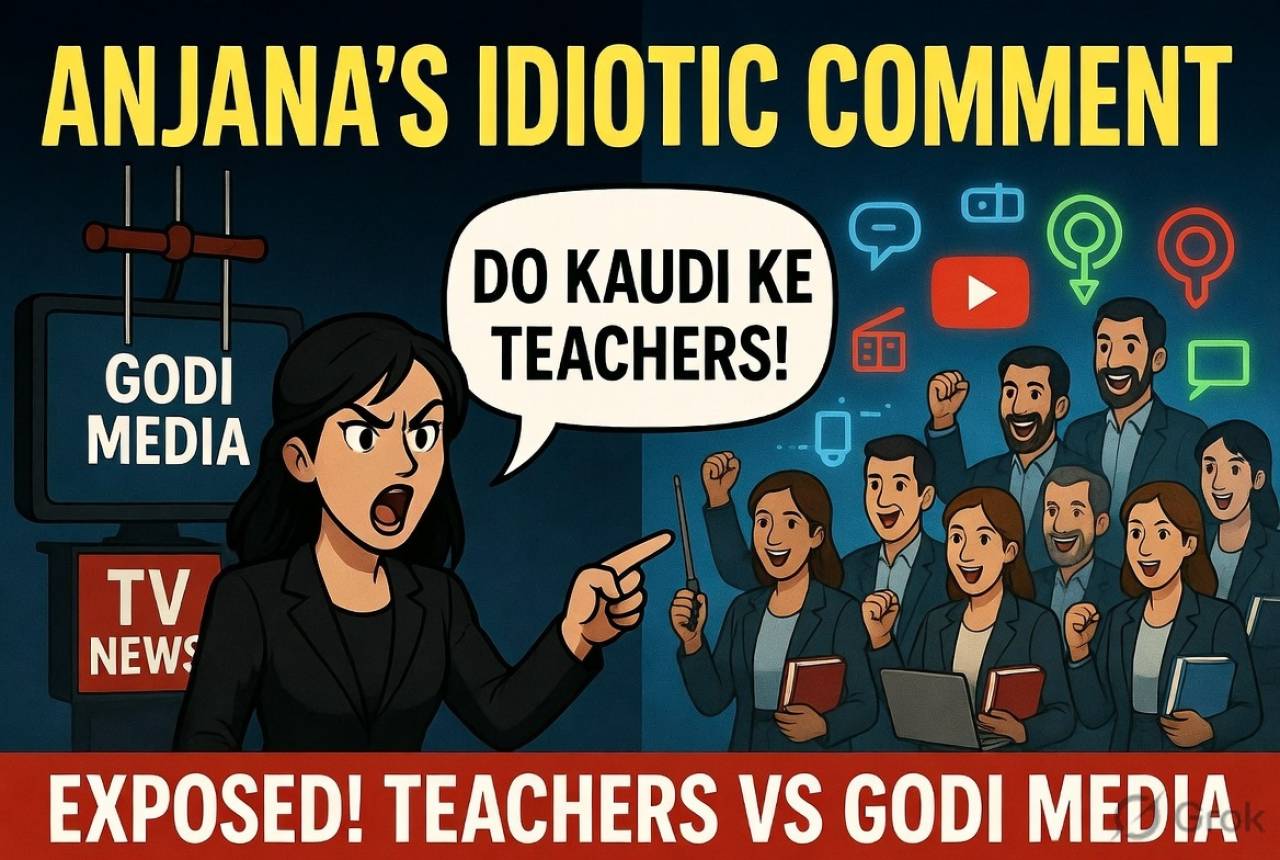
Can a single television remark reveal the widening trust gap between India's mainstream media and the millions who now turn to digital educators for knowledge and opportunity?
In a country where millions of students depend on quality education to shape their futures, a senior journalist's casual dismissal of educators as "do kaudi ke teachers" is more than a controversial remark—it reflects a troubling disconnect between sections of mainstream media and the realities faced by ordinary Indians.
The recent comments attributed to television anchor Anjana Om Kashyap during a debate on education and competitive examinations have sparked widespread criticism. What began as a discussion on the rise of YouTube educators quickly turned into a broader debate about media credibility, educational access, and the growing influence of independent digital platforms.
The Remark That Triggered the Backlash
During a heated television segment focused on issues surrounding competitive examinations such as NEET and CBSE assessments, Kashyap reportedly questioned the credibility of popular online educators. In the process, she referred to some of them as "do kaudi ke teachers," a phrase widely interpreted as insulting and dismissive.
The criticism was not directed at specific cases of misinformation or unethical practices. Instead, many viewers saw it as a sweeping attack on a category of educators who have transformed access to learning for millions of students, particularly those from smaller towns and economically weaker backgrounds.
The timing also amplified public anger. Students across the country have been demanding accountability over examination irregularities, paper leaks, and concerns surrounding institutions responsible for conducting national-level tests. Against this backdrop, many questioned why educators became the target rather than the systems under scrutiny.
Several prominent online teachers, including Khan Sir and other digital educators, responded strongly. Students and parents also took to social media, arguing that YouTube-based learning has helped democratize education by making high-quality instruction available at affordable costs.
The Rise of India's Digital Education Revolution
The popularity of online educators did not emerge by accident.
Over the past decade, digital platforms have allowed teachers to reach students far beyond metropolitan centers. A student in a remote village can now access lectures, exam preparation material, and guidance that previously required expensive coaching institutes or relocation to major cities.
This transformation has challenged traditional educational hierarchies and expanded opportunities for millions of aspirants.
Many digital educators have also become influential public voices, frequently highlighting student concerns related to examination systems, recruitment delays, and policy shortcomings. Their ability to communicate directly with large audiences has made them important stakeholders in India's educational ecosystem.
As a result, attacks on their credibility are often viewed by supporters as attacks on a broader movement that has made learning more accessible.
A Larger Question About Media Priorities
The controversy has also revived criticism of sections of mainstream television media, often labeled by critics as "Godi Media" for allegedly prioritizing establishment-friendly narratives over independent scrutiny.
According to critics, episodes like this reveal a recurring pattern: focus public attention on peripheral conflicts while larger structural issues receive limited attention. Instead of sustained investigations into examination failures, administrative lapses, or accountability mechanisms, debates can become centered on personalities and manufactured confrontations.
The framing of "TV News versus YouTube Teachers" struck many observers as an example of this tendency. Rather than examining why students increasingly trust digital educators, the conversation shifted toward questioning the legitimacy of those educators themselves.
Whether one agrees with that criticism or not, the episode has undeniably highlighted growing public skepticism toward traditional television news.
The Economics Behind the Tension
The conflict is not purely ideological; it is also economic.
Traditional media organizations face intense competition for audience attention. Viewership habits are changing rapidly as younger audiences increasingly consume information through digital platforms, social media, podcasts, and educational channels.
Many online educators now command audiences that rival or exceed those of television programs. Their influence is built through direct engagement and measurable outcomes rather than studio debates or ratings-driven programming.
In this environment, tensions between established media institutions and emerging digital voices are perhaps inevitable. Critics argue that dismissive comments about online educators reflect anxiety over shifting influence rather than genuine concern about educational quality.
Respecting Those Who Teach
India's future depends heavily on its teachers.
Whether they work in government schools, private institutions, coaching centers, or digital classrooms, educators play a central role in shaping the country's human capital. They prepare students for examinations, careers, and civic life.
This does not mean educators should be beyond criticism. Legitimate concerns about misinformation, commercialization, or unethical practices deserve scrutiny. However, criticism should be specific, evidence-based, and fair—not dismissive rhetoric that undermines an entire profession.
Final Take
The controversy surrounding Anjana Om Kashyap's remarks has become about much more than a single television debate.
It has exposed deeper questions about media credibility, educational access, and the changing balance of influence between traditional broadcasters and independent digital voices. The strong public reaction suggests that many Indians view educators—especially those who have expanded access to learning—as deserving of respect rather than ridicule.
As India's education landscape continues to evolve, the challenge for mainstream media is not to mock the disruption but to understand it. In an age where credibility is earned through trust and value, audiences increasingly reward those who inform, educate, and empower rather than those who simply dominate the studio conversation.
In a country where millions of students depend on quality education to shape their futures, a senior journalist's casual dismissal of educators as "do kaudi ke teachers" is more than a controversial remark—it reflects a troubling disconnect between sections of mainstream media and the realities faced by ordinary Indians.
The recent comments attributed to television anchor Anjana Om Kashyap during a debate on education and competitive examinations have sparked widespread criticism. What began as a discussion on the rise of YouTube educators quickly turned into a broader debate about media credibility, educational access, and the growing influence of independent digital platforms.
The Remark That Triggered the Backlash
During a heated television segment focused on issues surrounding competitive examinations such as NEET and CBSE assessments, Kashyap reportedly questioned the credibility of popular online educators. In the process, she referred to some of them as "do kaudi ke teachers," a phrase widely interpreted as insulting and dismissive.
The criticism was not directed at specific cases of misinformation or unethical practices. Instead, many viewers saw it as a sweeping attack on a category of educators who have transformed access to learning for millions of students, particularly those from smaller towns and economically weaker backgrounds.
The timing also amplified public anger. Students across the country have been demanding accountability over examination irregularities, paper leaks, and concerns surrounding institutions responsible for conducting national-level tests. Against this backdrop, many questioned why educators became the target rather than the systems under scrutiny.
Several prominent online teachers, including Khan Sir and other digital educators, responded strongly. Students and parents also took to social media, arguing that YouTube-based learning has helped democratize education by making high-quality instruction available at affordable costs.
The Rise of India's Digital Education Revolution
The popularity of online educators did not emerge by accident.
Over the past decade, digital platforms have allowed teachers to reach students far beyond metropolitan centers. A student in a remote village can now access lectures, exam preparation material, and guidance that previously required expensive coaching institutes or relocation to major cities.
This transformation has challenged traditional educational hierarchies and expanded opportunities for millions of aspirants.
Many digital educators have also become influential public voices, frequently highlighting student concerns related to examination systems, recruitment delays, and policy shortcomings. Their ability to communicate directly with large audiences has made them important stakeholders in India's educational ecosystem.
As a result, attacks on their credibility are often viewed by supporters as attacks on a broader movement that has made learning more accessible.
A Larger Question About Media Priorities
The controversy has also revived criticism of sections of mainstream television media, often labeled by critics as "Godi Media" for allegedly prioritizing establishment-friendly narratives over independent scrutiny.
According to critics, episodes like this reveal a recurring pattern: focus public attention on peripheral conflicts while larger structural issues receive limited attention. Instead of sustained investigations into examination failures, administrative lapses, or accountability mechanisms, debates can become centered on personalities and manufactured confrontations.
The framing of "TV News versus YouTube Teachers" struck many observers as an example of this tendency. Rather than examining why students increasingly trust digital educators, the conversation shifted toward questioning the legitimacy of those educators themselves.
Whether one agrees with that criticism or not, the episode has undeniably highlighted growing public skepticism toward traditional television news.
The Economics Behind the Tension
The conflict is not purely ideological; it is also economic.
Traditional media organizations face intense competition for audience attention. Viewership habits are changing rapidly as younger audiences increasingly consume information through digital platforms, social media, podcasts, and educational channels.
Many online educators now command audiences that rival or exceed those of television programs. Their influence is built through direct engagement and measurable outcomes rather than studio debates or ratings-driven programming.
In this environment, tensions between established media institutions and emerging digital voices are perhaps inevitable. Critics argue that dismissive comments about online educators reflect anxiety over shifting influence rather than genuine concern about educational quality.
Respecting Those Who Teach
India's future depends heavily on its teachers.
Whether they work in government schools, private institutions, coaching centers, or digital classrooms, educators play a central role in shaping the country's human capital. They prepare students for examinations, careers, and civic life.
This does not mean educators should be beyond criticism. Legitimate concerns about misinformation, commercialization, or unethical practices deserve scrutiny. However, criticism should be specific, evidence-based, and fair—not dismissive rhetoric that undermines an entire profession.
Final Take
The controversy surrounding Anjana Om Kashyap's remarks has become about much more than a single television debate.
It has exposed deeper questions about media credibility, educational access, and the changing balance of influence between traditional broadcasters and independent digital voices. The strong public reaction suggests that many Indians view educators—especially those who have expanded access to learning—as deserving of respect rather than ridicule.
As India's education landscape continues to evolve, the challenge for mainstream media is not to mock the disruption but to understand it. In an age where credibility is earned through trust and value, audiences increasingly reward those who inform, educate, and empower rather than those who simply dominate the studio conversation.














Leave a Comment