
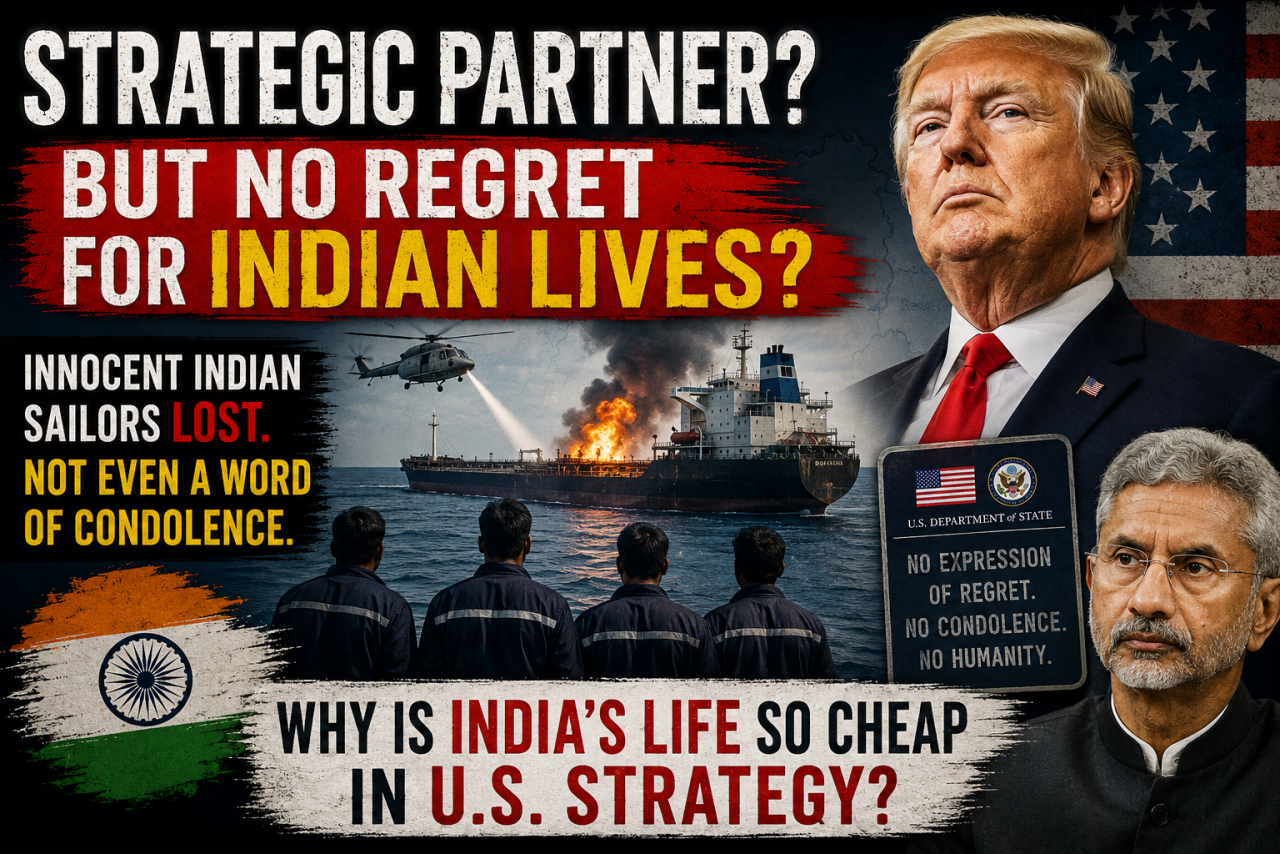
A strategic partner mourns with you in times of tragedy. So why was there no word of condolence for Indian lives lost? The controversy surrounding Washington's silence is raising difficult questions across India.
For decades, India and the United States have described their relationship as one of the most important strategic partnerships of the 21st century. Leaders from both nations regularly speak of shared democratic values, mutual respect, and cooperation across defense, trade, technology, and security. Yet partnerships are tested not during moments of convenience, but during moments of tragedy.
The reported U.S. statement regarding the death of Indian crew members in the Strait of Hormuz has raised serious questions in India about the human sensitivity of Washington's approach. What has disturbed many observers is not merely the incident itself, but the apparent absence of any expression of regret, sympathy, or condolence for the innocent lives lost.
For Indian citizens, this omission is difficult to understand.
Whenever a tragedy strikes involving foreign nationals, governments across the world generally begin by acknowledging the human cost. Diplomatic disagreements, military operations, and security concerns may follow, but the first response is often one of empathy. Human lives are recognized before geopolitical calculations take center stage.
If innocent Indian sailors lost their lives, one would expect a nation that calls India a “trusted friend” and a “strategic partner” to publicly acknowledge that loss. A simple statement expressing sorrow for the victims and their families would not weaken American strategic objectives. Instead, it would strengthen the moral credibility of the United States.
The absence of such language creates the impression that geopolitical priorities have overshadowed basic humanitarian considerations.
The incident also raises broader questions about the conduct of military operations in heavily trafficked international waters. The Strait of Hormuz is among the world's most important maritime corridors. A substantial number of merchant vessels operating in the region employ Indian sailors, engineers, and officers. India supplies one of the largest pools of seafarers to the global shipping industry.
This reality makes the issue particularly sensitive for India.
If a commercial vessel is suspected of violating sanctions or maritime directives, many Indians are asking a reasonable question: Were all possible non-lethal measures exhausted before force was used?
Modern naval forces possess sophisticated capabilities for interception, boarding, disabling propulsion systems, electronic disruption, and other methods designed to compel compliance without causing civilian casualties. International maritime norms emphasize proportionality and the protection of innocent lives wherever possible.
Therefore, concerns about whether lethal force was necessary deserve serious examination rather than dismissal.
The broader issue extends beyond a single incident. Around the world, the United States has often positioned itself as a defender of a rules-based international order. Such a claim carries responsibilities. Rules are meaningful only when they are applied alongside accountability, transparency, and respect for civilian life.
Critics have long argued that Washington frequently expects other nations to comply with international norms while reserving for itself the authority to define when those norms can be stretched or ignored. Whether in the Middle East, Latin America, or elsewhere, accusations of double standards have accompanied American foreign policy for decades.
From an Indian perspective, the concern is not merely legal; it is moral.
If Indian crew members become unintended victims of actions taken in pursuit of American strategic objectives, their lives cannot be treated as collateral details in a diplomatic readout. Every sailor has a family, responsibilities, and aspirations. Their deaths deserve acknowledgment and respect regardless of the geopolitical circumstances surrounding the incident.
This moment also serves as a reminder that India must continue strengthening its capacity to protect its maritime interests and citizens abroad. As India's economic and strategic footprint expands, so too does its responsibility to safeguard Indian nationals working in some of the world's most volatile regions.
A mature partnership between India and the United States should be able to accommodate honest criticism. Friends are not expected to remain silent when concerns arise. In fact, genuine partnerships require candor, accountability, and mutual respect.
If Washington wishes to preserve the goodwill it has built among Indians over recent decades, it must recognize that strategic cooperation cannot come at the expense of human dignity. Expressions of sympathy are not diplomatic formalities; they are acknowledgments of shared humanity.
For many Indians, the central issue is simple. Before discussions about sanctions, compliance, maritime security, or regional strategy, there should have been a recognition that innocent lives were lost.
A partnership built on democratic values should never forget the value of human life. When it does, even the strongest strategic relationship begins to look less like a friendship and more like a transaction.
For decades, India and the United States have described their relationship as one of the most important strategic partnerships of the 21st century. Leaders from both nations regularly speak of shared democratic values, mutual respect, and cooperation across defense, trade, technology, and security. Yet partnerships are tested not during moments of convenience, but during moments of tragedy.
The reported U.S. statement regarding the death of Indian crew members in the Strait of Hormuz has raised serious questions in India about the human sensitivity of Washington's approach. What has disturbed many observers is not merely the incident itself, but the apparent absence of any expression of regret, sympathy, or condolence for the innocent lives lost.
For Indian citizens, this omission is difficult to understand.
Whenever a tragedy strikes involving foreign nationals, governments across the world generally begin by acknowledging the human cost. Diplomatic disagreements, military operations, and security concerns may follow, but the first response is often one of empathy. Human lives are recognized before geopolitical calculations take center stage.
If innocent Indian sailors lost their lives, one would expect a nation that calls India a “trusted friend” and a “strategic partner” to publicly acknowledge that loss. A simple statement expressing sorrow for the victims and their families would not weaken American strategic objectives. Instead, it would strengthen the moral credibility of the United States.
The absence of such language creates the impression that geopolitical priorities have overshadowed basic humanitarian considerations.
The incident also raises broader questions about the conduct of military operations in heavily trafficked international waters. The Strait of Hormuz is among the world's most important maritime corridors. A substantial number of merchant vessels operating in the region employ Indian sailors, engineers, and officers. India supplies one of the largest pools of seafarers to the global shipping industry.
This reality makes the issue particularly sensitive for India.
If a commercial vessel is suspected of violating sanctions or maritime directives, many Indians are asking a reasonable question: Were all possible non-lethal measures exhausted before force was used?
Modern naval forces possess sophisticated capabilities for interception, boarding, disabling propulsion systems, electronic disruption, and other methods designed to compel compliance without causing civilian casualties. International maritime norms emphasize proportionality and the protection of innocent lives wherever possible.
Therefore, concerns about whether lethal force was necessary deserve serious examination rather than dismissal.
The broader issue extends beyond a single incident. Around the world, the United States has often positioned itself as a defender of a rules-based international order. Such a claim carries responsibilities. Rules are meaningful only when they are applied alongside accountability, transparency, and respect for civilian life.
Critics have long argued that Washington frequently expects other nations to comply with international norms while reserving for itself the authority to define when those norms can be stretched or ignored. Whether in the Middle East, Latin America, or elsewhere, accusations of double standards have accompanied American foreign policy for decades.
From an Indian perspective, the concern is not merely legal; it is moral.
If Indian crew members become unintended victims of actions taken in pursuit of American strategic objectives, their lives cannot be treated as collateral details in a diplomatic readout. Every sailor has a family, responsibilities, and aspirations. Their deaths deserve acknowledgment and respect regardless of the geopolitical circumstances surrounding the incident.
This moment also serves as a reminder that India must continue strengthening its capacity to protect its maritime interests and citizens abroad. As India's economic and strategic footprint expands, so too does its responsibility to safeguard Indian nationals working in some of the world's most volatile regions.
A mature partnership between India and the United States should be able to accommodate honest criticism. Friends are not expected to remain silent when concerns arise. In fact, genuine partnerships require candor, accountability, and mutual respect.
If Washington wishes to preserve the goodwill it has built among Indians over recent decades, it must recognize that strategic cooperation cannot come at the expense of human dignity. Expressions of sympathy are not diplomatic formalities; they are acknowledgments of shared humanity.
For many Indians, the central issue is simple. Before discussions about sanctions, compliance, maritime security, or regional strategy, there should have been a recognition that innocent lives were lost.
A partnership built on democratic values should never forget the value of human life. When it does, even the strongest strategic relationship begins to look less like a friendship and more like a transaction.
























Leave a Comment