
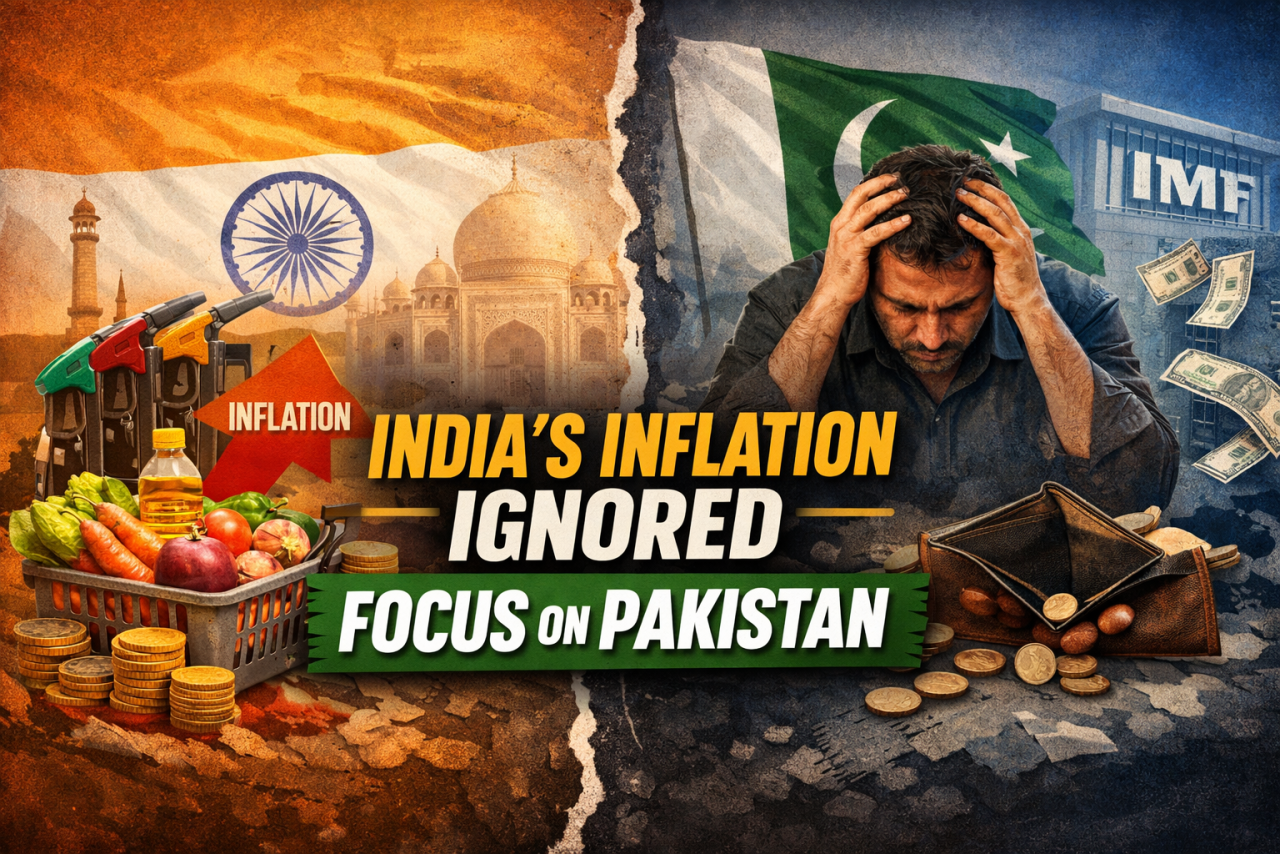
Is comparing Pakistan masking India’s real inflation crisis?
In periods of rising inflation, the role of the media becomes especially critical in shaping public understanding and policy discourse. Inflation is not merely a statistical phenomenon; it affects household consumption, savings, and overall economic sentiment. In India, where food and fuel constitute a significant portion of household expenditure, sustained price rise directly impacts the most vulnerable sections. Yet, a recurring trend in sections of mainstream media has been the disproportionate focus on inflationary crises in Pakistan, even when domestic pressures warrant deeper scrutiny.
At first glance, comparative reporting is not inherently problematic. Cross-country analysis can offer perspective, highlight policy contrasts, and serve as a cautionary tale. Pakistan, grappling with high inflation, currency depreciation, and an ongoing engagement with the International Monetary Fund, presents a case study in macroeconomic instability. However, when such coverage overshadows a rigorous examination of India’s own inflation dynamics, it raises questions about editorial priorities.
India’s retail inflation, measured by the Consumer Price Index (CPI), has periodically breached the upper tolerance band set by the Reserve Bank of India. Food inflation, driven by supply-side constraints, erratic monsoons, and global commodity fluctuations, has been a persistent concern. Pulses, vegetables, and edible oils have seen sharp price volatility in recent years. Fuel prices, influenced by global crude trends and domestic taxation policies, further compound the burden. These are structural issues that demand sustained analytical attention.
Yet, instead of unpacking these complexities—such as the role of supply chain inefficiencies, agricultural policy gaps, or fiscal decisions—television debates and headlines often pivot to Pakistan’s economic distress. The narrative subtly shifts from “Why are prices rising in India?” to “At least India is not Pakistan.” This comparative framing, while politically resonant, risks diluting accountability.
The implications of such a shift are significant. First, it weakens informed public discourse. Citizens require clear explanations of inflation drivers, policy responses, and potential remedies. Without this, economic reporting becomes superficial, reducing a serious issue to a tool of nationalist reassurance. Second, it reduces pressure on policymakers. A vigilant media acts as a watchdog, questioning decisions related to monetary tightening, fiscal deficits, or supply management. When attention is diverted, this critical function is compromised.
It is also important to consider the political economy of media. In an increasingly competitive landscape driven by viewership metrics, narratives that evoke strong emotional responses often take precedence over nuanced analysis. Pakistan, given its historical and geopolitical context vis-à-vis India, becomes an easy reference point. Stories highlighting its economic struggles are likely to attract attention, reinforce existing biases, and simplify complex realities into digestible binaries.
However, such editorial choices come at a cost. Inflation in India is not merely a headline—it is a lived reality for millions. According to data from the Ministry of Statistics and Programme Implementation, food inflation has consistently contributed a large share to overall CPI. Rural households, which allocate a higher proportion of income to food, are particularly affected. Urban middle classes, too, face pressure from rising costs of essentials, education, and healthcare.
Moreover, inflation has broader macroeconomic implications. It influences interest rates, investment decisions, and growth trajectories. The Reserve Bank of India, in its monetary policy stance, often walks a tightrope between controlling inflation and supporting growth. These are complex trade-offs that deserve detailed reporting and informed debate.
A more balanced media approach would not exclude international comparisons but would contextualize them. For instance, examining why Pakistan’s inflation has spiralled—factors such as external debt, currency instability, and delayed structural reforms—could offer lessons. Simultaneously, drawing parallels or contrasts with India’s relatively stable macroeconomic indicators could enrich understanding. The key lies in proportion and intent.
The tradition of public-interest journalism, exemplified by publications like The Hindu, has long emphasized depth, context, and accountability. Such an approach resists sensationalism and prioritizes clarity over noise. In the context of inflation, this would mean sustained coverage of supply chains, agricultural productivity, fiscal policy, and global economic linkages, rather than episodic and comparative narratives.
Ultimately, the media’s responsibility is not to reassure through comparison but to inform through analysis. Inflation, by its very nature, demands attention to detail, data, and policy. As India navigates a complex economic landscape marked by global uncertainties and domestic challenges, the need for rigorous, grounded journalism becomes even more pressing.
Shifting the focus back home is not merely an editorial choice—it is a democratic imperative.






















Leave a Comment