
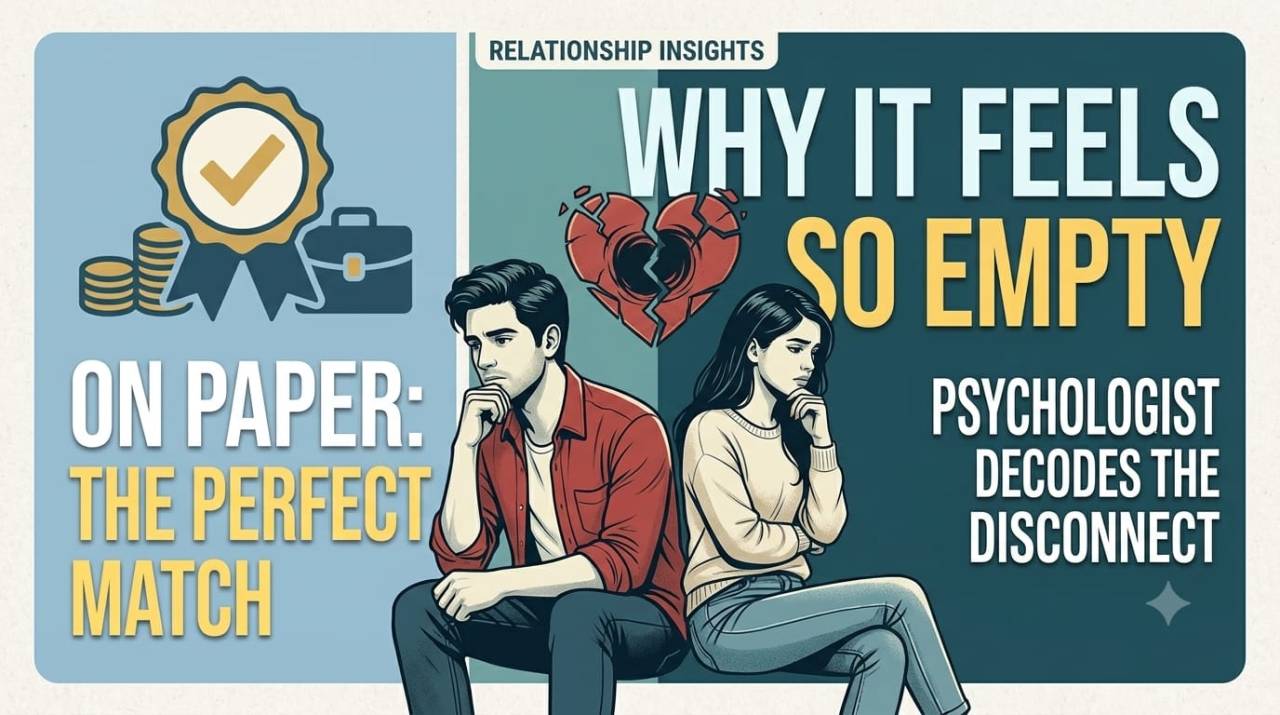
Your marriage may look perfect to everyone else, but does it truly feel fulfilling? The answer may have less to do with compatibility and more to do with emotional intimacy.
You can find someone who checks every box on paper. They have a successful career, financial stability, family approval, a similar background, and even the same hobbies. Yet, one day, you may wake up feeling emotionally distant from them.
It is one of the most confusing experiences in a relationship. From the outside, everything appears perfect. Friends admire your marriage, family members see you as an ideal couple, and social media reflects a happy life. But beneath that picture-perfect image lies a quiet emptiness that is difficult to explain. Everything seems right, yet emotionally, something feels missing.
According to counseling psychologist and author Damini Grover, this disconnect often arises because people mistake social compatibility for emotional compatibility.
When the Checklist Becomes the Relationship
For generations, people have been encouraged to evaluate a life partner through a practical checklist. Questions usually revolve around financial security, education, family background, and shared interests.
These factors certainly help create a stable and comfortable life together. They can reduce practical conflicts and make everyday responsibilities easier to manage. However, they cannot guarantee emotional closeness.
When relationships are built only on external compatibility, marriage begins to resemble a partnership focused on managing responsibilities rather than nurturing intimacy. Couples become efficient at running a household but gradually lose the emotional connection that keeps a relationship alive.
Emotional Compatibility Goes Deeper
Real compatibility extends beyond common interests or similar values. Two people may love each other, respect one another, and still struggle to connect emotionally.
Often, the difference lies in how they experience and express emotions. One partner may prefer talking through problems immediately, while the other needs silence and personal space before opening up. Neither approach is wrong, but without understanding these differences, misunderstandings become frequent.
Over time, conversations become difficult, disagreements leave lasting emotional wounds, and partners begin to feel lonely despite living under the same roof.
The Invisible Gap Called Emotional Intimacy
One of the biggest reasons marriages lose their spark is the absence of emotional intimacy.
Emotional intimacy is the ability to reveal your authentic self to your partner without fearing criticism, rejection, or judgment. It means sharing your fears, disappointments, hopes, insecurities, and dreams with complete honesty.
Many people grow up without learning how to express emotions openly. They are taught to suppress difficult feelings, remain strong, or solve problems on their own. As adults, they carry these habits into marriage.
Instead of expressing what hurts them, they remain silent to avoid conflict. They ignore disappointments, bury frustrations, and slowly begin hiding parts of themselves. While this may preserve temporary peace, it quietly builds emotional distance and resentment.
Eventually, the relationship begins to feel empty, even when nothing appears outwardly wrong.
Marriage Is a Daily Commitment
A common misconception is that once you find the "right" partner, the difficult part is over.
In reality, emotional intimacy is not something people discover. It is something they create and nurture every day.
People evolve throughout life. Careers change, responsibilities increase, priorities shift, and personalities mature. A healthy marriage survives these changes only when both partners continue making a conscious effort to understand each other.
As Damini Grover points out, a successful marriage is one in which both partners repeatedly choose each other by choosing to listen, understand, support, and grow together.
Rebuilding Emotional Connection
If a relationship feels emotionally distant, it does not necessarily mean the marriage has failed. More often, it signals the need to reconnect emotionally rather than simply managing daily routines.
A few small but meaningful habits can make a significant difference:
- Listen with full attention. Resist the urge to interrupt, defend yourself, or immediately offer solutions. Make your partner feel heard before trying to solve the problem.
- Share everyday emotions. Talk about how your day made you feel, not just what happened. Emotional intimacy grows through ordinary conversations.
- Address conflicts early. Small disappointments left unspoken often turn into deep resentment. Honest conversations prevent emotional distance from growing.
- Understand your partner's emotional style. Everyone copes differently with stress, sadness, and happiness. Learn what kind of support your partner actually needs instead of assuming.
Final Take
A lasting marriage requires far more than shared backgrounds, financial stability, or similar interests. Those qualities may build a comfortable life, but they cannot replace emotional connection.
True fulfilment comes from understanding each other's inner world, embracing vulnerability, and choosing every day to stay emotionally present.
When couples move beyond the social checklist and invest in genuine emotional intimacy, marriage transforms from simply looking successful on paper to becoming deeply meaningful in real life.
You can find someone who checks every box on paper. They have a successful career, financial stability, family approval, a similar background, and even the same hobbies. Yet, one day, you may wake up feeling emotionally distant from them.
It is one of the most confusing experiences in a relationship. From the outside, everything appears perfect. Friends admire your marriage, family members see you as an ideal couple, and social media reflects a happy life. But beneath that picture-perfect image lies a quiet emptiness that is difficult to explain. Everything seems right, yet emotionally, something feels missing.
According to counseling psychologist and author Damini Grover, this disconnect often arises because people mistake social compatibility for emotional compatibility.
When the Checklist Becomes the Relationship
For generations, people have been encouraged to evaluate a life partner through a practical checklist. Questions usually revolve around financial security, education, family background, and shared interests.
These factors certainly help create a stable and comfortable life together. They can reduce practical conflicts and make everyday responsibilities easier to manage. However, they cannot guarantee emotional closeness.
When relationships are built only on external compatibility, marriage begins to resemble a partnership focused on managing responsibilities rather than nurturing intimacy. Couples become efficient at running a household but gradually lose the emotional connection that keeps a relationship alive.
Emotional Compatibility Goes Deeper
Real compatibility extends beyond common interests or similar values. Two people may love each other, respect one another, and still struggle to connect emotionally.
Often, the difference lies in how they experience and express emotions. One partner may prefer talking through problems immediately, while the other needs silence and personal space before opening up. Neither approach is wrong, but without understanding these differences, misunderstandings become frequent.
Over time, conversations become difficult, disagreements leave lasting emotional wounds, and partners begin to feel lonely despite living under the same roof.
The Invisible Gap Called Emotional Intimacy
One of the biggest reasons marriages lose their spark is the absence of emotional intimacy.
Emotional intimacy is the ability to reveal your authentic self to your partner without fearing criticism, rejection, or judgment. It means sharing your fears, disappointments, hopes, insecurities, and dreams with complete honesty.
Many people grow up without learning how to express emotions openly. They are taught to suppress difficult feelings, remain strong, or solve problems on their own. As adults, they carry these habits into marriage.
Instead of expressing what hurts them, they remain silent to avoid conflict. They ignore disappointments, bury frustrations, and slowly begin hiding parts of themselves. While this may preserve temporary peace, it quietly builds emotional distance and resentment.
Eventually, the relationship begins to feel empty, even when nothing appears outwardly wrong.
Marriage Is a Daily Commitment
A common misconception is that once you find the "right" partner, the difficult part is over.
In reality, emotional intimacy is not something people discover. It is something they create and nurture every day.
People evolve throughout life. Careers change, responsibilities increase, priorities shift, and personalities mature. A healthy marriage survives these changes only when both partners continue making a conscious effort to understand each other.
As Damini Grover points out, a successful marriage is one in which both partners repeatedly choose each other by choosing to listen, understand, support, and grow together.
Rebuilding Emotional Connection
If a relationship feels emotionally distant, it does not necessarily mean the marriage has failed. More often, it signals the need to reconnect emotionally rather than simply managing daily routines.
A few small but meaningful habits can make a significant difference:
- Listen with full attention. Resist the urge to interrupt, defend yourself, or immediately offer solutions. Make your partner feel heard before trying to solve the problem.
- Share everyday emotions. Talk about how your day made you feel, not just what happened. Emotional intimacy grows through ordinary conversations.
- Address conflicts early. Small disappointments left unspoken often turn into deep resentment. Honest conversations prevent emotional distance from growing.
- Understand your partner's emotional style. Everyone copes differently with stress, sadness, and happiness. Learn what kind of support your partner actually needs instead of assuming.
Final Take
A lasting marriage requires far more than shared backgrounds, financial stability, or similar interests. Those qualities may build a comfortable life, but they cannot replace emotional connection.
True fulfilment comes from understanding each other's inner world, embracing vulnerability, and choosing every day to stay emotionally present.
When couples move beyond the social checklist and invest in genuine emotional intimacy, marriage transforms from simply looking successful on paper to becoming deeply meaningful in real life.


















Leave a Comment