
Are Bihar's official district social media accounts informing citizens or promoting political branding? An analysis of bureaucratic neutrality in the digital age.
In a constitutional democracy, the civil service occupies a unique position. While elected governments formulate policy and set political priorities, the bureaucracy is expected to implement those decisions with professionalism, continuity, and political neutrality. This distinction has long been regarded as one of the defining strengths of India's administrative system.
The rapid expansion of social media, however, has introduced a new challenge. Official district administration accounts, once used primarily for public notices, disaster alerts, and citizen services, are increasingly becoming platforms for promoting government initiatives in highly curated and leader-centric formats. The shift is particularly visible across several district-level social media handles in Bihar, where official communication often mirrors the style of institutional public relations.
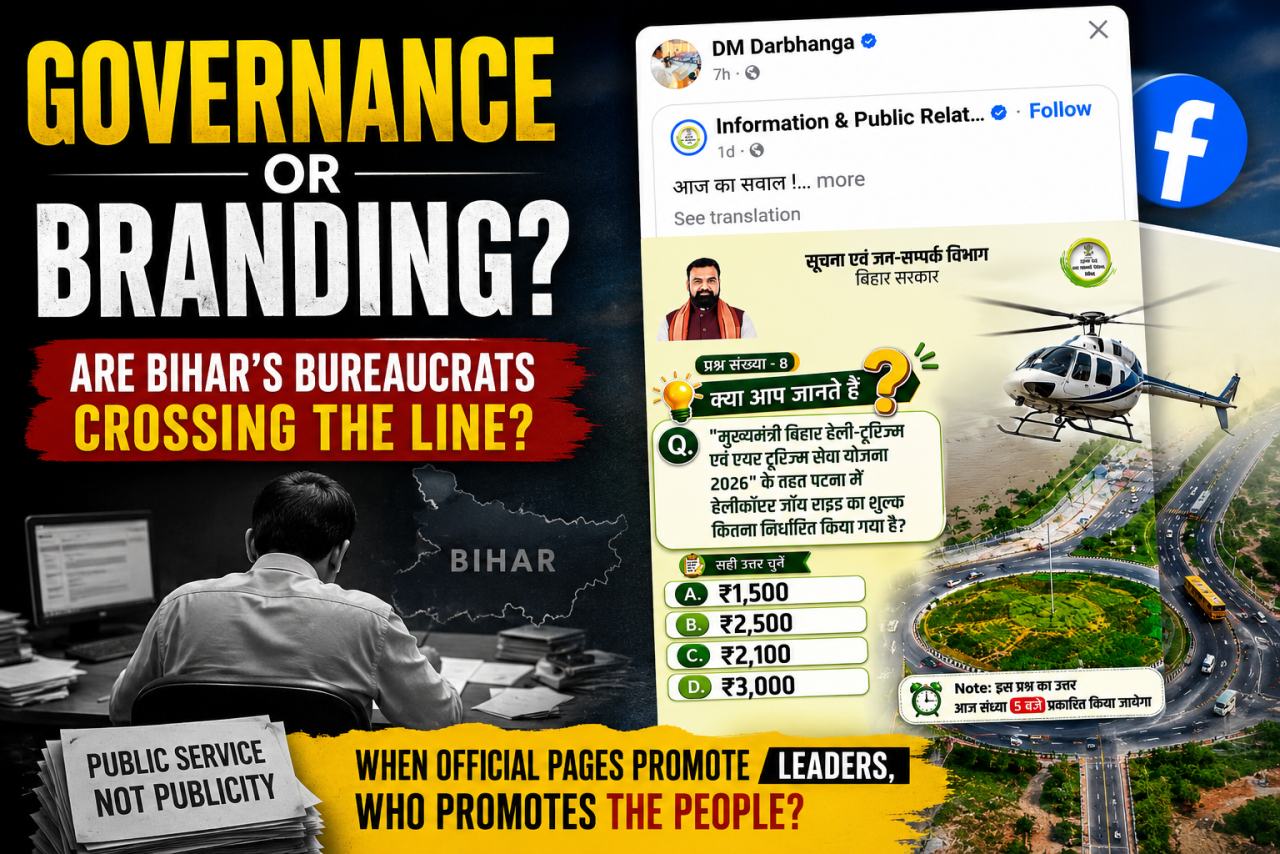
One such example is an official Facebook post from the verified DM Darbhanga account. The post shares content produced by Bihar's Information and Public Relations Department (IPRD), featuring an interactive graphic centred on Chief Minister Samrat Choudhary and inviting citizens to participate in a quiz about the Chief Minister Bihar Heli-Tourism and Air Tourism Service Scheme 2026. The campaign asks participants to identify the subsidised fare for a helicopter joyride in Patna.
Viewed in isolation, the post may appear harmless. Governments are expected to publicise public schemes, and social media has become an effective tool for expanding citizen awareness. The concern arises not from a single post but from a broader communication pattern in which official administrative platforms increasingly resemble promotional channels highlighting the political executive rather than neutral public institutions disseminating information.
Where Information Ends and Branding Begins
There is nothing improper about district administrations informing citizens about welfare programmes, infrastructure projects, tourism initiatives, or public services. Indeed, effective communication is an essential component of modern governance.
The question is one of emphasis and presentation.
When official district accounts consistently foreground political leadership through personalised graphics, campaign-style messaging, and visually branded promotional material, the distinction between government communication and political image-building becomes less clear. Even if the underlying objective is public awareness, the optics matter because civil servants are expected to maintain visible institutional neutrality.
Administrative credibility depends not only on impartial decision-making but also on the public perception of impartiality.
The Constitutional Expectation of Neutrality
Indian Administrative Service officers serve under the elected government of the day, and implementing government policy is unquestionably part of their constitutional responsibility. At the same time, the civil service has traditionally been expected to remain politically neutral, serving the state rather than any particular political formation.
This principle becomes especially relevant in the digital age. Unlike press releases or official notifications, social media platforms encourage branding, visual storytelling, engagement metrics, and personalised messaging. The risk is that administrative communication may gradually shift from informing citizens to reinforcing the public image of political leadership.
The issue is therefore not whether District Magistrates should use social media. They should. The issue is whether official administrative platforms can preserve their institutional neutrality while communicating government programmes.
The Optics of Development
The example of the heli-tourism campaign also raises broader questions about developmental priorities and public messaging.
Bihar continues to face persistent structural challenges in education, healthcare, employment generation, industrial investment, and rural infrastructure. Tourism promotion is a legitimate policy objective, and initiatives aimed at improving connectivity or diversifying the state's economy deserve consideration on their own merits.
However, when official administrative communication devotes substantial visibility to premium tourism initiatives while many citizens continue to struggle with access to basic public services, questions naturally arise about administrative priorities and the image the government seeks to project.
The criticism, therefore, is not directed at heli-tourism as a policy. It concerns the symbolism of communication and whether official district platforms adequately reflect the everyday governance concerns that affect the majority of citizens.
Risks for Public Administration
The increasing convergence of administrative communication and political branding carries several institutional risks.
First, it may gradually erode public confidence in bureaucratic neutrality. Citizens are more likely to trust administrative institutions when they appear equally committed to serving every government and every citizen, irrespective of political affiliation.
Second, it risks encouraging a culture in which administrative success is judged increasingly through digital visibility rather than measurable improvements in governance. Social media engagement can never substitute for efficient implementation of public programmes, timely grievance redressal, or effective district administration.
Third, it may alter institutional incentives. As official communication becomes more image-oriented, bureaucratic attention can shift towards presentation rather than performance, even if unintentionally.
A Necessary Balance
None of this suggests that district administrations should withdraw from social media. On the contrary, digital platforms have become indispensable during disasters, public health emergencies, elections, welfare enrolment drives, and routine citizen communication.
The challenge is ensuring that these platforms remain instruments of public service rather than extensions of political branding.
A citizen visiting an official district administration page should primarily encounter information that helps access government services, understand public policies, receive emergency updates, and engage with local administration. Communication about government initiatives is both legitimate and necessary. What deserves careful scrutiny is the increasing tendency to package that communication in ways that place political personalities at its centre.
The strength of India's administrative system has always rested on the perception that the bureaucracy serves the Constitution before it serves any government. Preserving that distinction has become more important—not less—in the age of digital governance.
Social media should strengthen transparency and citizen engagement, not blur the institutional boundary between governance and political messaging. That boundary may appear subtle, but it remains fundamental to the credibility of democratic administration.
In a constitutional democracy, the civil service occupies a unique position. While elected governments formulate policy and set political priorities, the bureaucracy is expected to implement those decisions with professionalism, continuity, and political neutrality. This distinction has long been regarded as one of the defining strengths of India's administrative system.
The rapid expansion of social media, however, has introduced a new challenge. Official district administration accounts, once used primarily for public notices, disaster alerts, and citizen services, are increasingly becoming platforms for promoting government initiatives in highly curated and leader-centric formats. The shift is particularly visible across several district-level social media handles in Bihar, where official communication often mirrors the style of institutional public relations.
One such example is an official Facebook post from the verified DM Darbhanga account. The post shares content produced by Bihar's Information and Public Relations Department (IPRD), featuring an interactive graphic centred on Chief Minister Samrat Choudhary and inviting citizens to participate in a quiz about the Chief Minister Bihar Heli-Tourism and Air Tourism Service Scheme 2026. The campaign asks participants to identify the subsidised fare for a helicopter joyride in Patna.
Viewed in isolation, the post may appear harmless. Governments are expected to publicise public schemes, and social media has become an effective tool for expanding citizen awareness. The concern arises not from a single post but from a broader communication pattern in which official administrative platforms increasingly resemble promotional channels highlighting the political executive rather than neutral public institutions disseminating information.
Where Information Ends and Branding Begins
There is nothing improper about district administrations informing citizens about welfare programmes, infrastructure projects, tourism initiatives, or public services. Indeed, effective communication is an essential component of modern governance.
The question is one of emphasis and presentation.
When official district accounts consistently foreground political leadership through personalised graphics, campaign-style messaging, and visually branded promotional material, the distinction between government communication and political image-building becomes less clear. Even if the underlying objective is public awareness, the optics matter because civil servants are expected to maintain visible institutional neutrality.
Administrative credibility depends not only on impartial decision-making but also on the public perception of impartiality.
The Constitutional Expectation of Neutrality
Indian Administrative Service officers serve under the elected government of the day, and implementing government policy is unquestionably part of their constitutional responsibility. At the same time, the civil service has traditionally been expected to remain politically neutral, serving the state rather than any particular political formation.
This principle becomes especially relevant in the digital age. Unlike press releases or official notifications, social media platforms encourage branding, visual storytelling, engagement metrics, and personalised messaging. The risk is that administrative communication may gradually shift from informing citizens to reinforcing the public image of political leadership.
The issue is therefore not whether District Magistrates should use social media. They should. The issue is whether official administrative platforms can preserve their institutional neutrality while communicating government programmes.
The Optics of Development
The example of the heli-tourism campaign also raises broader questions about developmental priorities and public messaging.
Bihar continues to face persistent structural challenges in education, healthcare, employment generation, industrial investment, and rural infrastructure. Tourism promotion is a legitimate policy objective, and initiatives aimed at improving connectivity or diversifying the state's economy deserve consideration on their own merits.
However, when official administrative communication devotes substantial visibility to premium tourism initiatives while many citizens continue to struggle with access to basic public services, questions naturally arise about administrative priorities and the image the government seeks to project.
The criticism, therefore, is not directed at heli-tourism as a policy. It concerns the symbolism of communication and whether official district platforms adequately reflect the everyday governance concerns that affect the majority of citizens.
Risks for Public Administration
The increasing convergence of administrative communication and political branding carries several institutional risks.
First, it may gradually erode public confidence in bureaucratic neutrality. Citizens are more likely to trust administrative institutions when they appear equally committed to serving every government and every citizen, irrespective of political affiliation.
Second, it risks encouraging a culture in which administrative success is judged increasingly through digital visibility rather than measurable improvements in governance. Social media engagement can never substitute for efficient implementation of public programmes, timely grievance redressal, or effective district administration.
Third, it may alter institutional incentives. As official communication becomes more image-oriented, bureaucratic attention can shift towards presentation rather than performance, even if unintentionally.
A Necessary Balance
None of this suggests that district administrations should withdraw from social media. On the contrary, digital platforms have become indispensable during disasters, public health emergencies, elections, welfare enrolment drives, and routine citizen communication.
The challenge is ensuring that these platforms remain instruments of public service rather than extensions of political branding.
A citizen visiting an official district administration page should primarily encounter information that helps access government services, understand public policies, receive emergency updates, and engage with local administration. Communication about government initiatives is both legitimate and necessary. What deserves careful scrutiny is the increasing tendency to package that communication in ways that place political personalities at its centre.
The strength of India's administrative system has always rested on the perception that the bureaucracy serves the Constitution before it serves any government. Preserving that distinction has become more important—not less—in the age of digital governance.
Social media should strengthen transparency and citizen engagement, not blur the institutional boundary between governance and political messaging. That boundary may appear subtle, but it remains fundamental to the credibility of democratic administration.
















Leave a Comment