
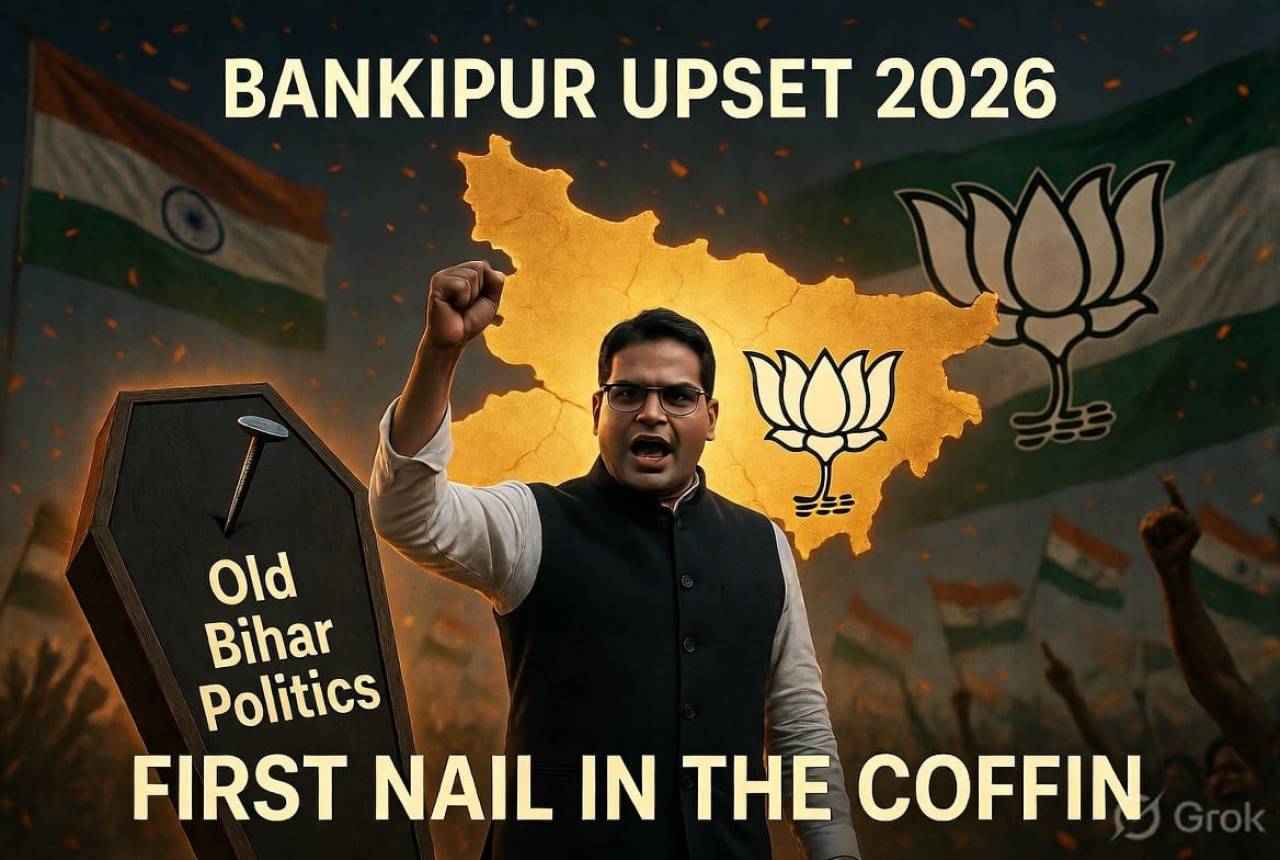
A BJP fortress has fallen, Jan Suraaj has arrived, and Bihar's political equations may never look quite the same again. Is Bankipur the beginning of a larger political shift or just a one-off upset?
Every election produces a winner. Only a few produce a message.
The 2026 Bankipur Assembly bypoll belongs to the second category. Prashant Kishor's victory is not merely the story of a political strategist finally entering the Assembly. It is the story of a fortress falling, a dismissed political experiment finding legitimacy, and a warning that Bihar's voters may be more restless than established parties had assumed.
On August 3, 2026, Kishor defeated the BJP's Neeraj Kumar Sinha by nearly 19,000 votes, securing around 64,000 votes against the BJP's roughly 44,000 to 45,000. The RJD finished a distant third. The bypoll was necessitated after BJP national president Nitin Nabin vacated the seat following his election to the Rajya Sabha. While the turnout remained modest at around 34.3 percent, the political significance of the verdict was anything but modest.
When a Fortress Falls
Bankipur was never considered an easy constituency to conquer.
Known earlier as Patna West, the seat had remained with the BJP continuously since 1995. It became synonymous with Nitin Nabin, who represented it repeatedly and retained it comfortably in the 2025 Assembly elections. For three decades, the constituency reflected the BJP's organisational depth and urban appeal.
That perception has now changed.
Political parties often lose seats. They rarely lose symbols. Bankipur was one such symbol. Its fall sends a message that extends far beyond Patna's municipal boundaries.
The Return of a Political Experiment
Less than a year ago, Jan Suraaj appeared to be a political project running out of momentum.
In the 2025 Bihar Assembly elections, the party contested almost the entire state but failed to win a single seat. It secured only around 3.4 percent of the vote, while many candidates lost their deposits. Critics questioned whether Prashant Kishor's years of political consulting could ever translate into electoral success.
Kishor had deliberately stayed out of the contest, choosing instead to strengthen the organisation. That decision looked risky after the results.
Bankipur has changed the conversation.
One seat does not make a statewide force, but it restores credibility. It tells supporters that persistence can produce results and reminds opponents that dismissing a new political movement too early can be costly.
Beyond Caste, Towards Governance?
Throughout the campaign, Kishor attempted to shift Bihar's political conversation away from its traditional fault lines.
Instead of relying primarily on caste arithmetic, he repeatedly focused on governance, unemployment, migration, education, and administrative accountability. He described the bypoll as a referendum on the BJP-led government and argued that Bankipur's educated electorate had an opportunity to send a larger political message.
Whether voters accepted every argument is open to debate. What is beyond debate is that enough of them accepted the larger narrative to produce an unexpected result.
After the victory, Kishor resisted triumphalism. He acknowledged that one MLA cannot transform Bankipur overnight but promised visible local improvements while urging the BJP's central leadership to pay greater attention to Bihar's concerns.
Reading the Public Mood
The bypoll unfolded against a backdrop of visible public dissatisfaction.
Young people across the country have increasingly expressed frustration over unemployment, competitive examination irregularities, recruitment delays, and limited economic opportunities. Bihar, where migration has long been both an economic necessity and a political issue, remains particularly sensitive to these concerns.
Public debates surrounding institutional accountability further contributed to an atmosphere in which voters appeared willing to reassess established political choices.
No election is decided by a single issue. Yet when several grievances converge, even long-standing electoral loyalties can weaken.
The Questions Every Party Must Answer
The BJP cannot dismiss Bankipur as merely an isolated setback. Losing a constituency associated with its national president inevitably raises questions about organisational complacency and voter expectations.
The RJD faces an equally uncomfortable reality. Finishing third in such a high-profile contest suggests that it no longer enjoys an unquestioned claim over anti-BJP sentiment, particularly among sections of urban voters searching for a different political alternative.
Jan Suraaj, meanwhile, faces the greatest challenge of all. Symbolic victories create expectations. Sustaining them requires disciplined organisation, credible local leadership, and consistent electoral performance across constituencies with very different social and political realities.
Winning Bankipur is difficult. Repeating it across Bihar will be far more demanding.
A Small Election With Big Implications
Bypolls rarely determine governments, but they often reveal changing political currents before larger elections do.
Bankipur has reminded Bihar's political class that voters are willing to reward credible alternatives when they believe established parties have stopped listening. It has demonstrated that urban constituencies can become laboratories for political change before wider shifts emerge elsewhere.
Whether this becomes the first chapter of a larger political transformation or simply a memorable electoral upset will depend on what follows. Jan Suraaj must convert symbolism into structure. The BJP must respond with governance as much as organisation. The opposition must rethink its own political strategy in an increasingly competitive landscape.
For now, one conclusion stands out.
Prashant Kishor has won more than an Assembly seat. He has reopened Bihar's political contest. In a state where electoral equations often appear settled long before voting begins, Bankipur has delivered a simple but powerful reminder: no stronghold is permanent, and no political verdict is ever the final word.
Every election produces a winner. Only a few produce a message.
The 2026 Bankipur Assembly bypoll belongs to the second category. Prashant Kishor's victory is not merely the story of a political strategist finally entering the Assembly. It is the story of a fortress falling, a dismissed political experiment finding legitimacy, and a warning that Bihar's voters may be more restless than established parties had assumed.
On August 3, 2026, Kishor defeated the BJP's Neeraj Kumar Sinha by nearly 19,000 votes, securing around 64,000 votes against the BJP's roughly 44,000 to 45,000. The RJD finished a distant third. The bypoll was necessitated after BJP national president Nitin Nabin vacated the seat following his election to the Rajya Sabha. While the turnout remained modest at around 34.3 percent, the political significance of the verdict was anything but modest.
When a Fortress Falls
Bankipur was never considered an easy constituency to conquer.
Known earlier as Patna West, the seat had remained with the BJP continuously since 1995. It became synonymous with Nitin Nabin, who represented it repeatedly and retained it comfortably in the 2025 Assembly elections. For three decades, the constituency reflected the BJP's organisational depth and urban appeal.
That perception has now changed.
Political parties often lose seats. They rarely lose symbols. Bankipur was one such symbol. Its fall sends a message that extends far beyond Patna's municipal boundaries.
The Return of a Political Experiment
Less than a year ago, Jan Suraaj appeared to be a political project running out of momentum.
In the 2025 Bihar Assembly elections, the party contested almost the entire state but failed to win a single seat. It secured only around 3.4 percent of the vote, while many candidates lost their deposits. Critics questioned whether Prashant Kishor's years of political consulting could ever translate into electoral success.
Kishor had deliberately stayed out of the contest, choosing instead to strengthen the organisation. That decision looked risky after the results.
Bankipur has changed the conversation.
One seat does not make a statewide force, but it restores credibility. It tells supporters that persistence can produce results and reminds opponents that dismissing a new political movement too early can be costly.
Beyond Caste, Towards Governance?
Throughout the campaign, Kishor attempted to shift Bihar's political conversation away from its traditional fault lines.
Instead of relying primarily on caste arithmetic, he repeatedly focused on governance, unemployment, migration, education, and administrative accountability. He described the bypoll as a referendum on the BJP-led government and argued that Bankipur's educated electorate had an opportunity to send a larger political message.
Whether voters accepted every argument is open to debate. What is beyond debate is that enough of them accepted the larger narrative to produce an unexpected result.
After the victory, Kishor resisted triumphalism. He acknowledged that one MLA cannot transform Bankipur overnight but promised visible local improvements while urging the BJP's central leadership to pay greater attention to Bihar's concerns.
Reading the Public Mood
The bypoll unfolded against a backdrop of visible public dissatisfaction.
Young people across the country have increasingly expressed frustration over unemployment, competitive examination irregularities, recruitment delays, and limited economic opportunities. Bihar, where migration has long been both an economic necessity and a political issue, remains particularly sensitive to these concerns.
Public debates surrounding institutional accountability further contributed to an atmosphere in which voters appeared willing to reassess established political choices.
No election is decided by a single issue. Yet when several grievances converge, even long-standing electoral loyalties can weaken.
The Questions Every Party Must Answer
The BJP cannot dismiss Bankipur as merely an isolated setback. Losing a constituency associated with its national president inevitably raises questions about organisational complacency and voter expectations.
The RJD faces an equally uncomfortable reality. Finishing third in such a high-profile contest suggests that it no longer enjoys an unquestioned claim over anti-BJP sentiment, particularly among sections of urban voters searching for a different political alternative.
Jan Suraaj, meanwhile, faces the greatest challenge of all. Symbolic victories create expectations. Sustaining them requires disciplined organisation, credible local leadership, and consistent electoral performance across constituencies with very different social and political realities.
Winning Bankipur is difficult. Repeating it across Bihar will be far more demanding.
A Small Election With Big Implications
Bypolls rarely determine governments, but they often reveal changing political currents before larger elections do.
Bankipur has reminded Bihar's political class that voters are willing to reward credible alternatives when they believe established parties have stopped listening. It has demonstrated that urban constituencies can become laboratories for political change before wider shifts emerge elsewhere.
Whether this becomes the first chapter of a larger political transformation or simply a memorable electoral upset will depend on what follows. Jan Suraaj must convert symbolism into structure. The BJP must respond with governance as much as organisation. The opposition must rethink its own political strategy in an increasingly competitive landscape.
For now, one conclusion stands out.
Prashant Kishor has won more than an Assembly seat. He has reopened Bihar's political contest. In a state where electoral equations often appear settled long before voting begins, Bankipur has delivered a simple but powerful reminder: no stronghold is permanent, and no political verdict is ever the final word.























Leave a Comment