
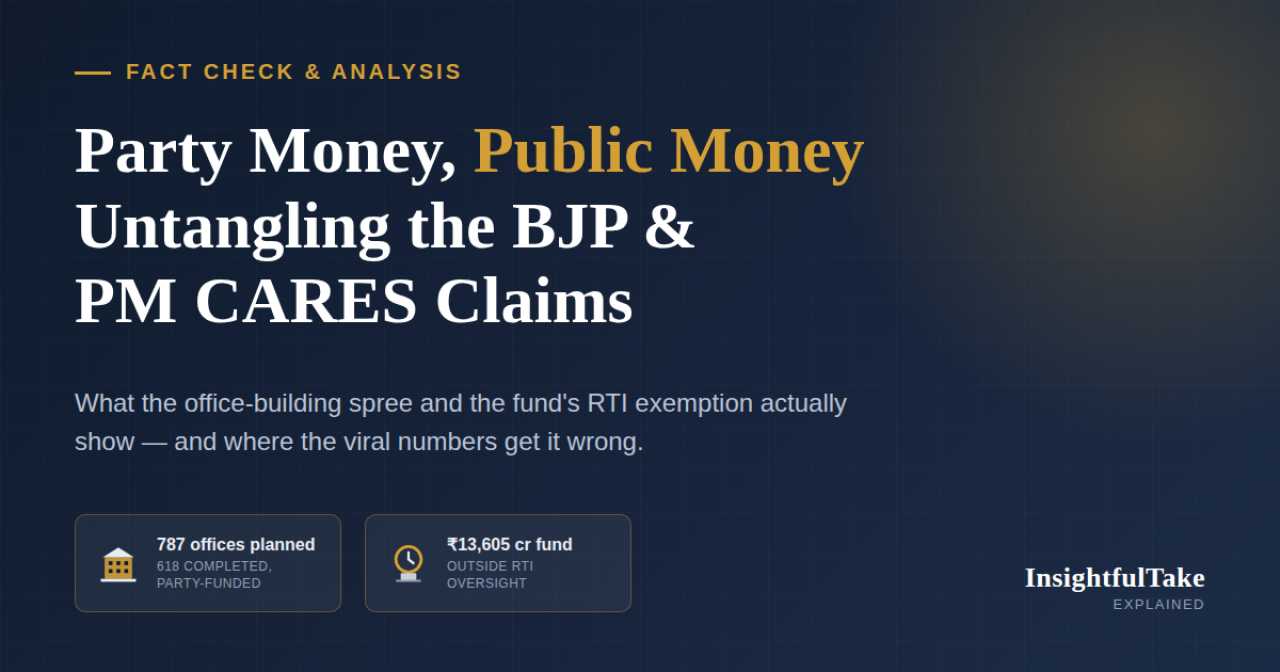
Hundreds of BJP offices and thousands of crores in PM CARES contributions have drawn attention to how political and public-linked funds are disclosed in India.
The Bharatiya Janata Party has built a large network of permanent offices across India during the past decade. At the same time, the PM CARES Fund, created during the COVID-19 pandemic, has collected thousands of crores while facing continuing questions about transparency and public accountability.
The two subjects are often placed together in political debates. But they involve different institutions, different sources of money and different legal questions. Looking at the available records separately gives a clearer picture.
A rapidly expanding BJP office network
The BJP's organisational expansion can be measured in numbers.
At the inauguration of the new Delhi BJP office in September 2025, then party president J.P. Nadda said that the party had planned 787 permanent offices across India. He said 617 had already been completed and described the Delhi office as the 618th.
The target had increased from an earlier figure. In August 2024, Nadda had said that the BJP planned 768 offices and that 563 had been completed. The changing figures reflect an expanding organisational plan rather than a fixed construction programme.
The financial scale is also visible in the party's accounts. An analysis by the Association for Democratic Reforms, based on BJP annual reports submitted for the period from 2014-15 to 2022-23, found that the party reported ₹1,124 crore in expenditure on land and buildings during those years.
That figure needs to be understood correctly. It is reported expenditure during a specific period, not the total value of every BJP office in the country. It also does not establish that a particular building was financed by a particular donor.
The BJP receives money through several declared sources, including contributions, fees and subscriptions. Its income has grown substantially over the years. ADR's analysis of the accounts of national parties found that the BJP reported income of ₹2,360 crore in 2022-23, while accounting for 76.73 per cent of the combined income of the six national parties examined that year.
The more important issue is therefore not whether a political party can legally own and construct offices. It can. The public-interest question is whether its sources of funds, expenditure and assets are properly recorded and disclosed under the rules applicable to political parties.
Electoral bonds changed the funding debate
The question became more complicated because a large part of political funding in recent years passed through electoral bonds.
The Supreme Court struck down the electoral-bond scheme in February 2024. The judgment brought donor disclosure and political funding back into the centre of public debate.
This does not mean that the construction of BJP offices is, by itself, evidence of misuse of public money. Party accounts and election-related disclosures provide the relevant starting point for examining how political organisations receive and spend money.
Claims that expensive party buildings automatically prove corruption go beyond what the available financial records establish.
The scale of PM CARES
PM CARES presents a different transparency question.
The Prime Minister's Citizen Assistance and Relief in Emergency Situations Fund was established in March 2020 as the COVID-19 crisis spread across India. The Prime Minister is its ex-officio chairman, while the Defence, Home and Finance ministers are ex-officio trustees.
The fund's official information says it accepts voluntary contributions and does not receive budgetary support. Donations are eligible for tax benefits, and contributions can also qualify as corporate social responsibility expenditure.
The financial figures are substantial. Between 2019-20 and 2022-23, PM CARES received about ₹13,605 crore in contributions, including voluntary and foreign contributions. It also earned about ₹565 crore in interest during those four years.
But ₹13,605 crore should not be described as the fund's balance or corpus. At the end of 2022-23, the closing balance was about ₹6,284 crore. The fund received another ₹912 crore in contributions during that financial year.
These distinctions matter when large financial figures enter public debate.
The unresolved RTI issue
The central controversy surrounding PM CARES concerns access to information.
The fund has maintained that it is a public charitable trust and is not a "public authority" under Section 2(h) of the Right to Information Act. The government has taken the same position in RTI proceedings.
The matter, however, has not simply disappeared from the legal system. A Delhi High Court case concerning whether PM CARES falls within the RTI Act remained pending. In an order dated April 1, 2026, the court listed the matter for July 10, 2026.
The distinction is important. PM CARES publishes financial information and audited accounts, but that is different from being subject to the full disclosure obligations of a public authority under the RTI Act.
There is also a difference between an audit by the Comptroller and Auditor General of India and an audit conducted by a chartered accountant from a panel maintained by the CAG. PM CARES has relied on the latter arrangement in defending its financial oversight structure.
The larger issue is disclosure
The BJP's office expansion is mainly a question about political-party finances and the reporting of assets and expenditure. PM CARES raises questions about the transparency obligations of a charitable trust closely associated with the highest political office in the country.
Neither issue is helped by combining unrelated figures or presenting them as proof of wrongdoing.
Can citizens see enough reliable information to understand where the money came from, how it was recorded, how it was spent and who is responsible for answering questions about it?
For a democracy, financial transparency is not only about finding wrongdoing. It is also about making it possible to check whether wrongdoing has occurred.
That is why the records, disclosures and pending legal questions surrounding political finance and PM CARES deserve careful public attention, without turning incomplete evidence into allegations of corruption.
The Bharatiya Janata Party has built a large network of permanent offices across India during the past decade. At the same time, the PM CARES Fund, created during the COVID-19 pandemic, has collected thousands of crores while facing continuing questions about transparency and public accountability.
The two subjects are often placed together in political debates. But they involve different institutions, different sources of money and different legal questions. Looking at the available records separately gives a clearer picture.
A rapidly expanding BJP office network
The BJP's organisational expansion can be measured in numbers.
At the inauguration of the new Delhi BJP office in September 2025, then party president J.P. Nadda said that the party had planned 787 permanent offices across India. He said 617 had already been completed and described the Delhi office as the 618th.
The target had increased from an earlier figure. In August 2024, Nadda had said that the BJP planned 768 offices and that 563 had been completed. The changing figures reflect an expanding organisational plan rather than a fixed construction programme.
The financial scale is also visible in the party's accounts. An analysis by the Association for Democratic Reforms, based on BJP annual reports submitted for the period from 2014-15 to 2022-23, found that the party reported ₹1,124 crore in expenditure on land and buildings during those years.
That figure needs to be understood correctly. It is reported expenditure during a specific period, not the total value of every BJP office in the country. It also does not establish that a particular building was financed by a particular donor.
The BJP receives money through several declared sources, including contributions, fees and subscriptions. Its income has grown substantially over the years. ADR's analysis of the accounts of national parties found that the BJP reported income of ₹2,360 crore in 2022-23, while accounting for 76.73 per cent of the combined income of the six national parties examined that year.
The more important issue is therefore not whether a political party can legally own and construct offices. It can. The public-interest question is whether its sources of funds, expenditure and assets are properly recorded and disclosed under the rules applicable to political parties.
Electoral bonds changed the funding debate
The question became more complicated because a large part of political funding in recent years passed through electoral bonds.
The Supreme Court struck down the electoral-bond scheme in February 2024. The judgment brought donor disclosure and political funding back into the centre of public debate.
This does not mean that the construction of BJP offices is, by itself, evidence of misuse of public money. Party accounts and election-related disclosures provide the relevant starting point for examining how political organisations receive and spend money.
Claims that expensive party buildings automatically prove corruption go beyond what the available financial records establish.
The scale of PM CARES
PM CARES presents a different transparency question.
The Prime Minister's Citizen Assistance and Relief in Emergency Situations Fund was established in March 2020 as the COVID-19 crisis spread across India. The Prime Minister is its ex-officio chairman, while the Defence, Home and Finance ministers are ex-officio trustees.
The fund's official information says it accepts voluntary contributions and does not receive budgetary support. Donations are eligible for tax benefits, and contributions can also qualify as corporate social responsibility expenditure.
The financial figures are substantial. Between 2019-20 and 2022-23, PM CARES received about ₹13,605 crore in contributions, including voluntary and foreign contributions. It also earned about ₹565 crore in interest during those four years.
But ₹13,605 crore should not be described as the fund's balance or corpus. At the end of 2022-23, the closing balance was about ₹6,284 crore. The fund received another ₹912 crore in contributions during that financial year.
These distinctions matter when large financial figures enter public debate.
The unresolved RTI issue
The central controversy surrounding PM CARES concerns access to information.
The fund has maintained that it is a public charitable trust and is not a "public authority" under Section 2(h) of the Right to Information Act. The government has taken the same position in RTI proceedings.
The matter, however, has not simply disappeared from the legal system. A Delhi High Court case concerning whether PM CARES falls within the RTI Act remained pending. In an order dated April 1, 2026, the court listed the matter for July 10, 2026.
The distinction is important. PM CARES publishes financial information and audited accounts, but that is different from being subject to the full disclosure obligations of a public authority under the RTI Act.
There is also a difference between an audit by the Comptroller and Auditor General of India and an audit conducted by a chartered accountant from a panel maintained by the CAG. PM CARES has relied on the latter arrangement in defending its financial oversight structure.
The larger issue is disclosure
The BJP's office expansion is mainly a question about political-party finances and the reporting of assets and expenditure. PM CARES raises questions about the transparency obligations of a charitable trust closely associated with the highest political office in the country.
Neither issue is helped by combining unrelated figures or presenting them as proof of wrongdoing.
Can citizens see enough reliable information to understand where the money came from, how it was recorded, how it was spent and who is responsible for answering questions about it?
For a democracy, financial transparency is not only about finding wrongdoing. It is also about making it possible to check whether wrongdoing has occurred.
That is why the records, disclosures and pending legal questions surrounding political finance and PM CARES deserve careful public attention, without turning incomplete evidence into allegations of corruption.






















Leave a Comment