
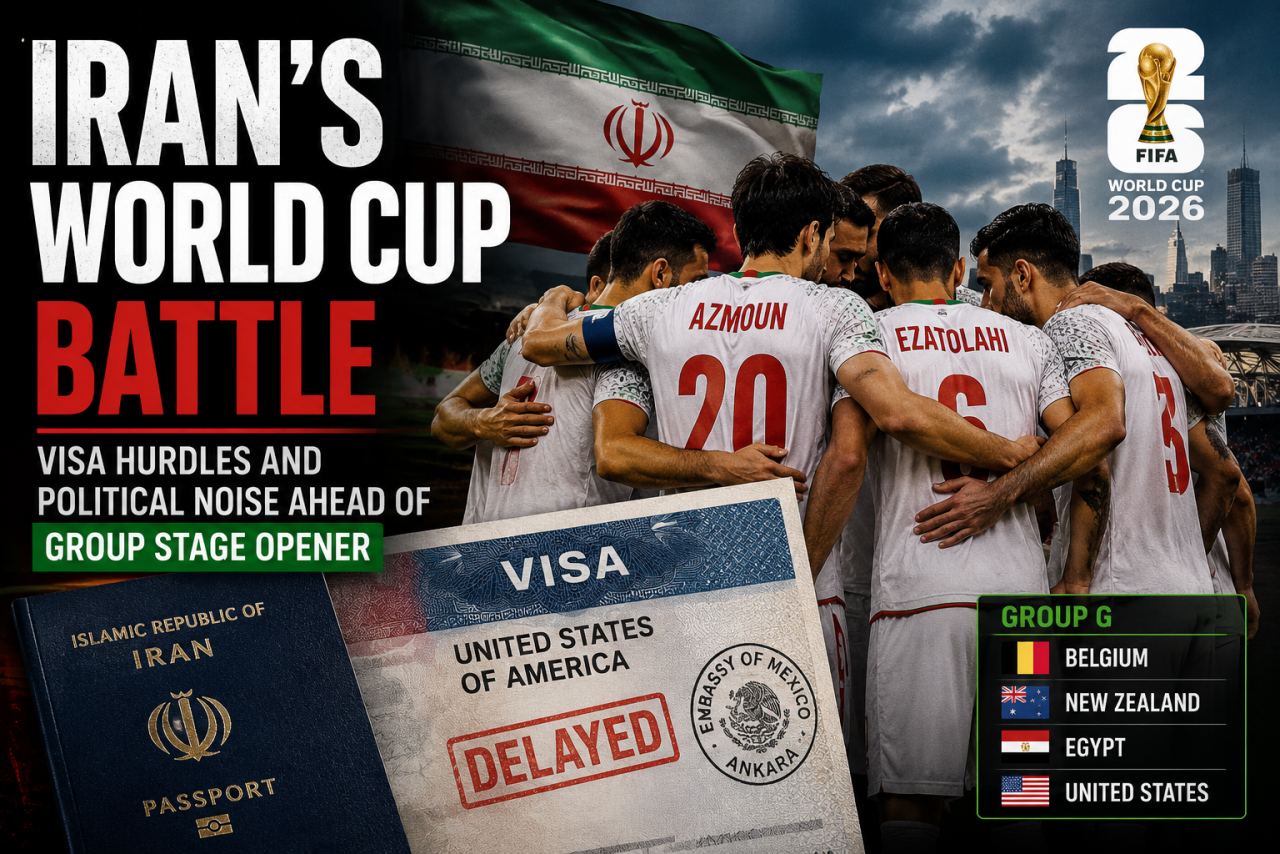
Before kicking a ball at the 2026 World Cup, Iran's players had to overcome visa hurdles, political distractions, and the pressure of representing a nation in difficult times.
As the 2026 FIFA World Cup gets underway across North America, Iran's national football team is dealing with challenges that extend far beyond the pitch. While most competing nations are focused on tactics, training, and fitness, Iran has spent the final days before the tournament navigating visa complications and the emotional strain of political developments at home.
Iran has been drawn into Group G alongside Belgium, New Zealand, Egypt, and the United States. The team's World Cup campaign begins on June 14 at the Los Angeles Rams' stadium in Inglewood. Iran will then face Belgium on June 21 before concluding the group stage against Egypt on June 26 in Seattle.
However, before focusing fully on football, the squad first had to overcome a significant logistical hurdle.
The Iranian delegation recently received its visas through the Mexican Embassy in Ankara after a lengthy approval process. To complete the procedure, members of the squad were required to travel to Mexico to collect the necessary documents before entering the United States. The unusual arrangement highlights the administrative difficulties Iranian teams often encounter when participating in major international events.
The issue has not gone unnoticed within the camp.
Saoudi Baradabi, a member of Iran's World Cup squad who also represented the country at the 2018 tournament, acknowledged the impact of events beyond football. Speaking in English, he admitted that the situation presents a unique challenge for the players.
"It's not going to be easy for us," Baradabi said. "At the same time, we are following the news in our country, and the political things, of course, can affect the mind of the players and the people."
Despite the distractions, Iran's players insist they remain determined to focus on their objectives at the tournament.
Midfielder Saeid Ezatolahi, whose club career has taken him across Europe and the Middle East, emphasized the importance of maintaining concentration and representing the country with pride.
"We need to clear up our minds and be fresh because our country and our duty is to fight for our target and to show how good we are," he said.
That sense of responsibility is shared across the squad.
Defender Ghorbani said the players are motivated not only by sporting ambition but also by a desire to provide moments of joy for supporters back home. He noted that many Iranians have faced significant hardships in recent times and that the team hopes its performances can offer some encouragement.
"We know that our people have been going through a lot of difficulties throughout the war and we are going there for them," he said.
Beyond the political and emotional backdrop, Iran also faces a demanding football schedule. The team is not required to enter the United States until shortly before its opening match, leaving a relatively short window for final preparations. With only three group-stage fixtures to secure progression, every match will carry significant importance.
Iran enters the tournament with a squad accustomed to overcoming adversity. Yet the combination of visa complications, political tensions, and the pressure of representing a nation experiencing difficult circumstances adds another layer to the challenge.
As the World Cup begins, Iran's players will hope to set aside the distractions and focus on the task ahead. Whether they can transform those challenges into motivation on the field could play a decisive role in determining how far they advance in the tournament.
For now, simply reaching the starting line has required resilience. The next challenge will be turning that resilience into results when the action begins on June 14.
As the 2026 FIFA World Cup gets underway across North America, Iran's national football team is dealing with challenges that extend far beyond the pitch. While most competing nations are focused on tactics, training, and fitness, Iran has spent the final days before the tournament navigating visa complications and the emotional strain of political developments at home.
Iran has been drawn into Group G alongside Belgium, New Zealand, Egypt, and the United States. The team's World Cup campaign begins on June 14 at the Los Angeles Rams' stadium in Inglewood. Iran will then face Belgium on June 21 before concluding the group stage against Egypt on June 26 in Seattle.
However, before focusing fully on football, the squad first had to overcome a significant logistical hurdle.
The Iranian delegation recently received its visas through the Mexican Embassy in Ankara after a lengthy approval process. To complete the procedure, members of the squad were required to travel to Mexico to collect the necessary documents before entering the United States. The unusual arrangement highlights the administrative difficulties Iranian teams often encounter when participating in major international events.
The issue has not gone unnoticed within the camp.
Saoudi Baradabi, a member of Iran's World Cup squad who also represented the country at the 2018 tournament, acknowledged the impact of events beyond football. Speaking in English, he admitted that the situation presents a unique challenge for the players.
"It's not going to be easy for us," Baradabi said. "At the same time, we are following the news in our country, and the political things, of course, can affect the mind of the players and the people."
Despite the distractions, Iran's players insist they remain determined to focus on their objectives at the tournament.
Midfielder Saeid Ezatolahi, whose club career has taken him across Europe and the Middle East, emphasized the importance of maintaining concentration and representing the country with pride.
"We need to clear up our minds and be fresh because our country and our duty is to fight for our target and to show how good we are," he said.
That sense of responsibility is shared across the squad.
Defender Ghorbani said the players are motivated not only by sporting ambition but also by a desire to provide moments of joy for supporters back home. He noted that many Iranians have faced significant hardships in recent times and that the team hopes its performances can offer some encouragement.
"We know that our people have been going through a lot of difficulties throughout the war and we are going there for them," he said.
Beyond the political and emotional backdrop, Iran also faces a demanding football schedule. The team is not required to enter the United States until shortly before its opening match, leaving a relatively short window for final preparations. With only three group-stage fixtures to secure progression, every match will carry significant importance.
Iran enters the tournament with a squad accustomed to overcoming adversity. Yet the combination of visa complications, political tensions, and the pressure of representing a nation experiencing difficult circumstances adds another layer to the challenge.
As the World Cup begins, Iran's players will hope to set aside the distractions and focus on the task ahead. Whether they can transform those challenges into motivation on the field could play a decisive role in determining how far they advance in the tournament.
For now, simply reaching the starting line has required resilience. The next challenge will be turning that resilience into results when the action begins on June 14.























Leave a Comment