
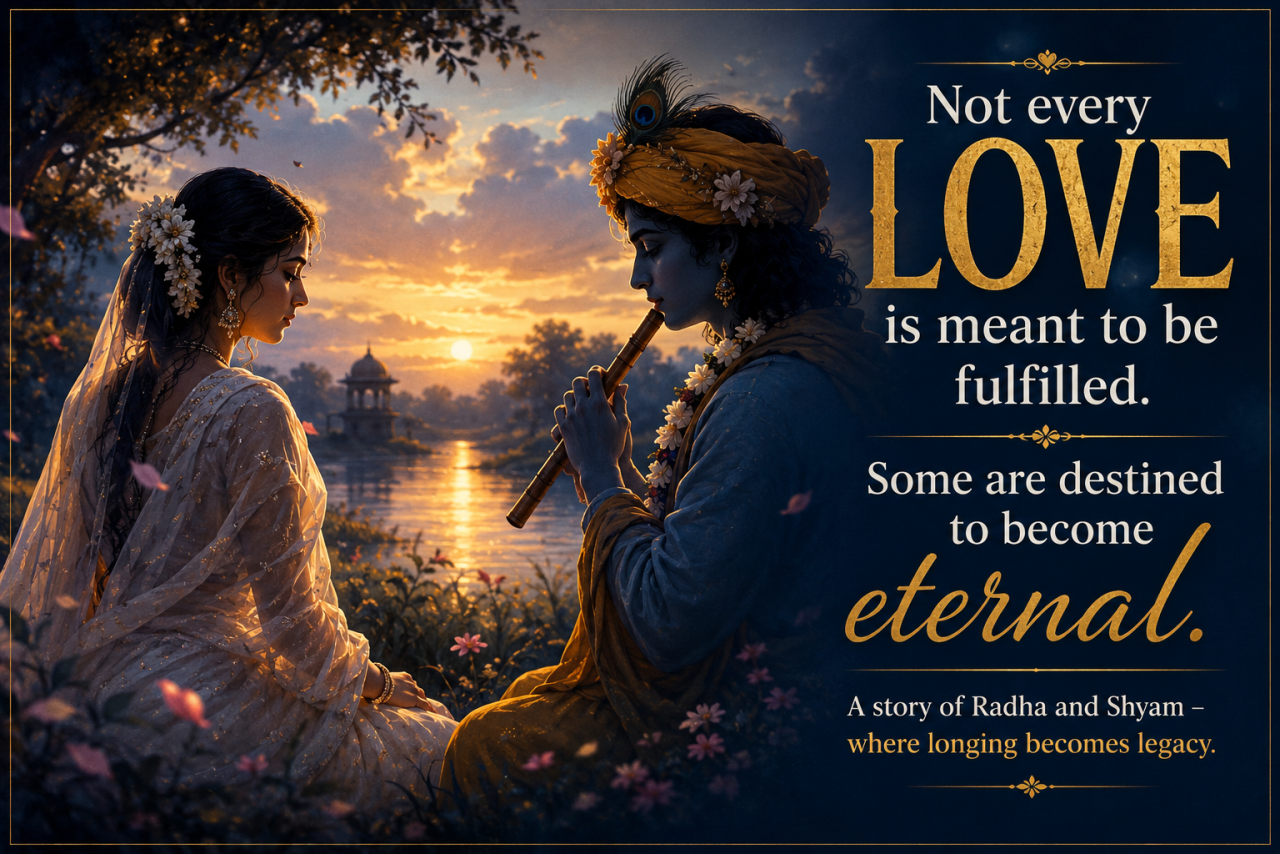
Some love stories end with a wedding. The greatest ones become immortal because they never stop longing.
Radha and Shyam were never separated by destiny. They were united by something greater than union itself. This is a fictional literary tale about love that survives not because it reaches its destination, but because it never stops becoming.
The River That Remembered
The Yamuna had forgotten the names of kings.
It no longer cared who had ruled Mathura, who had conquered kingdoms, or who had written history. Empires had come to its banks with flags fluttering in pride and had disappeared like footprints after rain.
Yet there was one story the river refused to forget.
Every dawn, before the first rays of sunlight touched Vrindavan, the breeze carried a melody that seemed older than time itself. Some called it imagination. Others called it faith.
The old boatman simply smiled.
"It is the flute," he would say.
People laughed.
"There is no one playing."
The boatman would dip his oar into the water and answer softly, "Not every sound is meant for the ears."
Nobody believed him anymore.
The world had become too busy measuring everything except silence.
Yet the Yamuna continued flowing, carrying within its currents a love story that had never ended because it had never truly sought an ending.
Its name was Radha and Shyam.
The Sculptor Who Could Shape Stone but Not Love
One autumn afternoon, a young sculptor arrived in Vrindavan carrying little more than a bundle of clothes and a box of chisels.
His name was Aariv.
His statues were celebrated across distant cities. Temples competed to display his work. Wealthy patrons admired the lifelike expressions he carved into marble.
But there was one criticism he heard everywhere.
"Your sculptures are perfect."
Nobody realised it was an insult.
Perfection had become his prison.
Every face he sculpted smiled exactly as it should.
Every gesture looked complete.
Every story ended where it was expected to end.
Nothing lingered.
Nothing haunted the heart.
A local priest invited him to create a grand idol of Radha and Shyam for a newly built temple.
"It will be your greatest masterpiece," the priest promised.
Aariv accepted.
He believed it would be just another commission.
He was wrong.
The Woman Beneath the Kadamba Tree
Days passed.
He studied old paintings, temple carvings, manuscripts, and folk songs.
The more he searched, the more confused he became.
Every artist painted Radha differently.
Every poet imagined Shyam differently.
Every devotee described love differently.
One evening, while sketching beneath a kadamba tree, an elderly woman approached him.
She watched his drawings for a long time before asking a single question.
"Why are they standing together?"
Aariv looked surprised.
"Because they loved each other."
She smiled.
"And that is precisely why they should not."
The sculptor frowned.
"I don't understand."
The old woman picked up one of his sketches and gently folded it.
"Union satisfies the eyes."
She paused.
"Longing awakens the soul."
Before Aariv could ask another question, she disappeared into the evening crowd.
He searched every lane of Vrindavan.
No one had seen such a woman.
A Flute Beyond Hearing
That night sleep refused to visit him.
He walked towards the Yamuna.
The river shimmered beneath a full moon.
Then he heard it.
A flute.
Not loud.
Not distant.
It seemed to rise from somewhere inside his own heartbeat.
He followed the melody through quiet groves until he reached an open clearing.
There stood a young man dressed in deep blue.
His flute rested gently against his lips.
A few steps away stood a woman dressed in white, her eyes fixed upon him with a smile that held centuries of silence.
Neither moved.
Neither spoke.
The world itself seemed to pause.
The wind stopped.
Leaves remained still.
Even the river forgot to flow.
Aariv waited for them to embrace.
Instead, the music ended.
The woman folded her hands.
The man smiled.
Then, slowly, they walked away from each other.
Not in sorrow.
Not in defeat.
But with a peace that only eternal love could understand.
Within moments, moonlight swallowed both figures.
The clearing stood empty once again.
Yet Aariv had never felt anything so complete.
The Sculpture That Was Never Finished
The next morning, he began carving.
Weeks became months.
When the temple trustees finally came to inspect the work, they stood bewildered.
Radha and Shyam faced one another.
Between them remained empty space.
"There is a mistake," one trustee said.
"They should be standing together."
"They are," Aariv replied.
"You left a gap."
"No."
"I left eternity."
The trustees were disappointed.
Pilgrims were confused.
Critics mocked the sculpture.
"It is unfinished," they declared.
Aariv never argued.
Some truths lose their meaning the moment they are explained.
The Empty Space That Changed Lives
Years passed.
The temple became famous.
Not because of the sculpture itself.
But because of the silence between the two figures.
Visitors behaved strangely.
Children laughed while standing in the empty space.
Old couples held hands without speaking.
Widows found tears they had buried for decades.
Young lovers stopped making promises.
Instead, they simply looked at one another.
Poets carried notebooks.
Musicians composed melodies.
Painters returned with blank canvases.
Everyone discovered something different.
The sculpture never changed.
The people did.
One scholar wrote, "The empty space is where every visitor places their own unfinished love."
Another called it "the architecture of longing."
A wandering saint simply smiled.
"Between Radha and Shyam," he said, "stands every human heart."
Why the Greatest Love Stories Never End
Many years later, when Aariv had grown old, a young traveller asked him the question everyone else had asked before.
"Why didn't you carve them together?"
The sculptor looked towards the Yamuna.
The evening breeze carried the faint fragrance of jasmine.
"If they had embraced," he answered quietly, "the story would have belonged to a single moment."
He paused.
"But because they remained forever reaching for one another, their love belongs to every generation."
The traveller remained silent.
For the first time, he understood that fulfilment often belongs to the body.
Eternity belongs to the soul.
Love That Time Could Not Complete
Perhaps this is why Radha and Shyam continue to live in songs, paintings, temples, and prayers.
Not because theirs was a love that conquered the world.
But because it conquered time.
History remembers victories.
Civilisations remember monuments.
The human heart remembers longing.
Some relationships end with marriage.
Some end with farewell.
A rare few become so vast that they no longer belong to two people alone.
They become symbols.
They become music.
They become faith.
They become mirrors in which every generation sees its own incomplete dreams.
Maybe that is why the flute is still heard in Vrindavan by those willing to listen.
Maybe that is why the Yamuna still carries whispers that historians cannot record.
And maybe that is why Radha and Shyam continue to walk through our imagination, never growing old, never fading into legend.
Because not every love is meant to be fulfilled.
Some are destined to become eternal.
-Gautam Jha
Radha and Shyam were never separated by destiny. They were united by something greater than union itself. This is a fictional literary tale about love that survives not because it reaches its destination, but because it never stops becoming.
The River That Remembered
The Yamuna had forgotten the names of kings.
It no longer cared who had ruled Mathura, who had conquered kingdoms, or who had written history. Empires had come to its banks with flags fluttering in pride and had disappeared like footprints after rain.
Yet there was one story the river refused to forget.
Every dawn, before the first rays of sunlight touched Vrindavan, the breeze carried a melody that seemed older than time itself. Some called it imagination. Others called it faith.
The old boatman simply smiled.
"It is the flute," he would say.
People laughed.
"There is no one playing."
The boatman would dip his oar into the water and answer softly, "Not every sound is meant for the ears."
Nobody believed him anymore.
The world had become too busy measuring everything except silence.
Yet the Yamuna continued flowing, carrying within its currents a love story that had never ended because it had never truly sought an ending.
Its name was Radha and Shyam.
The Sculptor Who Could Shape Stone but Not Love
One autumn afternoon, a young sculptor arrived in Vrindavan carrying little more than a bundle of clothes and a box of chisels.
His name was Aariv.
His statues were celebrated across distant cities. Temples competed to display his work. Wealthy patrons admired the lifelike expressions he carved into marble.
But there was one criticism he heard everywhere.
"Your sculptures are perfect."
Nobody realised it was an insult.
Perfection had become his prison.
Every face he sculpted smiled exactly as it should.
Every gesture looked complete.
Every story ended where it was expected to end.
Nothing lingered.
Nothing haunted the heart.
A local priest invited him to create a grand idol of Radha and Shyam for a newly built temple.
"It will be your greatest masterpiece," the priest promised.
Aariv accepted.
He believed it would be just another commission.
He was wrong.
The Woman Beneath the Kadamba Tree
Days passed.
He studied old paintings, temple carvings, manuscripts, and folk songs.
The more he searched, the more confused he became.
Every artist painted Radha differently.
Every poet imagined Shyam differently.
Every devotee described love differently.
One evening, while sketching beneath a kadamba tree, an elderly woman approached him.
She watched his drawings for a long time before asking a single question.
"Why are they standing together?"
Aariv looked surprised.
"Because they loved each other."
She smiled.
"And that is precisely why they should not."
The sculptor frowned.
"I don't understand."
The old woman picked up one of his sketches and gently folded it.
"Union satisfies the eyes."
She paused.
"Longing awakens the soul."
Before Aariv could ask another question, she disappeared into the evening crowd.
He searched every lane of Vrindavan.
No one had seen such a woman.
A Flute Beyond Hearing
That night sleep refused to visit him.
He walked towards the Yamuna.
The river shimmered beneath a full moon.
Then he heard it.
A flute.
Not loud.
Not distant.
It seemed to rise from somewhere inside his own heartbeat.
He followed the melody through quiet groves until he reached an open clearing.
There stood a young man dressed in deep blue.
His flute rested gently against his lips.
A few steps away stood a woman dressed in white, her eyes fixed upon him with a smile that held centuries of silence.
Neither moved.
Neither spoke.
The world itself seemed to pause.
The wind stopped.
Leaves remained still.
Even the river forgot to flow.
Aariv waited for them to embrace.
Instead, the music ended.
The woman folded her hands.
The man smiled.
Then, slowly, they walked away from each other.
Not in sorrow.
Not in defeat.
But with a peace that only eternal love could understand.
Within moments, moonlight swallowed both figures.
The clearing stood empty once again.
Yet Aariv had never felt anything so complete.
The Sculpture That Was Never Finished
The next morning, he began carving.
Weeks became months.
When the temple trustees finally came to inspect the work, they stood bewildered.
Radha and Shyam faced one another.
Between them remained empty space.
"There is a mistake," one trustee said.
"They should be standing together."
"They are," Aariv replied.
"You left a gap."
"No."
"I left eternity."
The trustees were disappointed.
Pilgrims were confused.
Critics mocked the sculpture.
"It is unfinished," they declared.
Aariv never argued.
Some truths lose their meaning the moment they are explained.
The Empty Space That Changed Lives
Years passed.
The temple became famous.
Not because of the sculpture itself.
But because of the silence between the two figures.
Visitors behaved strangely.
Children laughed while standing in the empty space.
Old couples held hands without speaking.
Widows found tears they had buried for decades.
Young lovers stopped making promises.
Instead, they simply looked at one another.
Poets carried notebooks.
Musicians composed melodies.
Painters returned with blank canvases.
Everyone discovered something different.
The sculpture never changed.
The people did.
One scholar wrote, "The empty space is where every visitor places their own unfinished love."
Another called it "the architecture of longing."
A wandering saint simply smiled.
"Between Radha and Shyam," he said, "stands every human heart."
Why the Greatest Love Stories Never End
Many years later, when Aariv had grown old, a young traveller asked him the question everyone else had asked before.
"Why didn't you carve them together?"
The sculptor looked towards the Yamuna.
The evening breeze carried the faint fragrance of jasmine.
"If they had embraced," he answered quietly, "the story would have belonged to a single moment."
He paused.
"But because they remained forever reaching for one another, their love belongs to every generation."
The traveller remained silent.
For the first time, he understood that fulfilment often belongs to the body.
Eternity belongs to the soul.
Love That Time Could Not Complete
Perhaps this is why Radha and Shyam continue to live in songs, paintings, temples, and prayers.
Not because theirs was a love that conquered the world.
But because it conquered time.
History remembers victories.
Civilisations remember monuments.
The human heart remembers longing.
Some relationships end with marriage.
Some end with farewell.
A rare few become so vast that they no longer belong to two people alone.
They become symbols.
They become music.
They become faith.
They become mirrors in which every generation sees its own incomplete dreams.
Maybe that is why the flute is still heard in Vrindavan by those willing to listen.
Maybe that is why the Yamuna still carries whispers that historians cannot record.
And maybe that is why Radha and Shyam continue to walk through our imagination, never growing old, never fading into legend.
Because not every love is meant to be fulfilled.
Some are destined to become eternal.
-Gautam Jha

.jpeg)
.jpeg)


















Leave a Comment