
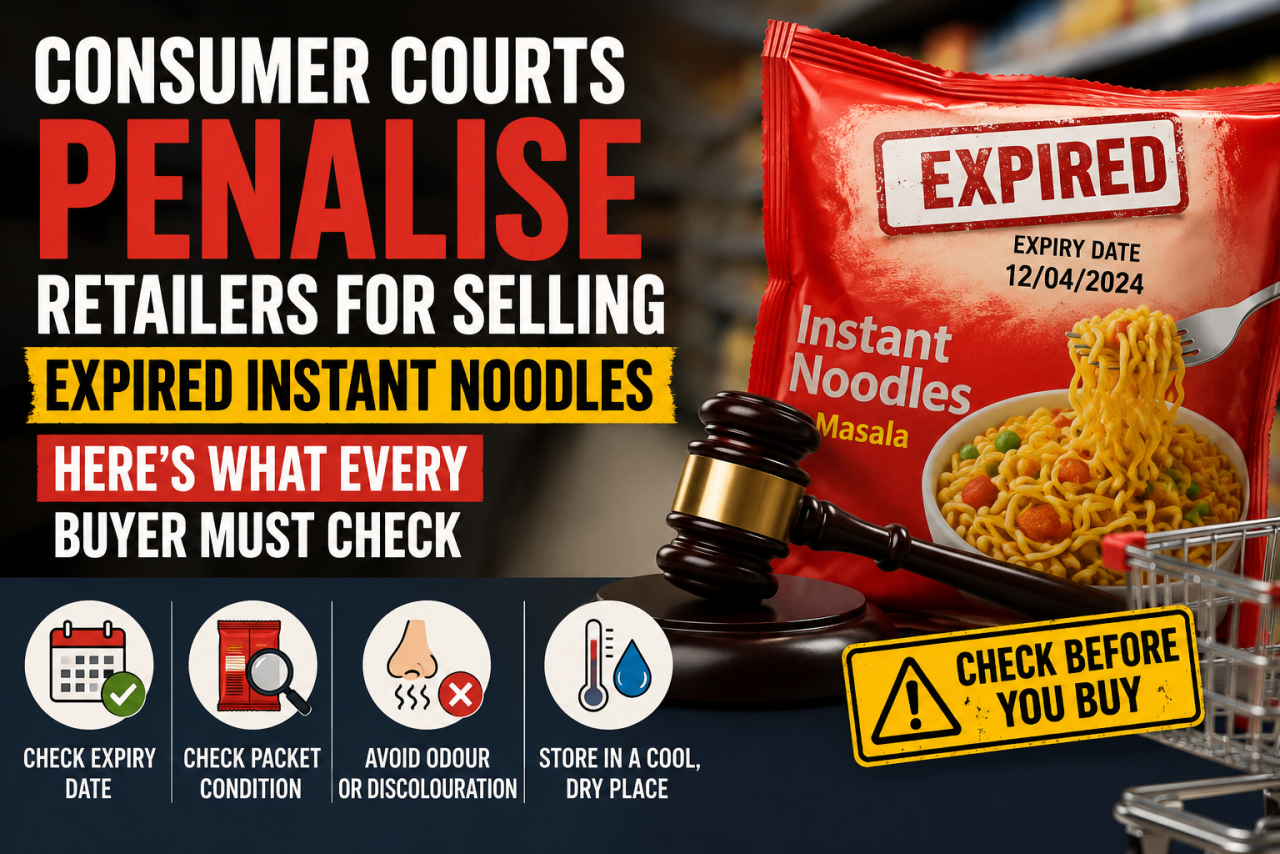
A packet of instant noodles may look perfectly safe, but if it's past its expiry date, it could pose serious health risks. Recent consumer court rulings show why checking the label matters.
Consumer courts in Himachal Pradesh and Andhra Pradesh have recently penalised retailers for selling instant noodle packets beyond their expiry date. The rulings have renewed attention on a product found in millions of Indian kitchens and reinforced a simple but often overlooked fact. Even dry, packaged food has a limited shelf life.
The judgments serve as a reminder that convenience should never come at the cost of food safety. Once an instant noodle packet crosses its expiry date, manufacturers can no longer guarantee its quality or safety, even if the product appears perfectly normal.
Why Expiry Dates Matter
According to nutritionist Kavita Devgan, consuming any packaged food after its expiry date poses unnecessary health risks. Instant noodles are designed to last longer because they are dehydrated and sealed in airtight packaging. However, that protection has limits, and the expiry date marks the period until which the manufacturer stands by the product.
Many consumers mistakenly believe that dry foods are immune to spoilage. In reality, several changes can occur inside an expired packet without any obvious warning signs.
The oil used to fry the noodle cake may oxidise and become rancid, affecting both flavour and safety. The seasoning sachet, often the most vulnerable component, can absorb moisture if its seal weakens over time, creating favourable conditions for bacteria such as Salmonella and E. coli, as well as mould. Ageing packaging can also develop tiny perforations that allow moisture, air, and contaminants to enter.
What Buyers Should Check
Before purchasing or preparing a packet of instant noodles, consumers should carefully verify the printed expiry date instead of relying solely on the appearance of the packaging.
Avoid buying packets that are puffed up, torn, punctured, or otherwise damaged, as a compromised seal significantly increases the risk of contamination. After opening the packet, discard it immediately if you notice an unusual odour, visible discolouration, or any signs of spoilage.
To preserve quality, unopened packets should be stored in a cool, dry place. Excessive heat and humidity accelerate oil oxidation and moisture absorption, reducing the product's shelf life even before the expiry date.
Extra Care for Cup Noodles
Cup noodles require additional precautions.
Nutritionist Nisha Mandal notes that most instant noodle cups are manufactured using food-grade paper with a protective lining and are safe when used according to the manufacturer's instructions. Problems arise when the container is damaged or when it is microwaved without being specifically labelled as microwave-safe. Excessive heat can cause chemicals to migrate from compromised packaging into the food.
Using clean drinking water and following the preparation instructions printed on the pack further reduces food safety risks.
What to Do If You Feel Unwell
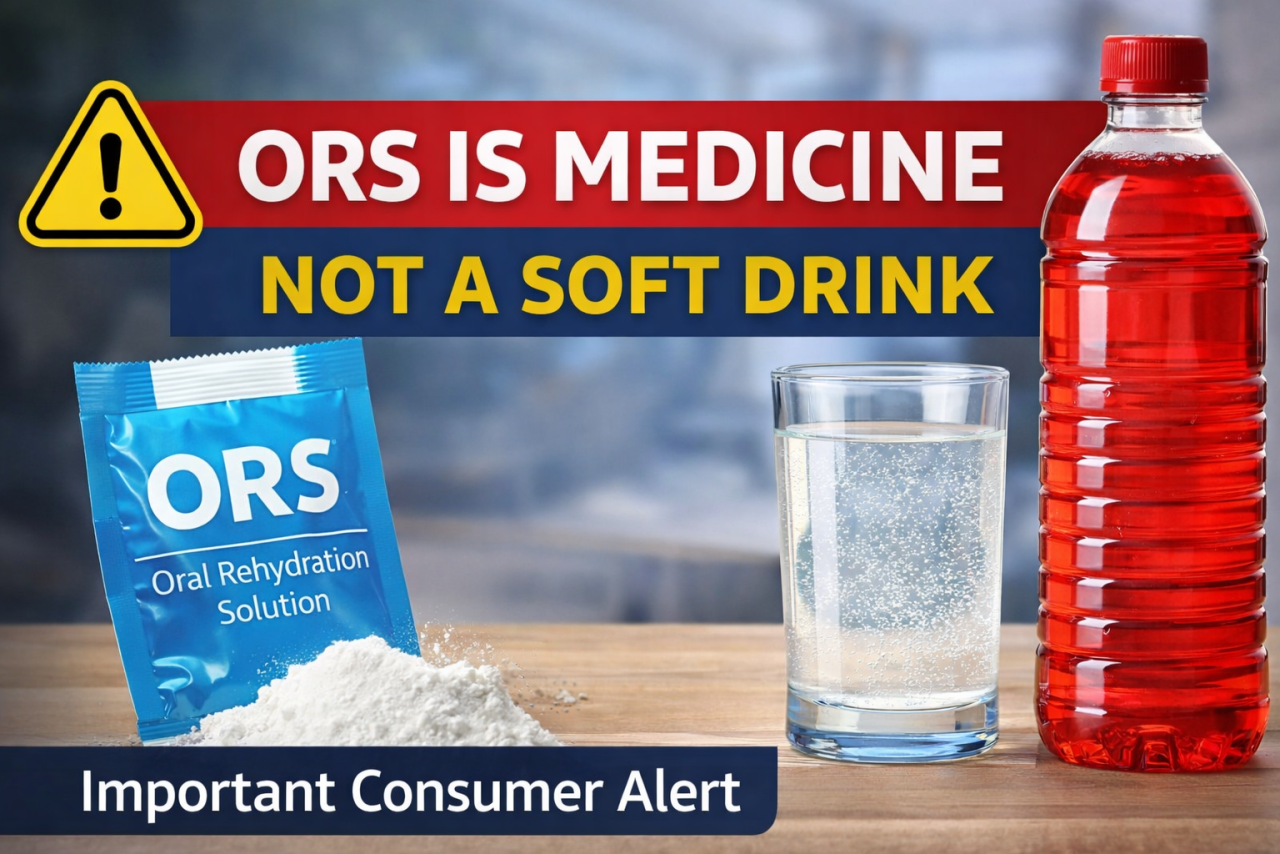
If illness develops after consuming a questionable packet, gastroenterologist Dr Vikrant Pawar, Senior Consultant at Shalby International Hospital, recommends immediate hydration with oral rehydration solution or other clear fluids.
During recovery, bland foods such as rice, bananas, curd, and toast are easier on the digestive system. Anti-diarrhoeal medicines and antibiotics should only be taken after consulting a doctor, as self-medication may mask a more serious infection.
Seek immediate medical attention if symptoms include persistent vomiting, blood in the stool, high fever, dehydration, reduced urine output, or if diarrhoea continues for more than 48 hours.
Final Take
Instant noodles remain one of India's most popular convenience foods because they are affordable, easy to prepare, and have a relatively long shelf life. However, the recent consumer court rulings underline an important reality. Their safety depends entirely on an intact package and a valid expiry date.
A few seconds spent checking the expiry date and inspecting the packaging before buying or cooking can help prevent foodborne illness and ensure that convenience never comes at the expense of health.
Consumer courts in Himachal Pradesh and Andhra Pradesh have recently penalised retailers for selling instant noodle packets beyond their expiry date. The rulings have renewed attention on a product found in millions of Indian kitchens and reinforced a simple but often overlooked fact. Even dry, packaged food has a limited shelf life.
The judgments serve as a reminder that convenience should never come at the cost of food safety. Once an instant noodle packet crosses its expiry date, manufacturers can no longer guarantee its quality or safety, even if the product appears perfectly normal.
Why Expiry Dates Matter
According to nutritionist Kavita Devgan, consuming any packaged food after its expiry date poses unnecessary health risks. Instant noodles are designed to last longer because they are dehydrated and sealed in airtight packaging. However, that protection has limits, and the expiry date marks the period until which the manufacturer stands by the product.
Many consumers mistakenly believe that dry foods are immune to spoilage. In reality, several changes can occur inside an expired packet without any obvious warning signs.
The oil used to fry the noodle cake may oxidise and become rancid, affecting both flavour and safety. The seasoning sachet, often the most vulnerable component, can absorb moisture if its seal weakens over time, creating favourable conditions for bacteria such as Salmonella and E. coli, as well as mould. Ageing packaging can also develop tiny perforations that allow moisture, air, and contaminants to enter.
What Buyers Should Check
Before purchasing or preparing a packet of instant noodles, consumers should carefully verify the printed expiry date instead of relying solely on the appearance of the packaging.
Avoid buying packets that are puffed up, torn, punctured, or otherwise damaged, as a compromised seal significantly increases the risk of contamination. After opening the packet, discard it immediately if you notice an unusual odour, visible discolouration, or any signs of spoilage.
To preserve quality, unopened packets should be stored in a cool, dry place. Excessive heat and humidity accelerate oil oxidation and moisture absorption, reducing the product's shelf life even before the expiry date.
Extra Care for Cup Noodles
Cup noodles require additional precautions.
Nutritionist Nisha Mandal notes that most instant noodle cups are manufactured using food-grade paper with a protective lining and are safe when used according to the manufacturer's instructions. Problems arise when the container is damaged or when it is microwaved without being specifically labelled as microwave-safe. Excessive heat can cause chemicals to migrate from compromised packaging into the food.
Using clean drinking water and following the preparation instructions printed on the pack further reduces food safety risks.
What to Do If You Feel Unwell
If illness develops after consuming a questionable packet, gastroenterologist Dr Vikrant Pawar, Senior Consultant at Shalby International Hospital, recommends immediate hydration with oral rehydration solution or other clear fluids.
During recovery, bland foods such as rice, bananas, curd, and toast are easier on the digestive system. Anti-diarrhoeal medicines and antibiotics should only be taken after consulting a doctor, as self-medication may mask a more serious infection.
Seek immediate medical attention if symptoms include persistent vomiting, blood in the stool, high fever, dehydration, reduced urine output, or if diarrhoea continues for more than 48 hours.
Final Take
Instant noodles remain one of India's most popular convenience foods because they are affordable, easy to prepare, and have a relatively long shelf life. However, the recent consumer court rulings underline an important reality. Their safety depends entirely on an intact package and a valid expiry date.
A few seconds spent checking the expiry date and inspecting the packaging before buying or cooking can help prevent foodborne illness and ensure that convenience never comes at the expense of health.

























Leave a Comment