
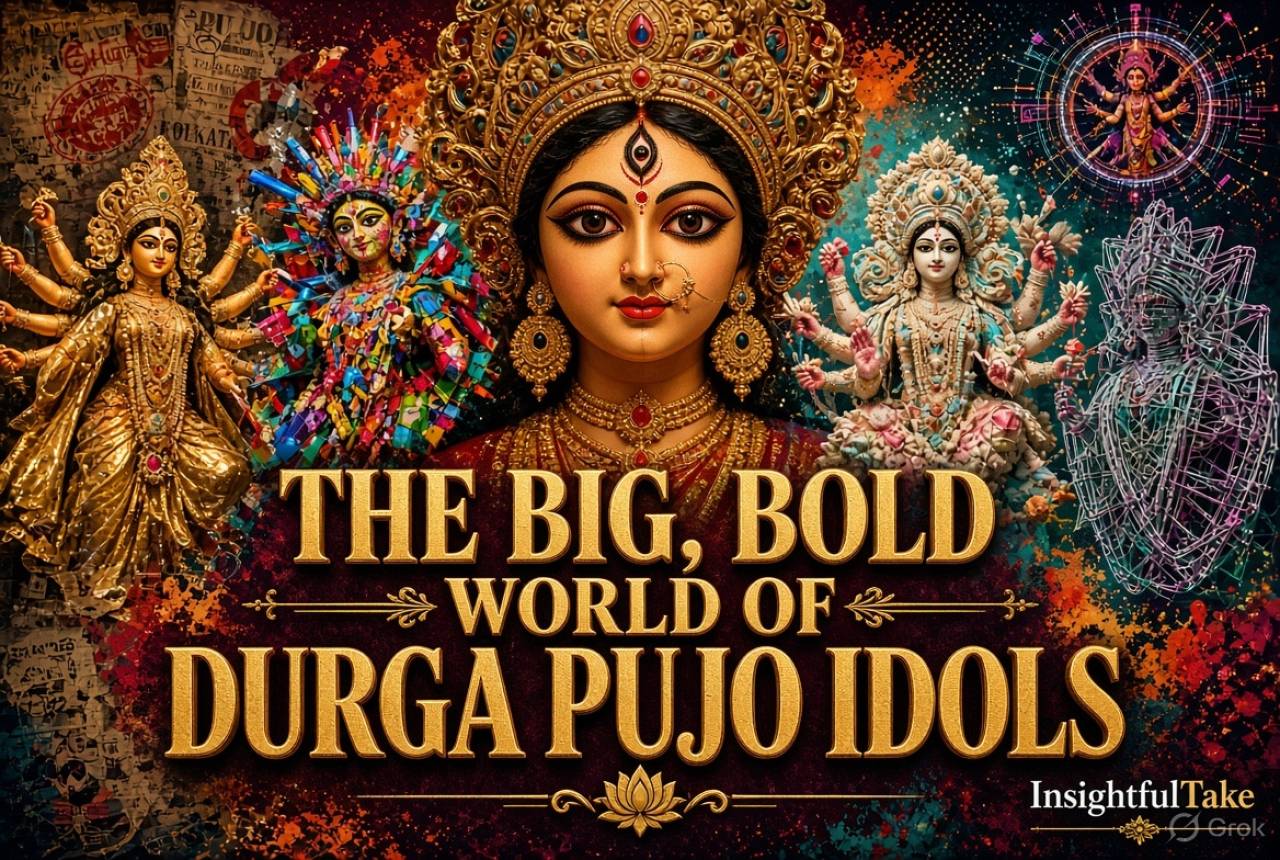
From 50,000 safety pins to recycled pens and ₹120 crore worth of gold, Durga Puja 2026 showcases how faith, art and sustainability are transforming India's pandals.
Every autumn, Durga Puja transforms India's pandals into open-air art galleries. This year, artists are reimagining the Goddess through safety pins, vegetables, recycled pens, seashells and even gold worth ₹120 crore. From Odisha's coastline to Assam, West Bengal and Bihar, these installations bring together devotion, visual storytelling, social messages and environmental awareness.
Art on the Shore: Sudarsan Pattnaik's Vegetable Durga
At Puri Beach in Odisha, Padma Shri award-winning sand artist Sudarsan Pattnaik has created an installation featuring 32 varieties of vegetables and 10 types of fruits. The Goddess's face emerges from the sand, framed by an elaborate crown decorated with paisley motifs, petal patterns and colourful produce.
Pattnaik says his aim is to celebrate the beauty of nature and encourage people to explore its creative possibilities. The choice of materials reinforces the idea behind the artwork: devotion can draw inspiration from the earth's natural bounty.
By using vegetables and fruits to create a religious icon, the installation brings together artistic expression, nature and faith in an unusual form.
50,000 Safety Pins, One Powerful Message
In Assam's Dhubri district, a seven-foot-tall Durga idol made from 50,000 safety pins has become a major attraction at the Vaishnav Sangha Durga Puja pandal. Artist Sanjib Basak chose the unconventional material to highlight women's dignity and safety.
A safety pin is a small, everyday object designed to hold things together and prevent them from coming apart. In Basak's interpretation, it becomes a symbol of protection and solidarity, connecting a familiar household item with the power of Shakti, the divine feminine.
Basak works for Assam's Disaster Management Department and has previously created Durga idols using unusual materials such as tablets, buttons, syringes and beads. His work demonstrates how traditional festival art can also serve as a platform for contemporary social commentary.
The installation invites visitors to look beyond the idol's appearance and consider the message behind its materials.
Draped in Gold: Siliguri's ₹120 Crore Spectacle
While some pandals make their mark through humble or recycled materials, others capture attention through grandeur and opulence.
The Central Colony pandal in Siliguri, West Bengal, features a Durga idol adorned with more than 100 kg of gold jewellery, reportedly valued at ₹120 crore. The display is housed within an ISKCON-inspired structure and sponsored by a jewellery brand. The ornaments have been loaned for the festival rather than donated permanently.
Given the enormous value of the jewellery, the pandal operates under tight security. An eight-foot barricade, round-the-clock monitoring and more than 100 volunteers help manage the arrangements.
The spectacle highlights another dimension of Durga Puja: its ability to bring together religious devotion, traditional craftsmanship, corporate sponsorship and large-scale public display.
For visitors, the gold-adorned Goddess offers a striking contrast to installations made from everyday objects and natural materials. Both approaches, however, demonstrate how artists and organisers use visual creativity to make the festival memorable.
Patna's Seashell Makeover
Patna, too, has joined this wave of experimentation. Artist Jitendra Kumar has created a Durga idol using seashells as part of a series of unconventional installations prepared ahead of the festival.
With textured seashell ornamentation set against a vivid blue backdrop, the Goddess takes on a distinctive appearance. The installation demonstrates that Bihar's capital is also contributing to the evolving visual language of Durga Puja.
Other idols in the series are reportedly made using natural materials such as spices, including cardamom and cinnamon. These choices turn familiar objects into artistic resources, challenging the idea that elaborate religious sculptures must rely on conventional materials.
Such experiments also highlight the role of local artists in expanding the festival's creative possibilities while retaining its devotional character.
Dragons, Recycled Pens and a Promise to Recycle
In Kolkata's Kalighat area, the Tridhara Sammilani pandal takes visitors into a world of fantasy. Its theme features giant dragon sculptures symbolising evil, flanking a 5.5-foot Durga idol created by artist Chandra Nath Saha using 13,000 recycled plastic pens and refills.
The pandal is described as featuring India's first Durga idol made from recycled plastic pens. But the choice of material is only part of the story. Its planned afterlife makes the installation particularly noteworthy.
Instead of being immersed in the Ganga after the festival, the idol will be dismantled and recycled. This approach addresses a persistent environmental concern associated with idol immersion, particularly the pollution caused by non-biodegradable materials entering rivers.
The installation offers a practical example of how festival organisers can preserve artistic ambition while reconsidering the environmental consequences of traditional celebrations.
By turning discarded pens into an image of the Goddess, the artwork also asks visitors to reconsider the value of materials that would otherwise be thrown away.
What These Installations Tell Us
Taken together, these Durga Puja installations reveal three important trends in the evolution of festival art.
Sustainability is becoming part of the creative process. Recycled pens, vegetables, fruits, seashells and other unconventional materials show how artists are exploring alternatives to conventional decorative resources. The planned recycling of the Kolkata idol takes this idea further by addressing what happens after the festival ends.
Social messages are entering sacred spaces. The safety-pin Durga in Assam transforms an everyday object into a statement about women's dignity and safety. It shows how religious art can encourage public reflection on issues that extend beyond the festival itself.
Devotion and spectacle continue to coexist. From Siliguri's gold-adorned Goddess to Kolkata's fantasy-themed pandal, Durga Puja embraces a wide range of artistic expressions. Grand displays attract attention, while installations made from ordinary or discarded materials invite visitors to think about creativity, society and the environment.
Smartphones and social media have also expanded the reach of these installations. A striking pandal can now attract attention far beyond its immediate neighbourhood, giving artists new audiences and making visual innovation an increasingly important part of festival culture.
A Festival That Keeps Reinventing Itself
Durga Puja has long been more than a religious ritual. It is a community celebration, a public art movement and an economic ecosystem involving artisans, sculptors, decorators, volunteers, sponsors and local businesses.
This year's installations demonstrate how tradition and innovation can coexist. Artists are not abandoning the familiar image of Goddess Durga. Instead, they are finding new ways to interpret it through the materials they select, the stories they tell and the concerns they bring into public view.
Whether fashioned from 50,000 safety pins, assembled from 13,000 recycled pens or adorned with gold worth ₹120 crore, each installation offers a different perspective on the festival.
The contrast is striking. One artist uses an everyday object to raise questions about women's safety. Another turns discarded plastic into a religious sculpture designed for recycling. Elsewhere, vegetables, seashells and precious jewellery become part of the visual celebration of the Goddess.
Together, these works show that faith and creativity need not remain confined to established forms. By reimagining Durga, India's artists are also exploring how a centuries-old tradition can engage with contemporary concerns, from sustainability and social responsibility to the limitless possibilities of artistic expression.























Leave a Comment