
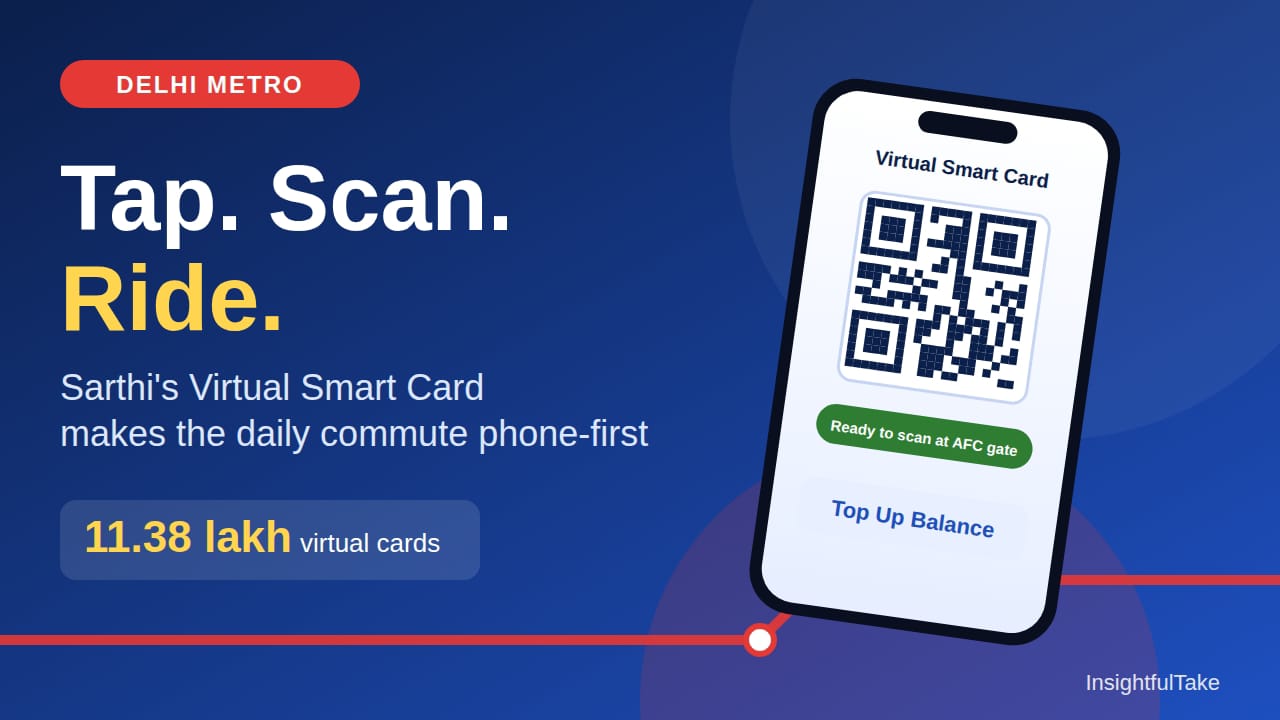
A growing number of commuters are turning to smartphone-based QR access for their daily metro journeys, signalling a shift towards simpler digital mobility in the capital.
Scanning a QR code has become a routine part of urban life in India. From cinema halls and concert venues to stadiums and public events, a quick scan often replaces the need for a physical ticket. The same convenience is now finding favour among Delhi Metro commuters, with the Virtual Smart Card feature on the Delhi Metro Sarthi app gaining traction.
Powered by Autope, Sarthi offers commuters a smartphone-based way to access the Delhi Metro network. Its Virtual Smart Card allows users to generate and recharge a QR-based pass on their phones and use it to enter and exit through Automatic Fare Collection (AFC) gates. The feature reduces dependence on physical smart cards and offers an alternative for people who prefer managing their travel digitally.
Virtual Smart Cards See Rising Adoption
The growing use of the feature suggests that smartphone-based metro access is becoming a regular travel option for many commuters.
Since January 2026, Sarthi has recorded 11.38 lakh Virtual Smart Card generations, while repeat usage has increased by approximately 215 per cent over the past nine months. During the same period, the platform facilitated 107.09 lakh QR-based transactions.
These figures indicate rising engagement with digital ticketing and travel services. They also point to an opportunity for technology providers to make public transport easier to access, particularly for passengers who are already comfortable using smartphones for payments, bookings and other everyday activities.
College students and young professionals are among the groups for whom such services may hold particular appeal. Having metro access on a device they already carry throughout the day can reduce the need to manage an additional card and make routine journeys more convenient.
One App for Multiple Travel Needs
The Virtual Smart Card is part of Autope's broader effort to bring different aspects of urban mobility onto a single digital platform.
The Sarthi app offers QR tickets, journey planning, first- and last-mile connectivity, locker facilities and station information. By bringing these services together, the platform aims to help commuters plan and manage more of their journeys without switching between multiple systems.
Autope has also taken steps to improve the ticket-booking experience for the Regional Rapid Transit System (RRTS) and Indian Railways Catering and Tourism Corporation (IRCTC). The company now wants to increase awareness of these services and encourage more commuters to explore the options available through the app.
The broader objective is to make digital mobility services more accessible and useful in everyday travel, rather than limiting the app to ticket purchases alone.
Autope Sees Scope for Further Growth
Pankaj Gambhir, Managing Director of Autope, believes that technology delivers meaningful value when it addresses routine problems through simple and intuitive solutions.
The company's approach, he says, centres on offering commuters convenient digital options and refining the user experience in response to how people actually use the platform.
Gambhir has described the response to Virtual Smart Cards as encouraging, with Autope looking to build on the momentum through service improvements and greater commuter outreach.
Awareness will be important to sustaining this growth. Even when a digital feature is available, commuters may continue using familiar methods unless they understand its benefits and know how to access it.
Convenience Must Work in Practice
The move towards phone-based travel reflects changing expectations from public transport. As people increasingly use smartphones to order food, make payments and book tickets, they may also expect their daily commute to involve fewer steps and less time spent at counters.
However, digital convenience comes with practical considerations. A phone-based system depends on a charged device, reliable QR-code scanning and gates that process transactions smoothly. Passengers may also face difficulties if their phones are unavailable or the app does not work as expected. Physical smart cards and tokens will therefore continue to serve commuters who prefer traditional options or need an alternative.
The success of digital ticketing will depend not only on adoption figures but also on reliability, ease of use and the availability of alternatives.
For a city that moves millions of people every day, even small improvements in the commuting experience can make a difference. The generation of more than 11 lakh Virtual Smart Cards since January 2026 suggests that phone-based metro access is attracting considerable interest.
Whether this momentum continues will depend on how effectively Autope improves the service and reaches new users. For now, Sarthi's growing usage offers a glimpse of a more smartphone-driven approach to urban travel in Delhi, where a QR code on a screen can become another everyday tool for getting across the city.























Leave a Comment