
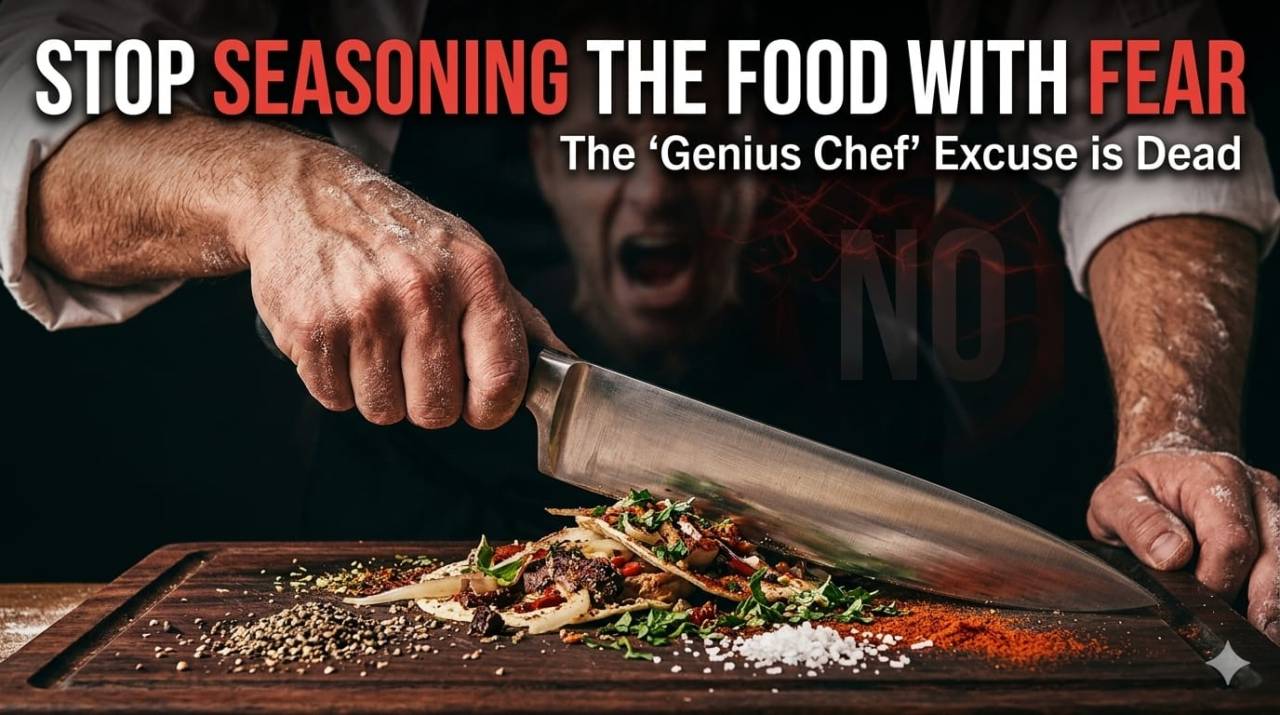
The era of the screaming genius chef is ending—and the industry has no excuse left to defend it.
For decades, the fine-dining world operated under a strange and troubling assumption: if the food was extraordinary, the behavior behind the kitchen doors didn’t matter. Culinary brilliance became a shield—one that allowed some of the industry’s most celebrated chefs to escape scrutiny for toxic conduct.
We elevated chefs to near-mythical status, where accolades like Michelin stars were seen as proof not just of skill, but of authority—unchecked and unquestioned. The fiery outbursts of Marco Pierre White and the explosive persona of Gordon Ramsay didn’t just define kitchen culture—they became part of its appeal. Aggression was reframed as passion. Intimidation was mistaken for leadership.
But that narrative is no longer holding up.
When the Best Isn’t Good Enough
Noma—once hailed as the world’s best restaurant—became a turning point. Reports of harsh working conditions and the treatment of unpaid interns cracked the polished façade of culinary excellence.
If even the pinnacle of global gastronomy is entangled in such controversies, it forces an uncomfortable question: why did we ever accept the idea that great food must come from a place of fear?
The “Military Kitchen” Myth
To understand how this culture took root, one must look back to the brigade system—a rigid hierarchy developed in 19th-century France. Modeled after military structures, it placed the head chef at the top as an unquestionable authority figure.
In theory, the system ensured discipline and efficiency. In practice, it often fostered environments where shouting, humiliation, and extreme pressure became normalized.
But the comparison to warfare has always been flawed. Cooking, however demanding, is not a battlefield. High-stakes professions like medicine or aviation require precision and composure—yet they do not rely on fear to function. The kitchen shouldn’t either.
How We Enabled It
The industry didn’t evolve in isolation. It was shaped—and sustained—by public fascination.
- The “Bad Boy” Brand: Television and media turned aggressive chefs into cultural icons. Shows built around confrontation and chaos attracted massive audiences, reinforcing the idea that intensity equals excellence.
- Selective Blindness: As diners, critics, and viewers, we focused on the final plate—the artistry, the presentation, the experience. What happened behind the scenes was conveniently ignored. Long hours, emotional strain, and toxic hierarchies became invisible costs of a “perfect” meal.
A New Definition of Excellence
That old model is losing credibility. A new generation within the culinary world is pushing back, rejecting the idea that suffering is a prerequisite for success.
Even industry leaders are beginning to acknowledge the need for change. René Redzepi, the visionary behind Noma, has openly discussed seeking therapy to address his own behavior. It’s a significant admission—but more importantly, it signals a shift.
Leadership in kitchens is being redefined. Today, respect, mentorship, and emotional intelligence are emerging as the true markers of excellence. A great chef is no longer just someone who creates extraordinary food, but someone who builds an environment where others can thrive.
Final Take
A meal cannot be considered perfect if it comes at the cost of human dignity. The industry is beginning to understand that brilliance doesn’t require brutality.
The romance of the “tortured genius” is fading—and rightly so. It’s time to stop glorifying chaos and start valuing the people behind the craft.
Because in the end, the finest ingredient in any kitchen isn’t fear—it’s respect.






















Leave a Comment