
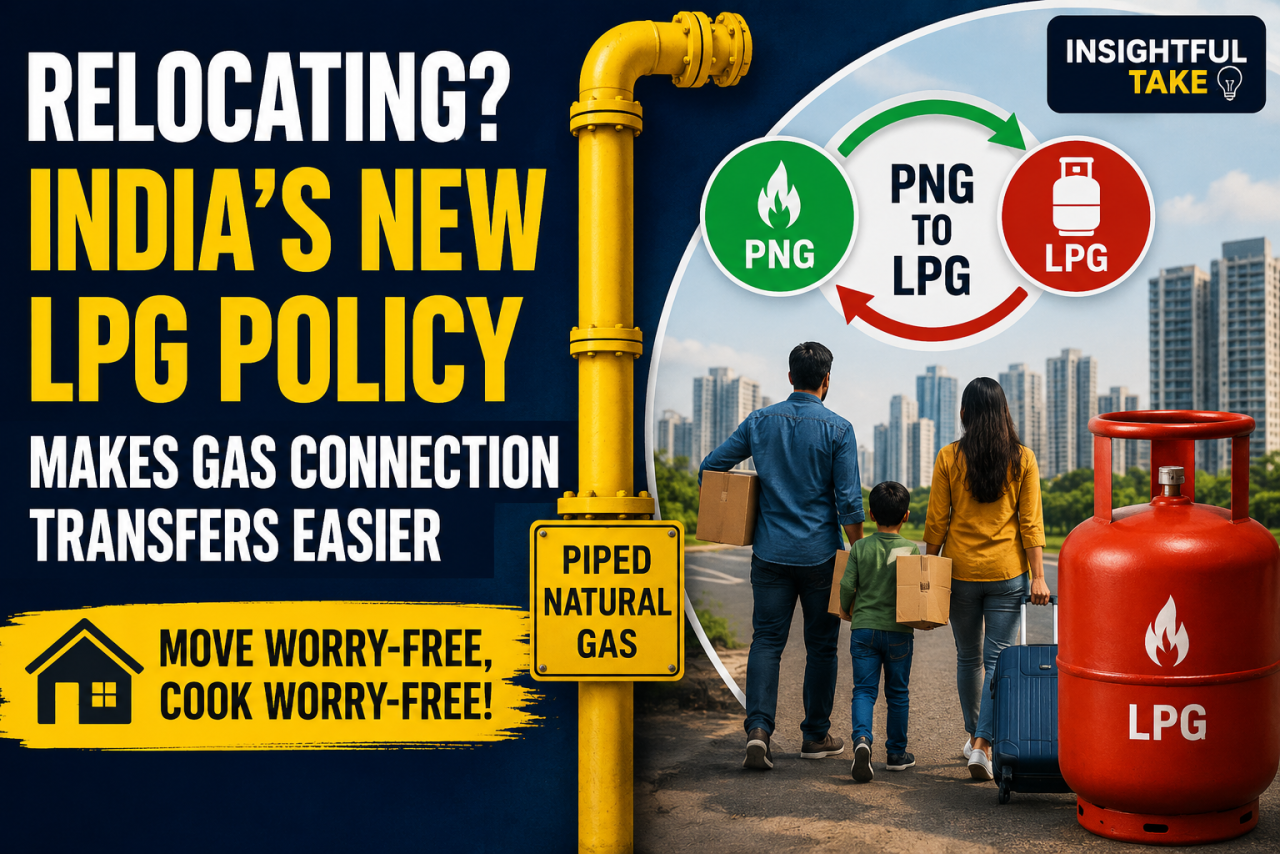
India’s latest LPG policy offers relief to families worried about losing cooking gas access after relocating from PNG-enabled cities.
Moving to a new city often comes with many challenges. People have to arrange housing, transport, schools, and daily essentials. One important concern for many families is cooking fuel. In recent years, many urban households shifted from LPG cylinders to Piped Natural Gas (PNG) because it is more convenient and does not require carrying heavy cylinders. However, problems started when people moved to places where PNG facilities were not available.
To solve this issue, the Government of India has introduced a new policy that makes it easier for people to restore their LPG connections after shifting homes. The change is expected to help millions of families, especially those who frequently relocate due to jobs, studies, or tenancy changes.
Why the Earlier Rule Created Problems
In March 2026, the government introduced a rule that required households to surrender their LPG connections after getting a PNG connection. The aim was to stop misuse of subsidised LPG cylinders and improve fuel distribution across the country.
Under the earlier system, people who had switched to PNG were not allowed to apply for another domestic LPG connection easily. While the rule looked practical from an administrative point of view, it created difficulties for many mobile families.
For example, a person living in a metro city with PNG facilities could later be transferred to a smaller town where PNG pipelines had not yet reached. In such cases, families suddenly found themselves without an easy cooking fuel option. Students, tenants, migrant workers, and employees with transferable jobs were among the worst affected.
The government recognised these difficulties and decided to relax the rules.
What the New LPG Policy Says
The new amendment, called the Liquefied Petroleum Gas (Regulation of Supply and Distribution) Amendment Order, 2026, gives consumers more flexibility.
Under the revised rules, people who shift to PNG now have safer and easier options if they need LPG again in the future.
1. Thirty-Day Transition Option
Consumers can officially close or surrender their LPG connection within 30 days after getting a working PNG connection. This helps maintain proper consumer records while allowing a smooth transition from cylinders to piped gas.
2. Transfer Voucher Facility
The most important change is the introduction of a transfer voucher system. This voucher acts like an assurance from the government. If a family later moves to an area where PNG is unavailable, they can use the voucher to restore their LPG connection more easily.
This step gives relief to people who were worried that switching to PNG could create problems later if they relocated.
Why This Policy Matters
The amendment is important because India is becoming increasingly mobile. Many professionals change cities for work, students move for education, and tenants often shift homes within short periods. A rigid gas connection system no longer suits modern lifestyles.
The new policy also encourages more people to adopt PNG without fear of losing access to LPG permanently. Earlier, many households hesitated to switch to PNG because they were unsure about future relocation. The new rules reduce that uncertainty.
At the same time, the government is trying to balance consumer convenience with energy management. India imports a large share of its LPG requirements from other countries. Global tensions and disruptions in international shipping routes can affect fuel supplies and prices. Because of this, the government wants to use resources carefully while also ensuring that citizens do not face hardships.
India’s Growing Gas Network
India’s cooking fuel system has expanded rapidly over the last decade. The number of domestic LPG connections has increased significantly, helping more households gain access to cleaner cooking fuel.
PNG infrastructure has also grown in many cities. More homes are being connected to piped gas networks, especially in urban areas. However, many towns and semi-urban regions still do not have PNG pipelines. This uneven availability makes flexible policies necessary.
The government has also promoted cleaner fuel through various schemes and infrastructure projects. As India’s energy network expands, policies like this help make the transition smoother for ordinary citizens.
What Consumers Should Know
For consumers, the biggest advantage of the new policy is peace of mind. Families no longer need to worry that switching to PNG will permanently cut them off from LPG access in the future.
The transfer voucher system is especially useful for people with uncertain living situations or transferable jobs. It creates a practical bridge between traditional LPG cylinders and modern piped gas systems.
The amendment also reflects a more consumer-friendly approach from policymakers. Instead of forcing people to choose one system permanently, the government has now allowed flexibility according to changing needs.
Final Take
India is slowly moving toward a modern and cleaner energy system, but the country’s diverse living conditions require practical solutions. The new LPG amendment recognises that people’s lives are not fixed and that fuel access should remain simple even when families move from one place to another.
By making it easier to restore LPG connections after shifting from PNG areas, the government has reduced a major concern for millions of households. The policy not only supports consumer convenience but also strengthens confidence in India’s growing gas infrastructure.
Moving to a new city often comes with many challenges. People have to arrange housing, transport, schools, and daily essentials. One important concern for many families is cooking fuel. In recent years, many urban households shifted from LPG cylinders to Piped Natural Gas (PNG) because it is more convenient and does not require carrying heavy cylinders. However, problems started when people moved to places where PNG facilities were not available.
To solve this issue, the Government of India has introduced a new policy that makes it easier for people to restore their LPG connections after shifting homes. The change is expected to help millions of families, especially those who frequently relocate due to jobs, studies, or tenancy changes.
Why the Earlier Rule Created Problems
In March 2026, the government introduced a rule that required households to surrender their LPG connections after getting a PNG connection. The aim was to stop misuse of subsidised LPG cylinders and improve fuel distribution across the country.
Under the earlier system, people who had switched to PNG were not allowed to apply for another domestic LPG connection easily. While the rule looked practical from an administrative point of view, it created difficulties for many mobile families.
For example, a person living in a metro city with PNG facilities could later be transferred to a smaller town where PNG pipelines had not yet reached. In such cases, families suddenly found themselves without an easy cooking fuel option. Students, tenants, migrant workers, and employees with transferable jobs were among the worst affected.
The government recognised these difficulties and decided to relax the rules.
What the New LPG Policy Says
The new amendment, called the Liquefied Petroleum Gas (Regulation of Supply and Distribution) Amendment Order, 2026, gives consumers more flexibility.
Under the revised rules, people who shift to PNG now have safer and easier options if they need LPG again in the future.
1. Thirty-Day Transition Option
Consumers can officially close or surrender their LPG connection within 30 days after getting a working PNG connection. This helps maintain proper consumer records while allowing a smooth transition from cylinders to piped gas.
2. Transfer Voucher Facility
The most important change is the introduction of a transfer voucher system. This voucher acts like an assurance from the government. If a family later moves to an area where PNG is unavailable, they can use the voucher to restore their LPG connection more easily.
This step gives relief to people who were worried that switching to PNG could create problems later if they relocated.
Why This Policy Matters
The amendment is important because India is becoming increasingly mobile. Many professionals change cities for work, students move for education, and tenants often shift homes within short periods. A rigid gas connection system no longer suits modern lifestyles.
The new policy also encourages more people to adopt PNG without fear of losing access to LPG permanently. Earlier, many households hesitated to switch to PNG because they were unsure about future relocation. The new rules reduce that uncertainty.
At the same time, the government is trying to balance consumer convenience with energy management. India imports a large share of its LPG requirements from other countries. Global tensions and disruptions in international shipping routes can affect fuel supplies and prices. Because of this, the government wants to use resources carefully while also ensuring that citizens do not face hardships.
India’s Growing Gas Network
India’s cooking fuel system has expanded rapidly over the last decade. The number of domestic LPG connections has increased significantly, helping more households gain access to cleaner cooking fuel.
PNG infrastructure has also grown in many cities. More homes are being connected to piped gas networks, especially in urban areas. However, many towns and semi-urban regions still do not have PNG pipelines. This uneven availability makes flexible policies necessary.
The government has also promoted cleaner fuel through various schemes and infrastructure projects. As India’s energy network expands, policies like this help make the transition smoother for ordinary citizens.
What Consumers Should Know
For consumers, the biggest advantage of the new policy is peace of mind. Families no longer need to worry that switching to PNG will permanently cut them off from LPG access in the future.
The transfer voucher system is especially useful for people with uncertain living situations or transferable jobs. It creates a practical bridge between traditional LPG cylinders and modern piped gas systems.
The amendment also reflects a more consumer-friendly approach from policymakers. Instead of forcing people to choose one system permanently, the government has now allowed flexibility according to changing needs.
Final Take
India is slowly moving toward a modern and cleaner energy system, but the country’s diverse living conditions require practical solutions. The new LPG amendment recognises that people’s lives are not fixed and that fuel access should remain simple even when families move from one place to another.
By making it easier to restore LPG connections after shifting from PNG areas, the government has reduced a major concern for millions of households. The policy not only supports consumer convenience but also strengthens confidence in India’s growing gas infrastructure.














Leave a Comment