
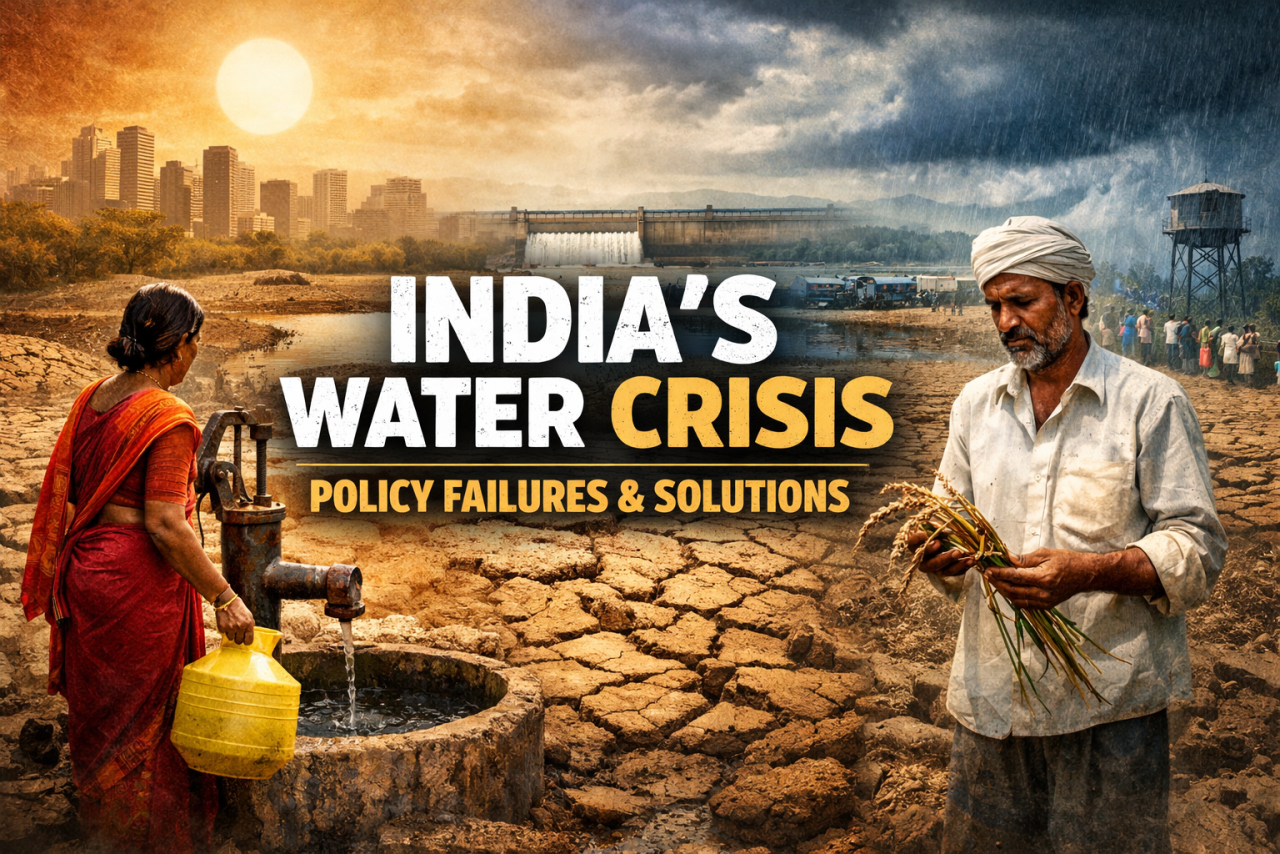
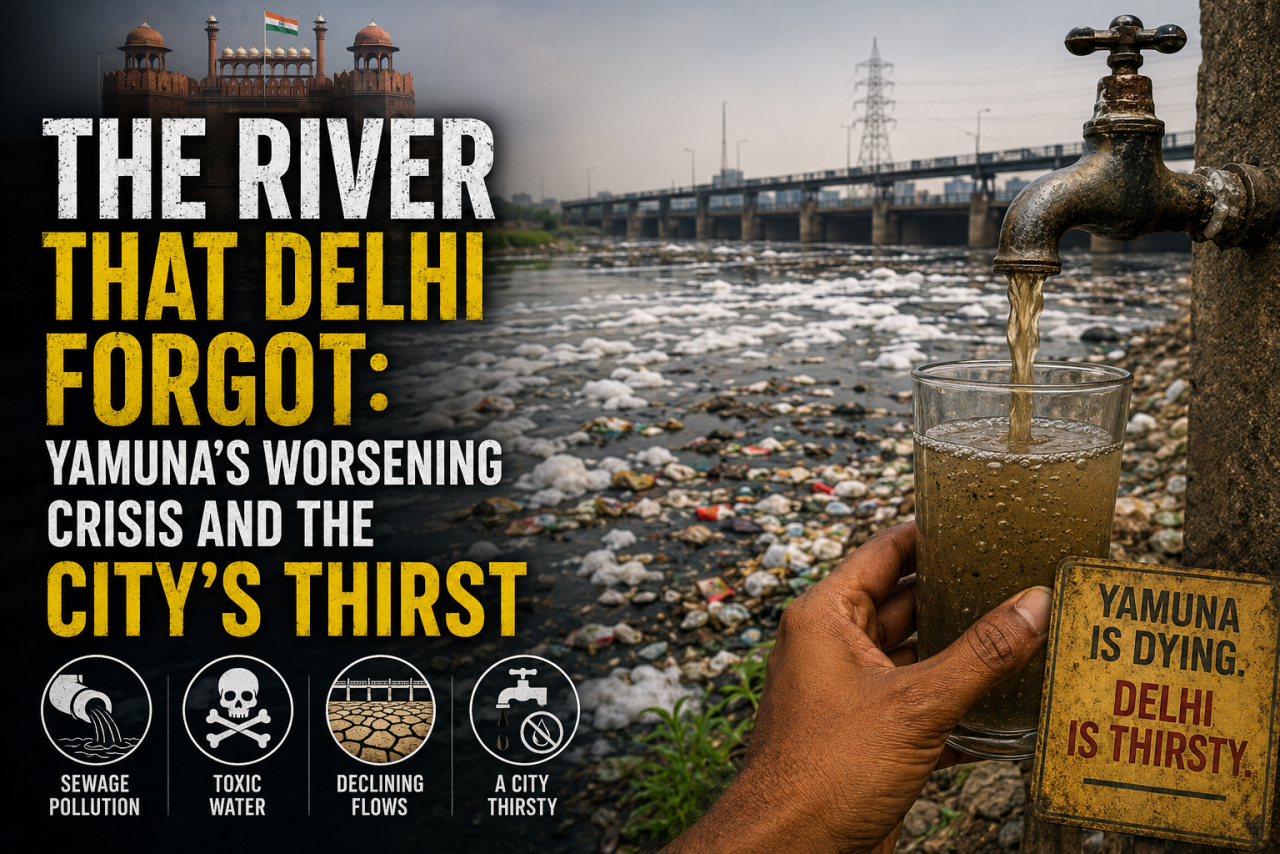
Every summer, the same scenes return across India. Long queues form around water tankers in cities. Wells run dry in villages. Farmers wait for rains that do not arrive on time. For many households, access to water still depends on tankers, handpumps, or uncertain supply. Water stress is no longer a distant threat. It is a daily reality.
India is not facing a water shortage alone. It is facing a water management crisis.
Water conservation is now a core policy issue. It affects agriculture, public health, and economic growth. India supports nearly 18% of the world’s population but has only about 4% of global freshwater resources. This gap is widening due to rising demand and climate pressure.
The scale of the crisis is large. India is one of the biggest users of groundwater. Around 85% of groundwater is used for agriculture. This has led to rapid depletion. In states like Rajasthan, most groundwater blocks are overexploited. In Punjab, water levels continue to fall each year. In many regions, water is not just scarce but unsafe. Contamination from fluoride and heavy metals has made drinking water a serious concern.
Urban India faces a different challenge. Cities are expanding fast. Natural water bodies are shrinking. Rainwater does not get enough space to recharge the ground. Many cities depend on distant rivers and reservoirs. This increases cost and risk. A delayed monsoon or weak rainfall can disrupt supply for millions.
India receives significant rainfall every year. Yet many regions face water shortages. This shows that the problem is not availability alone but storage and distribution.
The causes of this crisis are deeply linked to policy and behaviour.
Agriculture plays a central role. Water-intensive crops like paddy and sugarcane are grown in dry regions. This happens because of price support systems. Farmers follow market signals, not water availability.
Irrigation methods also add to the problem. Flood irrigation is still common. It uses more water than needed. Efficient systems like drip irrigation are available but not widely used.
Groundwater use remains weakly regulated. Farmers can extract water with little restriction. Power subsidies make pumping cheap. This encourages overuse.
Water governance is fragmented. Different agencies handle water at different levels. Coordination is often weak. This slows down decision-making and implementation.
Rainwater harvesting remains underused. A large share of rainfall is lost due to poor storage and weak local systems.
The Government of India has taken several steps to address the crisis. The Jal Jeevan Mission has expanded access to tap water in rural areas. At the start of the programme, only a small share of households had tap connections. Today, most rural homes are covered. This has improved access to drinking water.
The mission also focuses on water quality. Local communities are being trained to test water. Laboratories have been set up across districts. This helps in early detection of contamination.
The Jal Shakti Abhiyan focuses on water conservation. It promotes rainwater harvesting and groundwater recharge. Many water structures have been created under this programme.
Schemes like the Pradhan Mantri Krishi Sinchayee Yojana promote efficient irrigation. The Atal Bhujal Yojana focuses on groundwater management with community participation. These efforts aim to improve efficiency and reduce waste.
Yet, gaps remain between intent and impact.
There is a clear gap between infrastructure creation and long-term sustainability. In many areas, pipelines have been laid but water sources remain weak. This leads to irregular supply.
Funding delays have slowed progress in some states. Projects lose pace when funds are not released on time.
Water quality continues to be a concern in rural areas. Access does not always mean safe water.
There is also limited focus on managing demand. Policies often focus on increasing supply instead of reducing consumption.
Climate change is intensifying the crisis. Rainfall patterns are becoming unpredictable. Droughts are more frequent. This affects both supply and groundwater recharge.
Water is no longer just a resource in India. It is becoming a risk.
India needs a shift in approach.
Crop patterns must change. Farmers should be encouraged to grow less water-intensive crops. Incentives can support this transition.
Water use must become more efficient. Micro-irrigation should be expanded. Wastewater reuse should be promoted.
Rainwater harvesting needs to be scaled up. Both urban and rural areas need better storage systems. Local water bodies must be restored.
Governance reforms are critical. Water management should involve local communities. Decentralised systems can improve accountability.
India’s next major development challenge may not be only economic growth. It may be water security. Without sustainable water management, growth itself can slow down.




















Leave a Comment