

India dreams of becoming a Vishwa Guru, but over 93,000 schools have closed in a decade. Can global leadership be built while classrooms continue to disappear across the country?
India's aspiration to become Vishwa Guru, a global teacher and knowledge leader, has become one of the defining themes of Prime Minister Narendra Modi's vision for the country. From the revival of Nalanda University's legacy to the promotion of yoga, Ayurveda, artificial intelligence, and the National Education Policy (NEP) 2020, the intension is clear. India seeks to emerge not merely as an economic power but as a civilizational force capable of shaping the world's future.
The ambition is inspiring. Yet official education data presents an uncomfortable contradiction.
Over the past decade, India has witnessed the closure or merger of more than 93,000 schools. That translates to roughly 25 schools disappearing every single day.
The numbers raise an important question. Can a nation aspire to teach the world while steadily reducing access to its own foundational education system?
The Numbers Behind the Concern
Data presented by the Ministry of Education in Parliament shows that the total number of schools in India declined from approximately 11.07 lakh in 2014-15 to around 10.13 lakh in 2024-25.
Government schools accounted for most of this decline. States such as Uttar Pradesh, Madhya Pradesh, Odisha and Jharkhand recorded significant reductions in the number of public schools. Thousands more schools have reportedly been merged or shut during 2025-26 as states continue implementing school rationalisation policies.
At the same time, private schools have continued to expand, reflecting a steady shift in parental preference toward institutions perceived to offer better educational quality.
The Government's Case for Rationalisation
The government maintains that these closures do not represent the collapse of public education but rather its restructuring.
Under NEP 2020, many schools with extremely low enrolment, severe teacher shortages or duplicate infrastructure are being merged with nearby institutions. Officials argue that concentrating students and teachers in larger schools enables better facilities, improved pupil-teacher ratios and more efficient use of public resources.
Several demographic factors also support this argument. Falling fertility rates have reduced the number of school-age children in many regions. Rural migration has emptied villages, while increasing urbanisation has shifted demand toward city schools. In many locations, maintaining schools with only a handful of students has become financially difficult.
Viewed from this perspective, rationalisation appears to be an administrative necessity rather than an educational failure.
When Efficiency Meets Reality
However, the debate changes when viewed from the perspective of the child rather than the balance sheet.
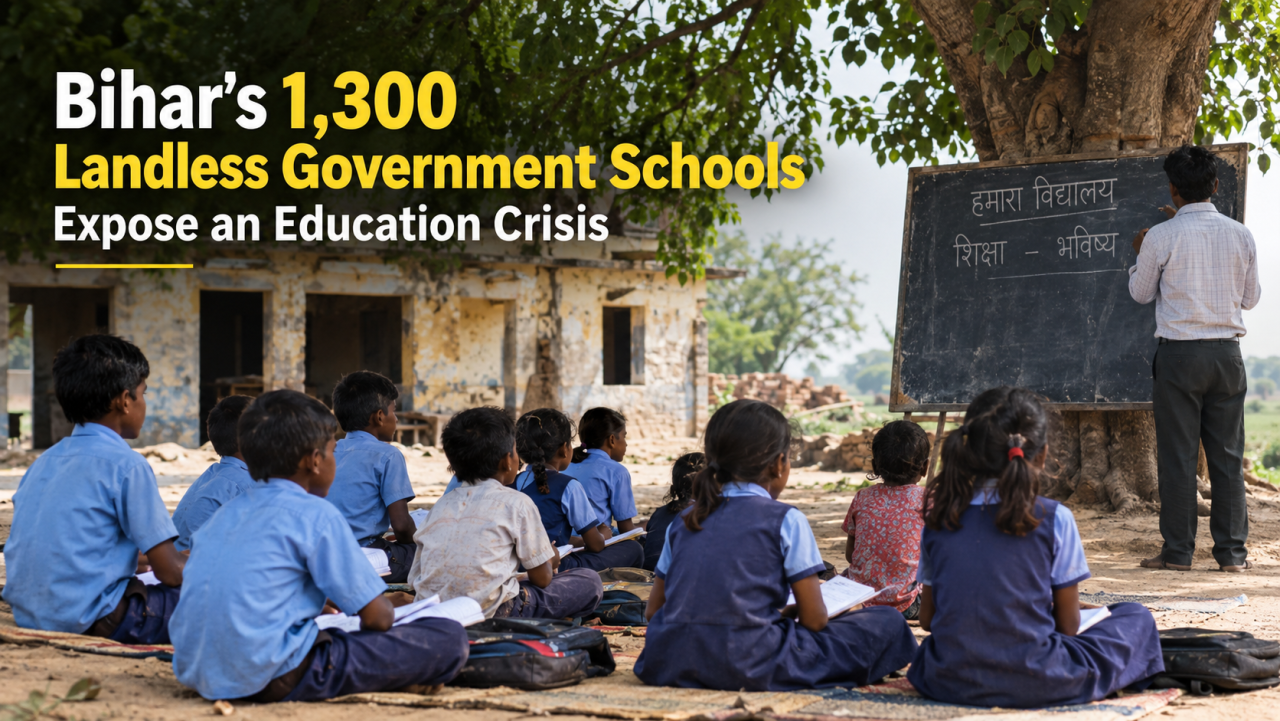
For millions of families in rural India, a government school is not simply another public institution. It is often the only accessible educational facility within walking distance.
When neighbourhood schools disappear, children frequently have to travel much farther to continue their education. This creates additional challenges for younger students and particularly for girls, whose schooling is often affected by concerns over safety, transport and household responsibilities.
Education researchers have repeatedly warned that longer travel distances increase the likelihood of absenteeism and school dropouts. Marginalised communities including Scheduled Castes, Scheduled Tribes and economically weaker families are disproportionately affected because private schools remain either unaffordable or geographically inaccessible.
A village school also serves as a social institution. Beyond classrooms, it functions as a community space that strengthens local participation, supports government welfare schemes and encourages educational continuity across generations.
Replacing that presence with a larger but more distant school may improve administrative efficiency while weakening educational access.
A Question of Priorities
India's Vishwa Guru vision rests on becoming a global knowledge hub. It seeks to attract international students, strengthen higher education, promote research, lead in emerging technologies and revive India's intellectual heritage.
These are important goals.
Yet world-class universities cannot compensate for weaknesses in foundational schooling.
Every scientist, engineer, entrepreneur and teacher begins in a primary classroom. If that first step becomes inaccessible or unequal, the entire educational pyramid weakens.
National learning assessments have repeatedly highlighted concerns about foundational literacy and numeracy among schoolchildren. While digital education, smart classrooms and elite institutions receive considerable attention, the quality of elementary education continues to determine the long-term strength of India's human capital.
A country cannot sustainably lead the global knowledge economy if millions of its own children struggle to access quality schooling.
The Challenge Is Not Closing Schools but Protecting Learning
The issue is not whether every low-enrolment school should remain open indefinitely. Some consolidation may indeed be necessary.
The real question is whether school mergers are accompanied by adequate safeguards.
Students should have reliable transportation. Receiving schools must possess sufficient classrooms, trained teachers and basic infrastructure before additional children are transferred. Digital learning should complement, not replace, physical access. Most importantly, governments should monitor educational outcomes after mergers rather than measuring success solely through administrative efficiency.
States that have invested consistently in teacher quality, early childhood education, mother-tongue instruction and school infrastructure demonstrate that stronger public education systems can coexist with efficient governance.
A Dream Worth Pursuing, But One That Begins at Home
India's aspiration to become Vishwa Guru is rooted in a rich intellectual tradition. The country has every reason to celebrate its civilisational achievements and aim for global leadership in education, innovation and knowledge.
But genuine leadership begins with ensuring that every child, regardless of geography or income, has access to a nearby school, qualified teachers and meaningful learning opportunities.
The contradiction is not between ambition and reform. It is between global aspirations and local realities.
If India wishes to become the world's classroom, it must first ensure that its own classrooms remain open, accessible and capable of nurturing every child.
The path to becoming Vishwa Guru does not begin in international summits or global rankings. It begins in the village school where a child's first lesson is taught.
India's aspiration to become Vishwa Guru, a global teacher and knowledge leader, has become one of the defining themes of Prime Minister Narendra Modi's vision for the country. From the revival of Nalanda University's legacy to the promotion of yoga, Ayurveda, artificial intelligence, and the National Education Policy (NEP) 2020, the intension is clear. India seeks to emerge not merely as an economic power but as a civilizational force capable of shaping the world's future.
The ambition is inspiring. Yet official education data presents an uncomfortable contradiction.
Over the past decade, India has witnessed the closure or merger of more than 93,000 schools. That translates to roughly 25 schools disappearing every single day.
The numbers raise an important question. Can a nation aspire to teach the world while steadily reducing access to its own foundational education system?
The Numbers Behind the Concern
Data presented by the Ministry of Education in Parliament shows that the total number of schools in India declined from approximately 11.07 lakh in 2014-15 to around 10.13 lakh in 2024-25.
Government schools accounted for most of this decline. States such as Uttar Pradesh, Madhya Pradesh, Odisha and Jharkhand recorded significant reductions in the number of public schools. Thousands more schools have reportedly been merged or shut during 2025-26 as states continue implementing school rationalisation policies.
At the same time, private schools have continued to expand, reflecting a steady shift in parental preference toward institutions perceived to offer better educational quality.
The Government's Case for Rationalisation
The government maintains that these closures do not represent the collapse of public education but rather its restructuring.
Under NEP 2020, many schools with extremely low enrolment, severe teacher shortages or duplicate infrastructure are being merged with nearby institutions. Officials argue that concentrating students and teachers in larger schools enables better facilities, improved pupil-teacher ratios and more efficient use of public resources.
Several demographic factors also support this argument. Falling fertility rates have reduced the number of school-age children in many regions. Rural migration has emptied villages, while increasing urbanisation has shifted demand toward city schools. In many locations, maintaining schools with only a handful of students has become financially difficult.
Viewed from this perspective, rationalisation appears to be an administrative necessity rather than an educational failure.
When Efficiency Meets Reality
However, the debate changes when viewed from the perspective of the child rather than the balance sheet.
For millions of families in rural India, a government school is not simply another public institution. It is often the only accessible educational facility within walking distance.
When neighbourhood schools disappear, children frequently have to travel much farther to continue their education. This creates additional challenges for younger students and particularly for girls, whose schooling is often affected by concerns over safety, transport and household responsibilities.
Education researchers have repeatedly warned that longer travel distances increase the likelihood of absenteeism and school dropouts. Marginalised communities including Scheduled Castes, Scheduled Tribes and economically weaker families are disproportionately affected because private schools remain either unaffordable or geographically inaccessible.
A village school also serves as a social institution. Beyond classrooms, it functions as a community space that strengthens local participation, supports government welfare schemes and encourages educational continuity across generations.
Replacing that presence with a larger but more distant school may improve administrative efficiency while weakening educational access.
A Question of Priorities
India's Vishwa Guru vision rests on becoming a global knowledge hub. It seeks to attract international students, strengthen higher education, promote research, lead in emerging technologies and revive India's intellectual heritage.
These are important goals.
Yet world-class universities cannot compensate for weaknesses in foundational schooling.
Every scientist, engineer, entrepreneur and teacher begins in a primary classroom. If that first step becomes inaccessible or unequal, the entire educational pyramid weakens.
National learning assessments have repeatedly highlighted concerns about foundational literacy and numeracy among schoolchildren. While digital education, smart classrooms and elite institutions receive considerable attention, the quality of elementary education continues to determine the long-term strength of India's human capital.
A country cannot sustainably lead the global knowledge economy if millions of its own children struggle to access quality schooling.
The Challenge Is Not Closing Schools but Protecting Learning
The issue is not whether every low-enrolment school should remain open indefinitely. Some consolidation may indeed be necessary.
The real question is whether school mergers are accompanied by adequate safeguards.
Students should have reliable transportation. Receiving schools must possess sufficient classrooms, trained teachers and basic infrastructure before additional children are transferred. Digital learning should complement, not replace, physical access. Most importantly, governments should monitor educational outcomes after mergers rather than measuring success solely through administrative efficiency.
States that have invested consistently in teacher quality, early childhood education, mother-tongue instruction and school infrastructure demonstrate that stronger public education systems can coexist with efficient governance.
A Dream Worth Pursuing, But One That Begins at Home
India's aspiration to become Vishwa Guru is rooted in a rich intellectual tradition. The country has every reason to celebrate its civilisational achievements and aim for global leadership in education, innovation and knowledge.
But genuine leadership begins with ensuring that every child, regardless of geography or income, has access to a nearby school, qualified teachers and meaningful learning opportunities.
The contradiction is not between ambition and reform. It is between global aspirations and local realities.
If India wishes to become the world's classroom, it must first ensure that its own classrooms remain open, accessible and capable of nurturing every child.
The path to becoming Vishwa Guru does not begin in international summits or global rankings. It begins in the village school where a child's first lesson is taught.


















Leave a Comment