
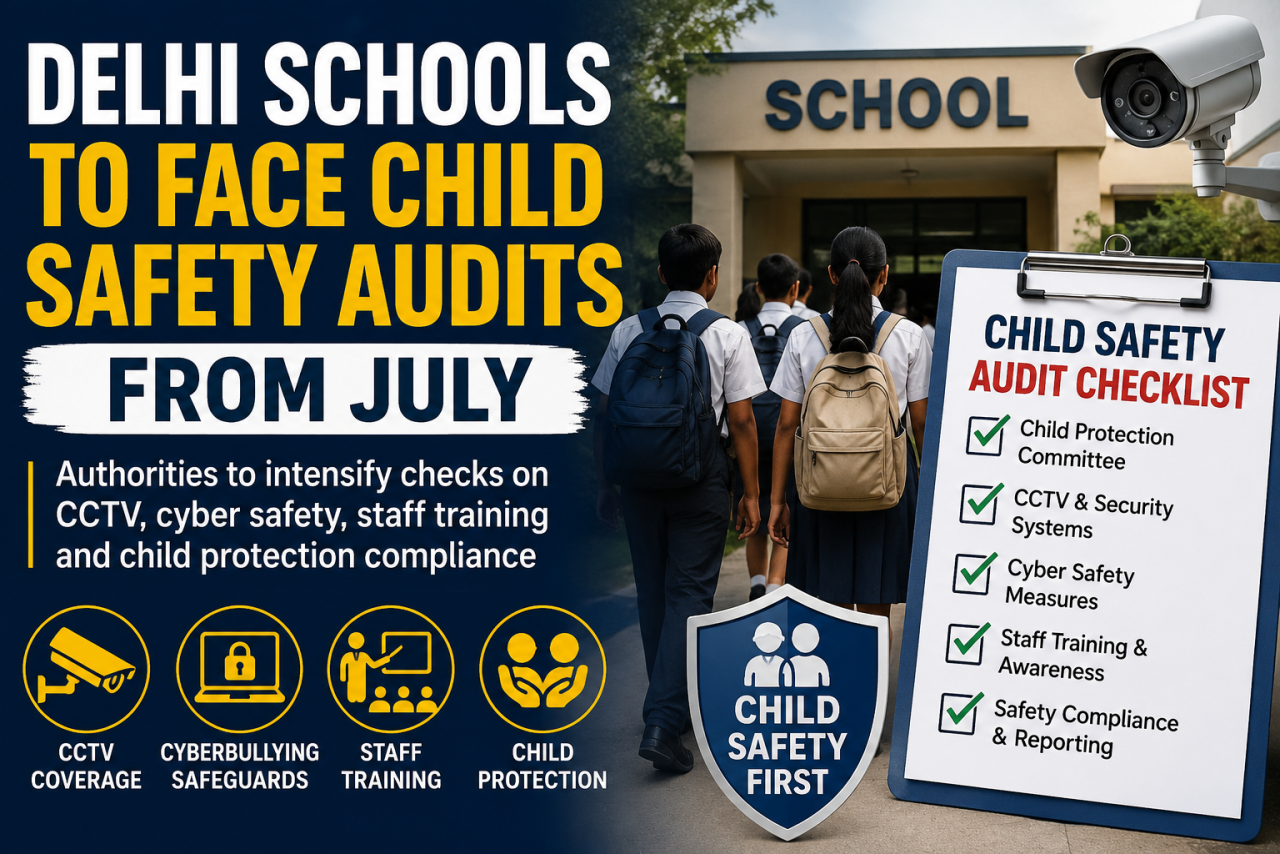
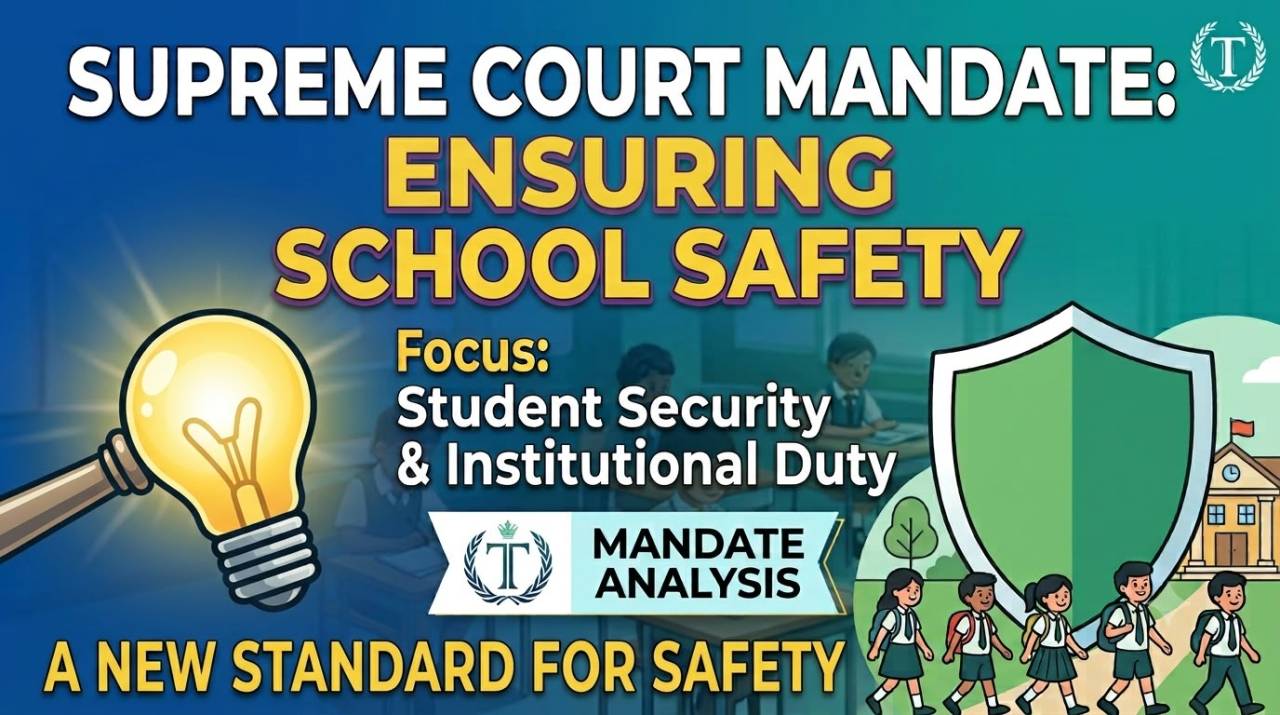
Delhi's schools are set for a comprehensive safety review as authorities launch inspections focused on child protection, cyber threats, staff conduct, and campus security.
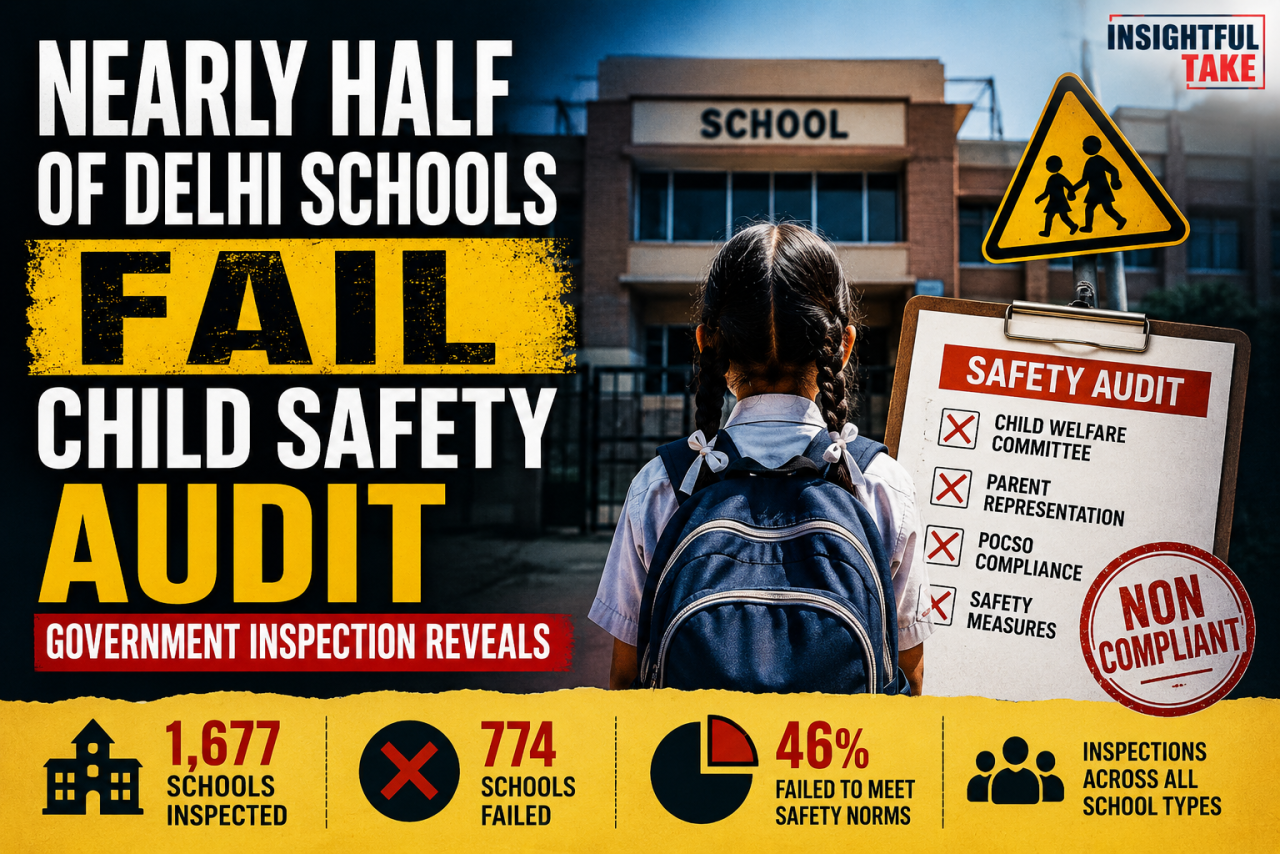
Starting July, schools across Delhi will undergo comprehensive child safety audits as the government moves to strengthen child protection measures across educational institutions. Inspection teams comprising officials from the Directorate of Education (DoE) and local police will visit government, government-aided, and private schools to verify whether child protection guidelines are being effectively implemented on the ground.
The initiative follows a detailed circular issued by the Directorate of Education on June 19, outlining a citywide audit mechanism aimed at ensuring compliance with child safety norms. The decision emerged from a high-level review meeting chaired by Delhi Lieutenant Governor Taranjit Singh Sandhu, attended by senior officials from the Delhi Police, the Women and Child Development Department, and the Education Department.
As part of the broader initiative, July will be observed as Child Protection Month across the national capital, with awareness campaigns, training sessions, and safety audits being conducted throughout the month.
Why the Government Is Taking Action
The move comes amid growing concerns over crimes against children. According to official data, Delhi recorded more than 1,500 cases under the Protection of Children from Sexual Offences (POCSO) Act in 2024, the highest among major Indian cities.
Equally concerning is the pace of legal proceedings. Chargesheets were reportedly filed in only around 60 percent of registered cases, while a significant majority of pending cases remained unresolved by the end of the year. The figures have reinforced calls for stronger preventive mechanisms within schools, where children spend a large portion of their time.
What the School Safety Audits Will Examine
Under the new framework, inspectors will assess whether schools have established and maintained functional Child Protection Committees (CPCs), which are required to meet at least once every quarter. Authorities will verify not only the existence of these committees but also their actual functioning and record-keeping.
The audits will also review:
- Installation and maintenance of CCTV cameras in vulnerable areas.
- Regular safety inspections of school premises.
- Compliance with safety norms for school transport vehicles.
- Adherence to professional conduct standards by teaching and non-teaching staff.
- Availability of child protection policies and reporting mechanisms.
Schools will be expected to demonstrate that safety protocols are actively enforced rather than merely documented.
Focus on Cyber Safety and Online Threats
One of the most significant aspects of the directive is its emphasis on digital safety. Schools have been instructed to monitor and report incidents involving cyberbullying, online blackmail, and grooming attempts targeting students.
Authorities have also directed schools to preserve digital evidence in such cases to support investigations and ensure accountability. The inclusion of cyber safety reflects the growing recognition that threats to children increasingly extend beyond the physical classroom into online spaces.
Shared Responsibility Between Schools and Authorities
The circular places responsibility on both educational institutions and government agencies. School heads have been directed to review existing child protection systems and submit detailed compliance reports to their respective zonal authorities within 15 days.
At the same time, education officials and police personnel will conduct physical inspections to independently verify compliance. The government has also made annual child protection training mandatory for both teaching and non-teaching staff, emphasizing the need for continuous awareness and preparedness.
Building a Long-Term Safety Framework
The audit exercise follows several recent incidents that reignited public concern about child safety in educational institutions. Rather than responding with temporary measures, the Delhi government appears to be establishing a long-term framework based on regular inspections, mandatory oversight committees, staff training, and digital-age safeguards.
For parents and guardians, the effectiveness of the initiative will ultimately depend on implementation. As inspections begin in July, schools will face increased scrutiny over whether their child protection measures exist only on paper or are genuinely safeguarding students in practice.
The upcoming audits could become one of Delhi's most comprehensive school safety reviews in recent years, setting a benchmark for child protection standards across educational institutions.
Starting July, schools across Delhi will undergo comprehensive child safety audits as the government moves to strengthen child protection measures across educational institutions. Inspection teams comprising officials from the Directorate of Education (DoE) and local police will visit government, government-aided, and private schools to verify whether child protection guidelines are being effectively implemented on the ground.
The initiative follows a detailed circular issued by the Directorate of Education on June 19, outlining a citywide audit mechanism aimed at ensuring compliance with child safety norms. The decision emerged from a high-level review meeting chaired by Delhi Lieutenant Governor Taranjit Singh Sandhu, attended by senior officials from the Delhi Police, the Women and Child Development Department, and the Education Department.
As part of the broader initiative, July will be observed as Child Protection Month across the national capital, with awareness campaigns, training sessions, and safety audits being conducted throughout the month.
Why the Government Is Taking Action
The move comes amid growing concerns over crimes against children. According to official data, Delhi recorded more than 1,500 cases under the Protection of Children from Sexual Offences (POCSO) Act in 2024, the highest among major Indian cities.
Equally concerning is the pace of legal proceedings. Chargesheets were reportedly filed in only around 60 percent of registered cases, while a significant majority of pending cases remained unresolved by the end of the year. The figures have reinforced calls for stronger preventive mechanisms within schools, where children spend a large portion of their time.
What the School Safety Audits Will Examine
Under the new framework, inspectors will assess whether schools have established and maintained functional Child Protection Committees (CPCs), which are required to meet at least once every quarter. Authorities will verify not only the existence of these committees but also their actual functioning and record-keeping.
The audits will also review:
- Installation and maintenance of CCTV cameras in vulnerable areas.
- Regular safety inspections of school premises.
- Compliance with safety norms for school transport vehicles.
- Adherence to professional conduct standards by teaching and non-teaching staff.
- Availability of child protection policies and reporting mechanisms.
Schools will be expected to demonstrate that safety protocols are actively enforced rather than merely documented.
Focus on Cyber Safety and Online Threats
One of the most significant aspects of the directive is its emphasis on digital safety. Schools have been instructed to monitor and report incidents involving cyberbullying, online blackmail, and grooming attempts targeting students.
Authorities have also directed schools to preserve digital evidence in such cases to support investigations and ensure accountability. The inclusion of cyber safety reflects the growing recognition that threats to children increasingly extend beyond the physical classroom into online spaces.
Shared Responsibility Between Schools and Authorities
The circular places responsibility on both educational institutions and government agencies. School heads have been directed to review existing child protection systems and submit detailed compliance reports to their respective zonal authorities within 15 days.
At the same time, education officials and police personnel will conduct physical inspections to independently verify compliance. The government has also made annual child protection training mandatory for both teaching and non-teaching staff, emphasizing the need for continuous awareness and preparedness.
Building a Long-Term Safety Framework
The audit exercise follows several recent incidents that reignited public concern about child safety in educational institutions. Rather than responding with temporary measures, the Delhi government appears to be establishing a long-term framework based on regular inspections, mandatory oversight committees, staff training, and digital-age safeguards.
For parents and guardians, the effectiveness of the initiative will ultimately depend on implementation. As inspections begin in July, schools will face increased scrutiny over whether their child protection measures exist only on paper or are genuinely safeguarding students in practice.
The upcoming audits could become one of Delhi's most comprehensive school safety reviews in recent years, setting a benchmark for child protection standards across educational institutions.

















Leave a Comment