
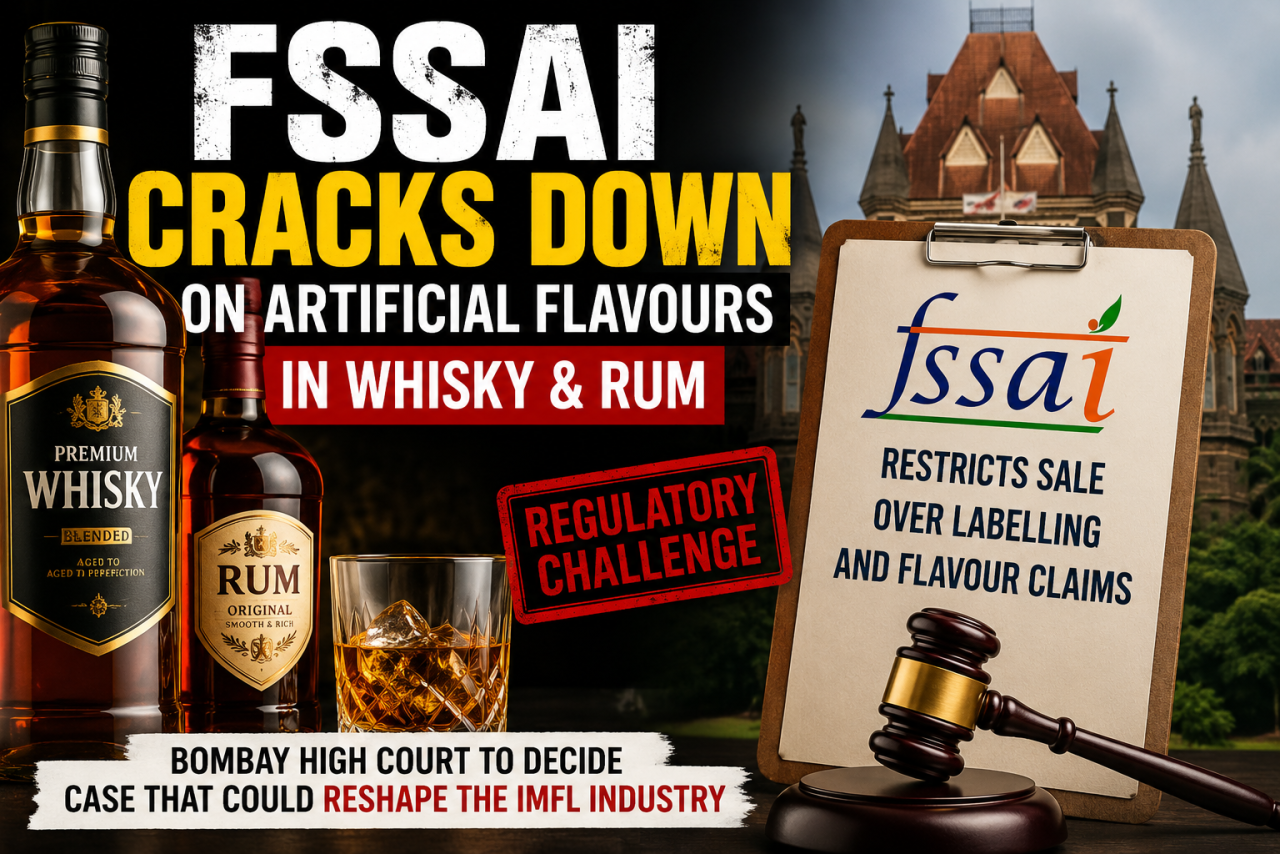
Can your favourite whisky or rum contain artificial flavours? FSSAI's latest crackdown has sparked a legal battle that could change India's liquor industry.
India's food regulator has tightened its scrutiny of alcoholic beverages, putting the spotlight on the use of artificial flavouring in premium whisky and rum brands. The latest development follows action by the Food Safety and Standards Authority of India (FSSAI), which has restricted the sale of certain liquor products over concerns related to labelling and flavour claims.
The issue has now reached the Bombay High Court, setting the stage for a legal battle that could have far-reaching consequences for India's Indian Made Foreign Liquor (IMFL) industry.
What Triggered the Dispute?
The controversy centres on United Spirits Ltd., the maker of popular brands such as McDowell's No.1 Royal Challenge, Antiquity Blue and Signature whisky. The company challenged an FSSAI order issued on June 29, arguing that the regulator had unfairly restricted the sale of one of its rum products manufactured at its Baramati facility in Maharashtra.
According to the company, the dispute is not about the use of flavouring substances themselves. Instead, it revolves around how these ingredients are described on product labels and whether the labelling complies with the Food Safety and Standards Act, 2006.
The petition was filed before the Bombay High Court, which is currently hearing the matter. The court is expected to examine whether the regulator's interpretation of labelling rules is consistent with existing food safety laws.
FSSAI's Stand
FSSAI maintains that while the use of natural flavouring substances is permitted in alcoholic beverages, manufacturers cannot use artificial flavouring agents in a manner that could mislead consumers.
The regulator believes that certain labels may create an incorrect impression about the composition of alcoholic beverages. As part of its broader enforcement drive, FSSAI has stepped up inspections and compliance checks across the liquor industry, focusing particularly on ingredient declarations and packaging claims.
Officials argue that transparent labelling is essential so consumers know exactly what they are purchasing.
Industry Raises Concerns
Liquor manufacturers, however, see the issue differently. They argue that flavouring substances have been used in certain alcoholic beverages for decades and form an accepted part of global manufacturing practices.
United Spirits has reportedly maintained before the court that its product labels comply with the legal and regulatory framework that has governed the industry for years. The company contends that sudden changes in interpretation could disrupt manufacturing, supply chains and product availability.
Industry experts believe the outcome of the case could affect several other liquor manufacturers if similar enforcement actions are initiated.
Why the Case Matters
The dispute goes beyond a single brand. It raises broader questions about regulatory consistency, food safety standards and consumer transparency.
If courts uphold FSSAI's interpretation, manufacturers may have to redesign labels, reformulate products or alter the way flavouring ingredients are declared. Such changes could increase compliance costs while also affecting marketing strategies for premium alcoholic beverages.
On the other hand, if the court finds merit in the industry's arguments, regulators may need to revisit or clarify existing guidelines to avoid uncertainty.
Impact on Consumers
For consumers, the immediate impact is likely to be limited. Most liquor products will continue to remain available unless regulators specifically restrict their sale.
However, over the longer term, buyers may begin to see clearer ingredient disclosures and more transparent packaging. This could improve consumer awareness about what goes into alcoholic beverages and strengthen confidence in food safety regulations.
What Lies Ahead?
The Bombay High Court's decision will be closely watched by both regulators and the alcohol industry. The verdict could establish an important legal precedent on how flavouring substances are regulated in alcoholic beverages and how food safety rules should be interpreted.
As India's regulatory landscape evolves, the balance between consumer protection and industry practices will remain at the heart of this debate. Whether the outcome favours FSSAI or liquor manufacturers, the case is expected to influence compliance standards and labelling practices across the country's alcoholic beverage sector for years to come.
India's food regulator has tightened its scrutiny of alcoholic beverages, putting the spotlight on the use of artificial flavouring in premium whisky and rum brands. The latest development follows action by the Food Safety and Standards Authority of India (FSSAI), which has restricted the sale of certain liquor products over concerns related to labelling and flavour claims.
The issue has now reached the Bombay High Court, setting the stage for a legal battle that could have far-reaching consequences for India's Indian Made Foreign Liquor (IMFL) industry.
What Triggered the Dispute?
The controversy centres on United Spirits Ltd., the maker of popular brands such as McDowell's No.1 Royal Challenge, Antiquity Blue and Signature whisky. The company challenged an FSSAI order issued on June 29, arguing that the regulator had unfairly restricted the sale of one of its rum products manufactured at its Baramati facility in Maharashtra.
According to the company, the dispute is not about the use of flavouring substances themselves. Instead, it revolves around how these ingredients are described on product labels and whether the labelling complies with the Food Safety and Standards Act, 2006.
The petition was filed before the Bombay High Court, which is currently hearing the matter. The court is expected to examine whether the regulator's interpretation of labelling rules is consistent with existing food safety laws.
FSSAI's Stand
FSSAI maintains that while the use of natural flavouring substances is permitted in alcoholic beverages, manufacturers cannot use artificial flavouring agents in a manner that could mislead consumers.
The regulator believes that certain labels may create an incorrect impression about the composition of alcoholic beverages. As part of its broader enforcement drive, FSSAI has stepped up inspections and compliance checks across the liquor industry, focusing particularly on ingredient declarations and packaging claims.
Officials argue that transparent labelling is essential so consumers know exactly what they are purchasing.
Industry Raises Concerns
Liquor manufacturers, however, see the issue differently. They argue that flavouring substances have been used in certain alcoholic beverages for decades and form an accepted part of global manufacturing practices.
United Spirits has reportedly maintained before the court that its product labels comply with the legal and regulatory framework that has governed the industry for years. The company contends that sudden changes in interpretation could disrupt manufacturing, supply chains and product availability.
Industry experts believe the outcome of the case could affect several other liquor manufacturers if similar enforcement actions are initiated.
Why the Case Matters
The dispute goes beyond a single brand. It raises broader questions about regulatory consistency, food safety standards and consumer transparency.
If courts uphold FSSAI's interpretation, manufacturers may have to redesign labels, reformulate products or alter the way flavouring ingredients are declared. Such changes could increase compliance costs while also affecting marketing strategies for premium alcoholic beverages.
On the other hand, if the court finds merit in the industry's arguments, regulators may need to revisit or clarify existing guidelines to avoid uncertainty.
Impact on Consumers
For consumers, the immediate impact is likely to be limited. Most liquor products will continue to remain available unless regulators specifically restrict their sale.
However, over the longer term, buyers may begin to see clearer ingredient disclosures and more transparent packaging. This could improve consumer awareness about what goes into alcoholic beverages and strengthen confidence in food safety regulations.
What Lies Ahead?
The Bombay High Court's decision will be closely watched by both regulators and the alcohol industry. The verdict could establish an important legal precedent on how flavouring substances are regulated in alcoholic beverages and how food safety rules should be interpreted.
As India's regulatory landscape evolves, the balance between consumer protection and industry practices will remain at the heart of this debate. Whether the outcome favours FSSAI or liquor manufacturers, the case is expected to influence compliance standards and labelling practices across the country's alcoholic beverage sector for years to come.















Leave a Comment