
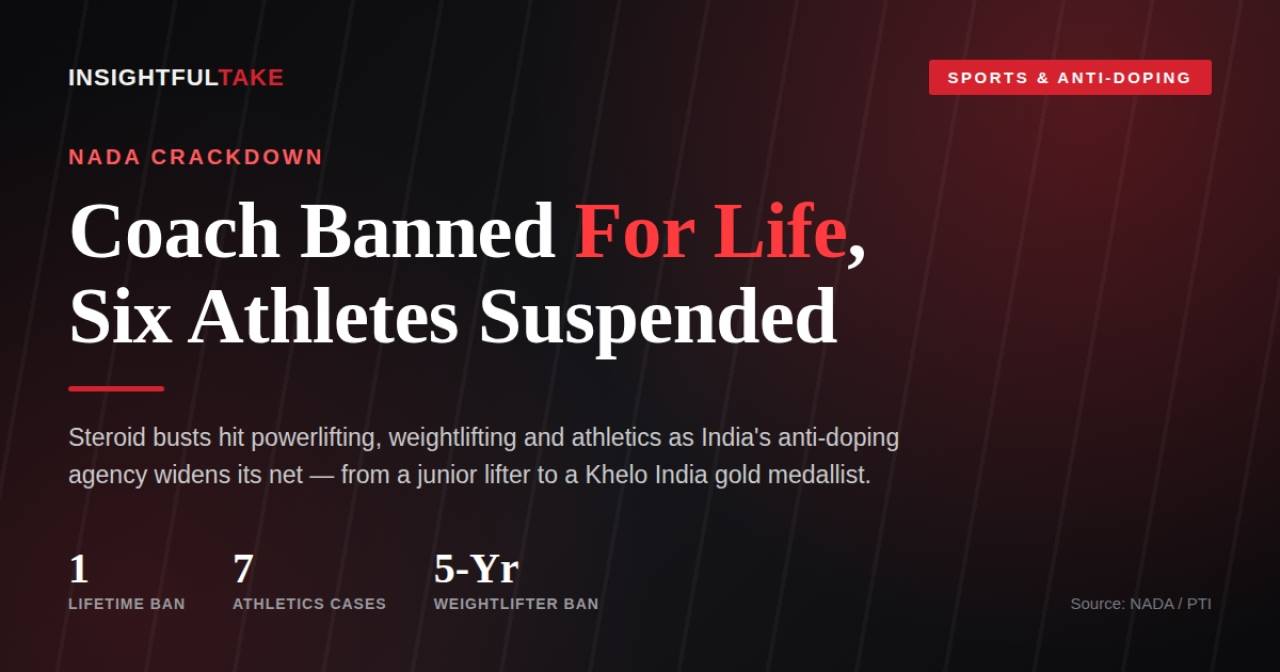
India’s latest doping sanctions go beyond athletes, targeting a coach, supplement-linked cases and young competitors, raising fresh questions about accountability across the sporting system.
India’s fight against doping has taken another serious turn. In its latest list of sanctions issued on Wednesday, the National Anti-Doping Agency (NADA) handed a life ban to an athletics coach and provisionally suspended athletes from weightlifting, powerlifting and track events.
The cases highlight a wider concern in Indian sport that the doping is not limited to athletes who fail tests. Coaches, support staff and supply chains can also play a role in how banned substances reach competitors.
Coach Gets Life Ban for Administering Prohibited Substances
Athletics coach Rakesh Kumar has been banned for life for administering prohibited substances to athletes under his charge.
Kumar was first suspended in March last year, and the life ban has been made effective from that date. The case is significant because it involves an alleged violation by someone responsible for supporting and guiding athletes.
It also raises questions about the role of coaches and other support personnel in preventing doping and protecting athletes from banned substances.
Powerlifter Case Points to Supplement Supply Chain
Powerlifter Gaurav Vats has been provisionally suspended over allegations involving possession and trafficking of prohibited substances. The case has also been linked in reports to action involving a nutritional supplements company whose premises came under scrutiny.
The case brings attention to the risks surrounding sports supplements. Athletes can face anti-doping violations when products contain prohibited substances, whether knowingly consumed or not. Stronger checks on the manufacture, sale and distribution of supplements remain important for protecting athletes.
The trafficking allegation also points beyond an individual failed test and towards the possible movement of banned substances through a wider supply chain.
Athletics Remains Under the Doping Scanner
Several athletics cases feature in the latest sanctions.
National Inter-State bronze medallist sprinter Prakruthi Roopa Rao tested positive for the prohibited steroids Stanozolol and Drostanolone. Quartermiler Kaushal Kumar, steeplechaser Jujhar Singh and long-distance runner Baljeet Kaur were also among those provisionally suspended.
The number of athletics-related cases in the latest list underlines the continuing anti-doping challenge in a sport where India has been seeking greater success at international competitions.
Weightlifting Cases Raise Concern About Young Athletes
One of the more concerning cases involves a minor weightlifter who was provisionally suspended after testing positive for Oxandrolone, an anabolic steroid.
A case involving a junior athlete raises questions about how young competitors are educated about prohibited substances and how they gain access to them. It also highlights the responsibility of coaches, parents, training centres and other support systems in protecting young athletes.
Khelo India Games gold medallist weightlifter Chelsi has also received a five-year ban after failing a dope test.
Why the Latest Sanctions Matter
The latest cases point to several layers of the doping problem: athletes, coaching structures, prohibited substances and sports-supplement supply chains.
For India, which is investing heavily in developing athletes for the Olympics, Asian Games and other international competitions, maintaining clean sport is important not only for individual careers but also for the credibility of the sporting system.
The life ban imposed on a coach is particularly significant because it extends accountability beyond athletes. But sanctions alone cannot address the wider problem.
Regular anti-doping education, stronger monitoring of coaches and support staff, better oversight of supplements and greater protection for young athletes will remain important if India wants to reduce the risks associated with doping.
The latest list therefore represents more than a series of individual sanctions. It also offers a reminder that the fight against doping has to look beyond the athlete who tests positive and examine the systems around them.
India’s fight against doping has taken another serious turn. In its latest list of sanctions issued on Wednesday, the National Anti-Doping Agency (NADA) handed a life ban to an athletics coach and provisionally suspended athletes from weightlifting, powerlifting and track events.
The cases highlight a wider concern in Indian sport that the doping is not limited to athletes who fail tests. Coaches, support staff and supply chains can also play a role in how banned substances reach competitors.
Coach Gets Life Ban for Administering Prohibited Substances
Athletics coach Rakesh Kumar has been banned for life for administering prohibited substances to athletes under his charge.
Kumar was first suspended in March last year, and the life ban has been made effective from that date. The case is significant because it involves an alleged violation by someone responsible for supporting and guiding athletes.
It also raises questions about the role of coaches and other support personnel in preventing doping and protecting athletes from banned substances.
Powerlifter Case Points to Supplement Supply Chain
Powerlifter Gaurav Vats has been provisionally suspended over allegations involving possession and trafficking of prohibited substances. The case has also been linked in reports to action involving a nutritional supplements company whose premises came under scrutiny.
The case brings attention to the risks surrounding sports supplements. Athletes can face anti-doping violations when products contain prohibited substances, whether knowingly consumed or not. Stronger checks on the manufacture, sale and distribution of supplements remain important for protecting athletes.
The trafficking allegation also points beyond an individual failed test and towards the possible movement of banned substances through a wider supply chain.
Athletics Remains Under the Doping Scanner
Several athletics cases feature in the latest sanctions.
National Inter-State bronze medallist sprinter Prakruthi Roopa Rao tested positive for the prohibited steroids Stanozolol and Drostanolone. Quartermiler Kaushal Kumar, steeplechaser Jujhar Singh and long-distance runner Baljeet Kaur were also among those provisionally suspended.
The number of athletics-related cases in the latest list underlines the continuing anti-doping challenge in a sport where India has been seeking greater success at international competitions.
Weightlifting Cases Raise Concern About Young Athletes
One of the more concerning cases involves a minor weightlifter who was provisionally suspended after testing positive for Oxandrolone, an anabolic steroid.
A case involving a junior athlete raises questions about how young competitors are educated about prohibited substances and how they gain access to them. It also highlights the responsibility of coaches, parents, training centres and other support systems in protecting young athletes.
Khelo India Games gold medallist weightlifter Chelsi has also received a five-year ban after failing a dope test.
Why the Latest Sanctions Matter
The latest cases point to several layers of the doping problem: athletes, coaching structures, prohibited substances and sports-supplement supply chains.
For India, which is investing heavily in developing athletes for the Olympics, Asian Games and other international competitions, maintaining clean sport is important not only for individual careers but also for the credibility of the sporting system.
The life ban imposed on a coach is particularly significant because it extends accountability beyond athletes. But sanctions alone cannot address the wider problem.
Regular anti-doping education, stronger monitoring of coaches and support staff, better oversight of supplements and greater protection for young athletes will remain important if India wants to reduce the risks associated with doping.
The latest list therefore represents more than a series of individual sanctions. It also offers a reminder that the fight against doping has to look beyond the athlete who tests positive and examine the systems around them.






















Leave a Comment