
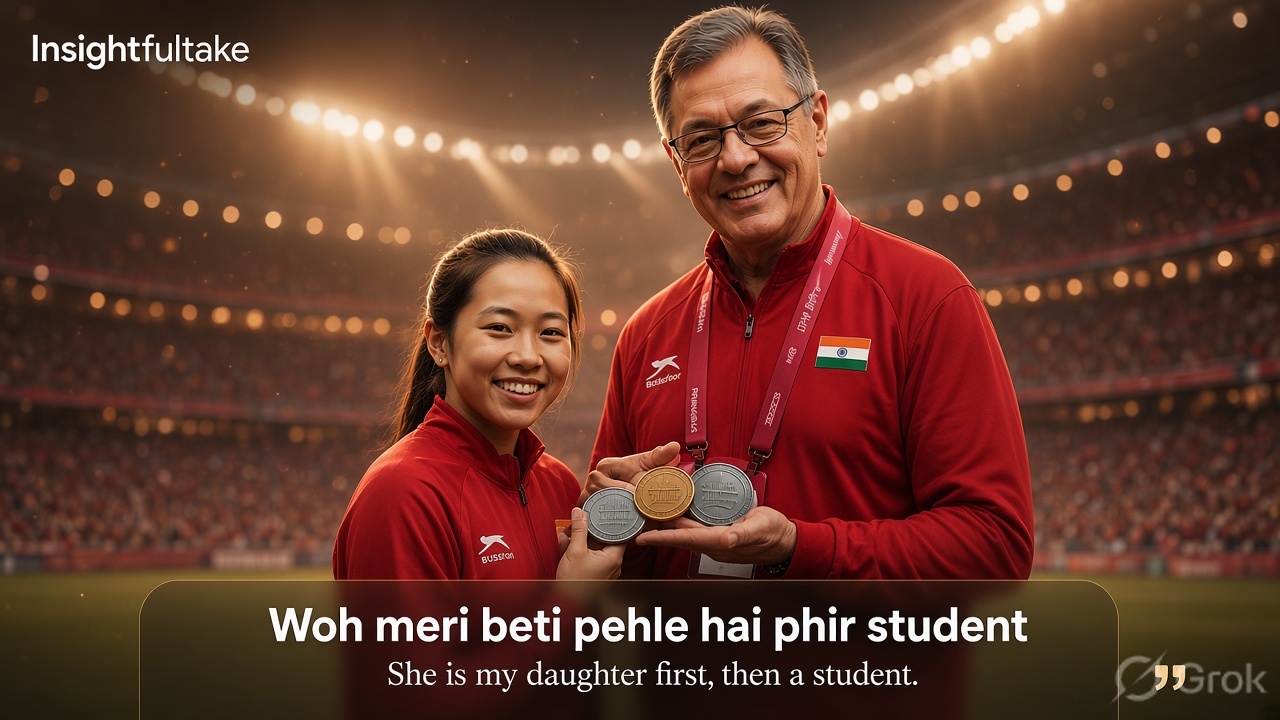
Champions win medals. Great coaches build the resilience that makes those medals possible.
Every Teacher’s Day, India remembers its classroom teachers. Far less attention goes to the coaches who spend more waking hours with their students than many parents do, in gyms and training halls where lessons are measured in kilograms rather than marks.
Vijay Sharma, national coach of the Indian Weightlifting Federation, belongs to that quieter category of teacher. His most famous student, Saikhom Mirabai Chanu, has spent more than a decade demonstrating why that distinction matters.
Sharma has coached Chanu since 2014, a partnership that has survived multiple Olympic cycles, a serious injury, devastating defeats and the ordinary physical demands of a career in which an athlete regularly lifts more than twice her own body weight.
Their journey began long before the medals. Chanu was a promising but largely unproven lifter from Manipur when she came under Sharma’s guidance. It took years of repetition, discipline and unglamorous training before the results began to match the ambition.
Then came the brutal setback of the 2016 Rio Olympics.
Chanu failed all three of her clean-and-jerk attempts and returned home devastated. Reports from that period described Sharma and the support staff working with her family to help bring her back to training.
A coach’s real work often happens in precisely that kind of silence, far away from podiums, cameras and applause.
What followed is now part of Indian sporting history.
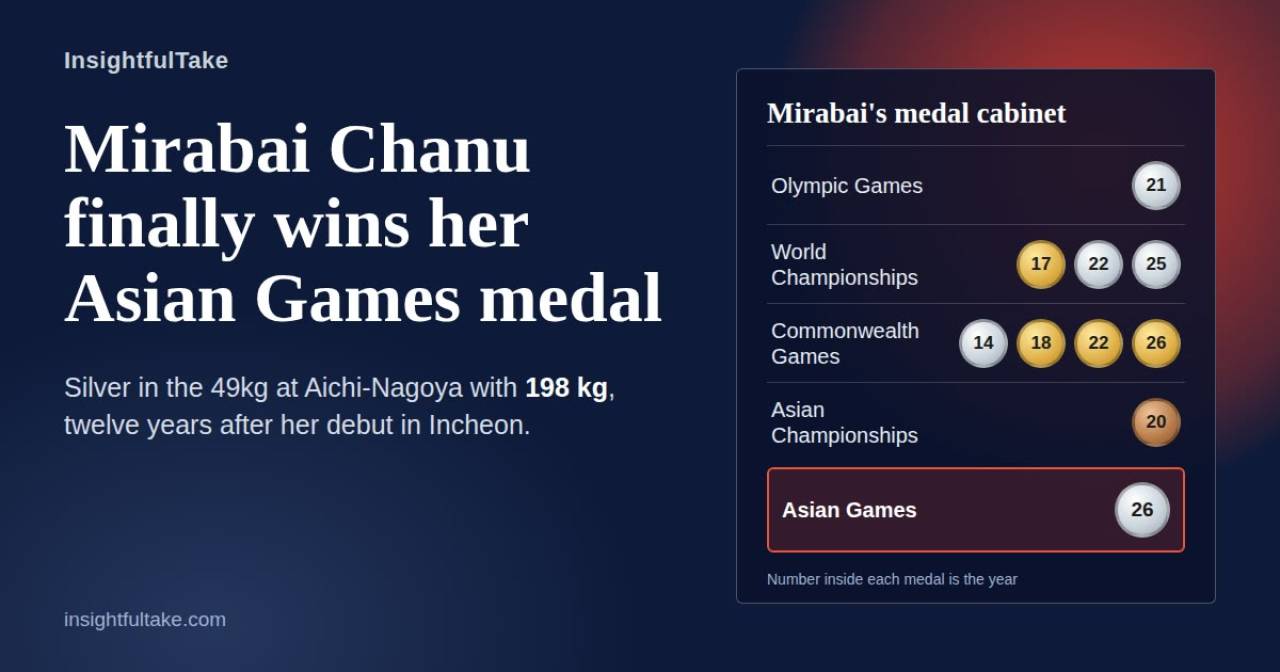
Chanu won the World Weightlifting Championships in 2017. At the Tokyo Olympics in 2021, she won a silver medal, becoming independent India’s first medallist at those Games. Then came another setback. A hip injury before the 2023 Asian Games kept her out of competition for five months.
Sharma has been candid that an Asian Games medal remains one of the gaps in Chanu’s collection. Both coach and athlete have treated the disappointments that followed, including her agonising fourth-place finish at Paris 2024, as unfinished business rather than an ending.
In 2026, at the Commonwealth Games in Glasgow, Chanu completed a hat-trick of gold medals in the women’s 48kg category, extending a streak that began with Gold Coast in 2018. As she has done after many of the defining victories of her career, she was quick to acknowledge the role of her family and the coach who has shaped not only her technique but also her temperament over twelve years.
There is an easy version of this story in which Sharma becomes little more than a footnote to Chanu’s achievements, a supporting character mentioned after the medals have been counted.
That framing misses something the two of them clearly understand.
Sharma, a Dronacharya Award recipient who grew up in Modinagar after his family moved there from Jammu, has spoken about his desire to train young weightlifters from his home region. He has also been working to build a training facility there for that purpose.
His investment in Indian weightlifting did not begin with one athlete, nor does it end with her. Chanu happens to be its most visible result.
That is perhaps closer to what teaching looks like at its best. It is not simply a triumphant collaboration between one teacher and one exceptional student. It is the creation of a system, a culture and an opportunity that continues to grow even after the star pupil has succeeded.
It is worth asking why India’s sporting culture still tends to treat coaches like Sharma as support staff rather than as co-authors of an athlete’s career.
A classroom teacher gets a designated day, a garland and perhaps a tribute video. A coach who helps rebuild a shattered 21-year-old into an Olympic medallist, and continues doing similar work for other athletes away from the spotlight, rarely receives comparable recognition beyond the athlete’s own gratitude.
Chanu’s repeated public acknowledgment of Sharma is therefore more than a personal gesture. It highlights something the wider sporting ecosystem should address structurally.
Coaches, particularly at the grassroots level, need better pay, greater professional security and higher status. Recognition should not arrive only when the athlete they train wins a medal.
The lesson of this partnership, on a day meant to honour teachers, is not really about weightlifting.
It is about what happens when someone stays through the failures long enough to witness the version of success that only years of patience can produce.
And sometimes, the person standing beside the champion deserves to be remembered as a champion of a different kind.
Every Teacher’s Day, India remembers its classroom teachers. Far less attention goes to the coaches who spend more waking hours with their students than many parents do, in gyms and training halls where lessons are measured in kilograms rather than marks.
Vijay Sharma, national coach of the Indian Weightlifting Federation, belongs to that quieter category of teacher. His most famous student, Saikhom Mirabai Chanu, has spent more than a decade demonstrating why that distinction matters.
Sharma has coached Chanu since 2014, a partnership that has survived multiple Olympic cycles, a serious injury, devastating defeats and the ordinary physical demands of a career in which an athlete regularly lifts more than twice her own body weight.
Their journey began long before the medals. Chanu was a promising but largely unproven lifter from Manipur when she came under Sharma’s guidance. It took years of repetition, discipline and unglamorous training before the results began to match the ambition.
Then came the brutal setback of the 2016 Rio Olympics.
Chanu failed all three of her clean-and-jerk attempts and returned home devastated. Reports from that period described Sharma and the support staff working with her family to help bring her back to training.
A coach’s real work often happens in precisely that kind of silence, far away from podiums, cameras and applause.
What followed is now part of Indian sporting history.
Chanu won the World Weightlifting Championships in 2017. At the Tokyo Olympics in 2021, she won a silver medal, becoming independent India’s first medallist at those Games. Then came another setback. A hip injury before the 2023 Asian Games kept her out of competition for five months.
Sharma has been candid that an Asian Games medal remains one of the gaps in Chanu’s collection. Both coach and athlete have treated the disappointments that followed, including her agonising fourth-place finish at Paris 2024, as unfinished business rather than an ending.
In 2026, at the Commonwealth Games in Glasgow, Chanu completed a hat-trick of gold medals in the women’s 48kg category, extending a streak that began with Gold Coast in 2018. As she has done after many of the defining victories of her career, she was quick to acknowledge the role of her family and the coach who has shaped not only her technique but also her temperament over twelve years.
There is an easy version of this story in which Sharma becomes little more than a footnote to Chanu’s achievements, a supporting character mentioned after the medals have been counted.
That framing misses something the two of them clearly understand.
Sharma, a Dronacharya Award recipient who grew up in Modinagar after his family moved there from Jammu, has spoken about his desire to train young weightlifters from his home region. He has also been working to build a training facility there for that purpose.
His investment in Indian weightlifting did not begin with one athlete, nor does it end with her. Chanu happens to be its most visible result.
That is perhaps closer to what teaching looks like at its best. It is not simply a triumphant collaboration between one teacher and one exceptional student. It is the creation of a system, a culture and an opportunity that continues to grow even after the star pupil has succeeded.
It is worth asking why India’s sporting culture still tends to treat coaches like Sharma as support staff rather than as co-authors of an athlete’s career.
A classroom teacher gets a designated day, a garland and perhaps a tribute video. A coach who helps rebuild a shattered 21-year-old into an Olympic medallist, and continues doing similar work for other athletes away from the spotlight, rarely receives comparable recognition beyond the athlete’s own gratitude.
Chanu’s repeated public acknowledgment of Sharma is therefore more than a personal gesture. It highlights something the wider sporting ecosystem should address structurally.
Coaches, particularly at the grassroots level, need better pay, greater professional security and higher status. Recognition should not arrive only when the athlete they train wins a medal.
The lesson of this partnership, on a day meant to honour teachers, is not really about weightlifting.
It is about what happens when someone stays through the failures long enough to witness the version of success that only years of patience can produce.
And sometimes, the person standing beside the champion deserves to be remembered as a champion of a different kind.


















Leave a Comment