
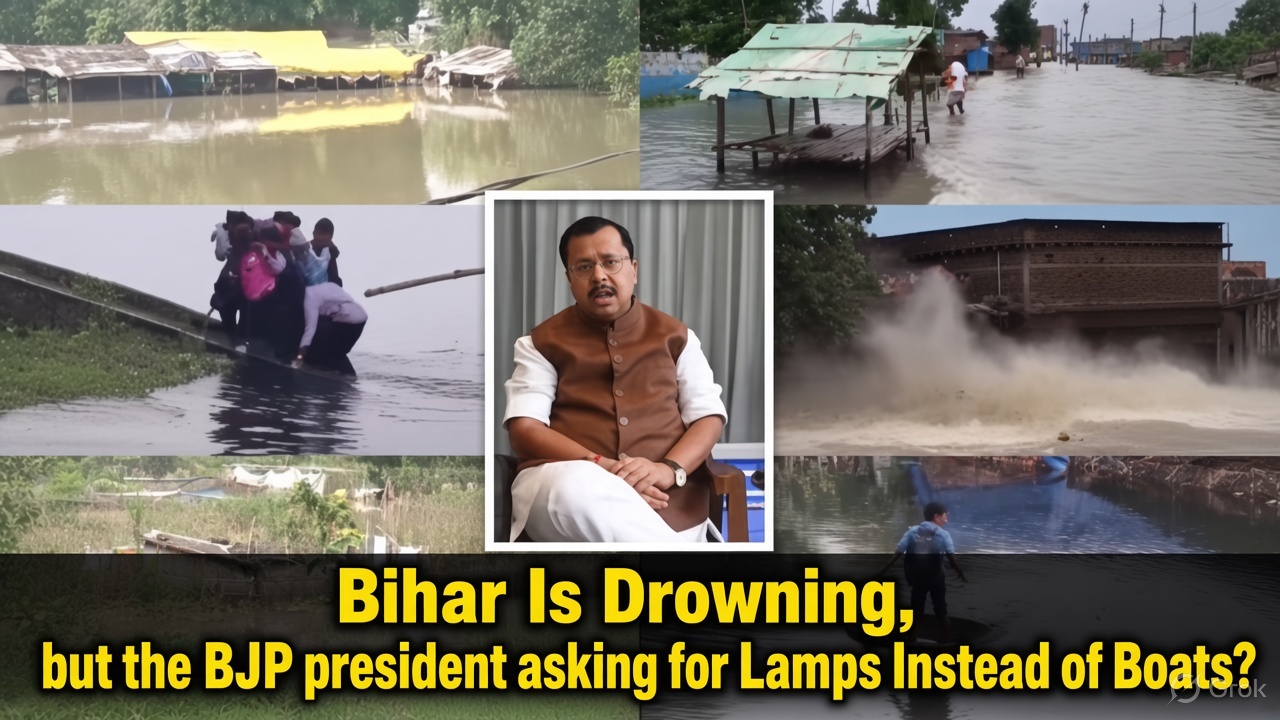
When millions of Bihar residents are battling floods, a campaign asking people to light lamps for the Prime Minister's birthday raises a larger question about political priorities.
More than 47 lakh people across 15 districts of Bihar are dealing with flooded homes, breached embankments and submerged fields. Against this backdrop, the BJP's national president has asked people to light a lamp for Prime Minister Narendra Modi's long life and continued success.
The Aashirwad Ka Diya Campaign
September 17 marks Narendra Modi's 76th birthday, and the BJP has planned a month-long "Seva Sankalp Abhiyan" around it, running until October 17. The programme also coincides with 25 years since Modi first became Chief Minister of Gujarat in 2001.
As part of the campaign, the party has launched "Aashirwad Ka Diya", under which families, particularly beneficiaries of central welfare schemes, are being encouraged to light earthen lamps as a gesture of gratitude.
The campaign also includes blood donation drives, school competitions around the theme of "Viksit Bharat" and stage productions highlighting the stories of beneficiaries of government schemes.
There is nothing inherently unusual about a political party marking its leader's birthday or organising public outreach around government welfare programmes. Political parties across India have long used such occasions to connect with supporters and beneficiaries.
The question here is not whether the campaign should exist.
It is why this particular message is being pushed at a time when large parts of Bihar are still dealing with a severe flood crisis.
A State Still Counting Its Losses
The scale of the flooding in Bihar is substantial. Government data cited by disaster management officials puts the number of affected people at more than 47 lakh across 15 districts, while the Ganga and several of its tributaries have remained above danger levels in parts of the state.
Bhagalpur has reported multiple embankment breaches, while administrations across the state have deployed nearly 1,900 boats along with NDRF and SDRF teams for rescue and relief operations.
Fodder shortages, damaged crops and displaced families sheltering wherever they can remain part of the immediate reality in several flood-affected districts.
Bihar's disaster management machinery has not been entirely absent. Boats have been deployed, rescue teams are operating and relief and fodder distribution are underway in affected areas.
But administrative response and political messaging are two different things.
It is the political messaging that has prompted criticism.
RJD MP Pappu Yadav has publicly questioned the BJP's appeal, arguing that asking flood-hit families to light a ceremonial lamp for the Prime Minister's birthday appears disconnected from their immediate circumstances.
The criticism carries added political significance because Nitin Nabin is not a distant party functionary. He is a Bihar politician, a former Bihar cabinet minister and now the national president of the BJP.
That makes the contrast harder to ignore.
When Symbolism Meets a Disaster
This is where the larger question begins.
Indian politics has always relied on symbolism. Birthdays, anniversaries, welfare celebrations and public campaigns are part of political communication across parties.
But symbolism acquires a different meaning during a disaster.
A flood does not pause for a birthday campaign. A family forced from its home does not experience a crisis differently because a political calendar says it is time for celebration.
For a flood-affected household, the immediate concerns are likely to be much more basic: safe shelter, food, drinking water, livestock, damaged crops, transport and compensation.
That does not mean citizens cannot celebrate a political leader's birthday. Nor does it mean a political party must suspend every other activity during a disaster.
The issue is one of political emphasis and public responsibility.
When the BJP's national president asks people to light lamps for the Prime Minister while his own state is dealing with a major flood emergency, the campaign inevitably invites questions about priorities.
Could the same message have been accompanied by a stronger public appeal for flood relief?
Could the campaign have visibly acknowledged the families still living through the crisis?
Could the party have used its organisational machinery to amplify information about rescue operations, relief centres, compensation and embankment repairs?
There is no requirement that political leaders choose between public celebration and disaster response. They can acknowledge both.
What Accountability Should Look Like
If the "Aashirwad Ka Diya" campaign is intended to represent public gratitude, it could have been placed alongside an equally visible political commitment to those facing the flood crisis.
That could include clear statements on relief operations, embankment repair, crop and livestock losses, compensation and rehabilitation.
For people living through a disaster, political communication matters because it tells them what their leaders are paying attention to.
A birthday campaign may generate photographs, social-media posts and symbolic participation.
Relief requires something different: boats, shelters, food, medicine, fodder, functioning roads, repaired embankments and timely compensation.
Both can happen at the same time.
But when one receives prominent political attention while the other remains buried beneath the routine language of administration, the contrast becomes difficult to overlook.
Bihar Needs Relief Before Ritual
The real issue is not the diya.
It is what the diya represents at a moment when millions of people are dealing with water, displacement and loss.
A political party is free to celebrate its leader. Citizens are equally free to participate or not participate.
But public leadership during a disaster is ultimately measured by how visibly and urgently it responds to those who need help.
For Bihar's flood-affected families, the immediate need is not a lamp lit in gratitude.
It is a government response whose urgency matches the water levels in the Ganga and the Kosi.
The diya will burn for an hour. The flood crisis will remain long after the flame goes out.
More than 47 lakh people across 15 districts of Bihar are dealing with flooded homes, breached embankments and submerged fields. Against this backdrop, the BJP's national president has asked people to light a lamp for Prime Minister Narendra Modi's long life and continued success.
The Aashirwad Ka Diya Campaign
September 17 marks Narendra Modi's 76th birthday, and the BJP has planned a month-long "Seva Sankalp Abhiyan" around it, running until October 17. The programme also coincides with 25 years since Modi first became Chief Minister of Gujarat in 2001.
As part of the campaign, the party has launched "Aashirwad Ka Diya", under which families, particularly beneficiaries of central welfare schemes, are being encouraged to light earthen lamps as a gesture of gratitude.
The campaign also includes blood donation drives, school competitions around the theme of "Viksit Bharat" and stage productions highlighting the stories of beneficiaries of government schemes.
There is nothing inherently unusual about a political party marking its leader's birthday or organising public outreach around government welfare programmes. Political parties across India have long used such occasions to connect with supporters and beneficiaries.
The question here is not whether the campaign should exist.
It is why this particular message is being pushed at a time when large parts of Bihar are still dealing with a severe flood crisis.
A State Still Counting Its Losses
The scale of the flooding in Bihar is substantial. Government data cited by disaster management officials puts the number of affected people at more than 47 lakh across 15 districts, while the Ganga and several of its tributaries have remained above danger levels in parts of the state.
Bhagalpur has reported multiple embankment breaches, while administrations across the state have deployed nearly 1,900 boats along with NDRF and SDRF teams for rescue and relief operations.
Fodder shortages, damaged crops and displaced families sheltering wherever they can remain part of the immediate reality in several flood-affected districts.
Bihar's disaster management machinery has not been entirely absent. Boats have been deployed, rescue teams are operating and relief and fodder distribution are underway in affected areas.
But administrative response and political messaging are two different things.
It is the political messaging that has prompted criticism.
RJD MP Pappu Yadav has publicly questioned the BJP's appeal, arguing that asking flood-hit families to light a ceremonial lamp for the Prime Minister's birthday appears disconnected from their immediate circumstances.
The criticism carries added political significance because Nitin Nabin is not a distant party functionary. He is a Bihar politician, a former Bihar cabinet minister and now the national president of the BJP.
That makes the contrast harder to ignore.
When Symbolism Meets a Disaster
This is where the larger question begins.
Indian politics has always relied on symbolism. Birthdays, anniversaries, welfare celebrations and public campaigns are part of political communication across parties.
But symbolism acquires a different meaning during a disaster.
A flood does not pause for a birthday campaign. A family forced from its home does not experience a crisis differently because a political calendar says it is time for celebration.
For a flood-affected household, the immediate concerns are likely to be much more basic: safe shelter, food, drinking water, livestock, damaged crops, transport and compensation.
That does not mean citizens cannot celebrate a political leader's birthday. Nor does it mean a political party must suspend every other activity during a disaster.
The issue is one of political emphasis and public responsibility.
When the BJP's national president asks people to light lamps for the Prime Minister while his own state is dealing with a major flood emergency, the campaign inevitably invites questions about priorities.
Could the same message have been accompanied by a stronger public appeal for flood relief?
Could the campaign have visibly acknowledged the families still living through the crisis?
Could the party have used its organisational machinery to amplify information about rescue operations, relief centres, compensation and embankment repairs?
There is no requirement that political leaders choose between public celebration and disaster response. They can acknowledge both.
What Accountability Should Look Like
If the "Aashirwad Ka Diya" campaign is intended to represent public gratitude, it could have been placed alongside an equally visible political commitment to those facing the flood crisis.
That could include clear statements on relief operations, embankment repair, crop and livestock losses, compensation and rehabilitation.
For people living through a disaster, political communication matters because it tells them what their leaders are paying attention to.
A birthday campaign may generate photographs, social-media posts and symbolic participation.
Relief requires something different: boats, shelters, food, medicine, fodder, functioning roads, repaired embankments and timely compensation.
Both can happen at the same time.
But when one receives prominent political attention while the other remains buried beneath the routine language of administration, the contrast becomes difficult to overlook.
Bihar Needs Relief Before Ritual
The real issue is not the diya.
It is what the diya represents at a moment when millions of people are dealing with water, displacement and loss.
A political party is free to celebrate its leader. Citizens are equally free to participate or not participate.
But public leadership during a disaster is ultimately measured by how visibly and urgently it responds to those who need help.
For Bihar's flood-affected families, the immediate need is not a lamp lit in gratitude.
It is a government response whose urgency matches the water levels in the Ganga and the Kosi.
The diya will burn for an hour. The flood crisis will remain long after the flame goes out.

















Leave a Comment