
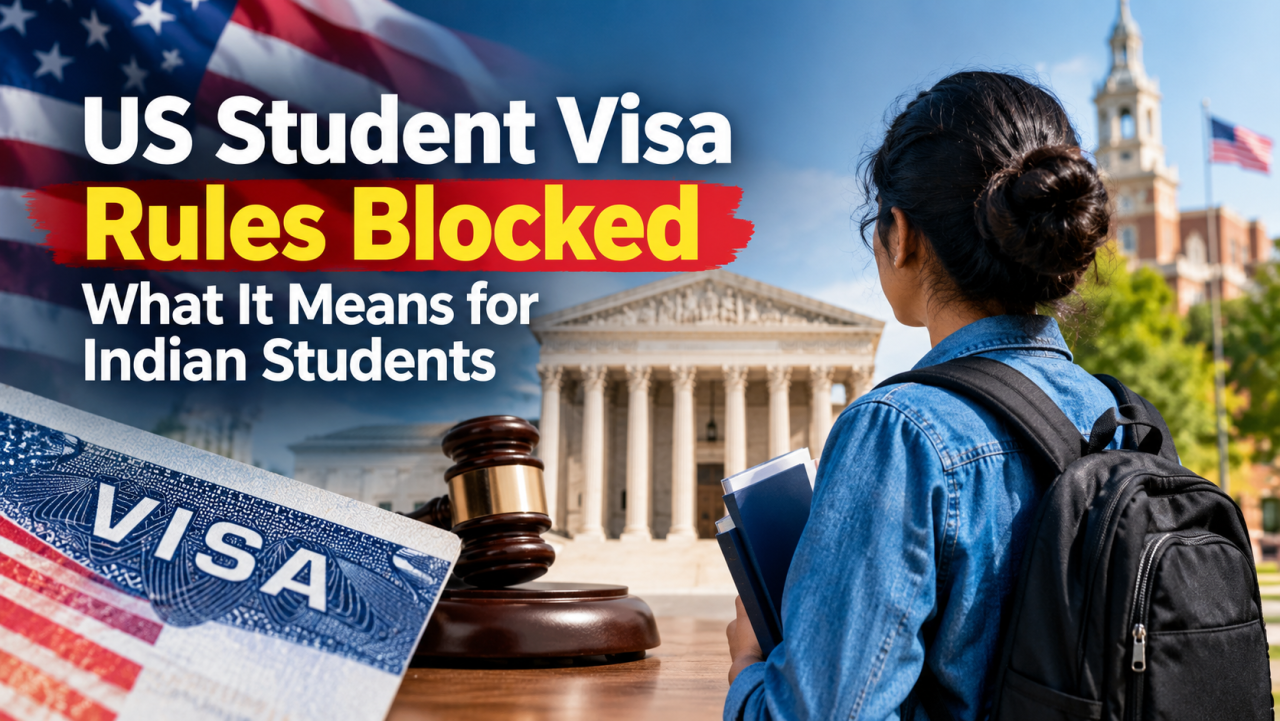
A visa rule that could have changed how Indian students study and work in America has been stopped by a US court, at least for now.
A US federal judge has temporarily blocked a Trump administration rule that would have replaced the long-standing “duration of status” system for international students with fixed periods of stay. For Indian students, who numbered 363,019 in the US during 2024–25, the ruling provides immediate relief. But the legal battle is not over.
What Was the Trump Administration Trying to Change?
For nearly 50 years, international students on F-1 visas have generally been admitted under a system known as “duration of status”. In simple terms, students can remain in the US while they maintain their legal student status and make normal progress in their academic programme.
The new rule sought to replace that system with fixed periods of admission. For most F and J visa holders, the proposed limit was four years. Students whose programmes lasted longer, or those who needed additional time for academic reasons, could have faced additional applications and immigration procedures.
The Department of Homeland Security argued that the change would provide greater control over immigration and reduce opportunities for visa abuse. Universities and immigration groups, however, warned that it would create uncertainty for students pursuing long courses, research programmes and other academic work.
Why Did the Judge Step In?
The case was heard by US District Judge F. Dennis Saylor IV in Boston. On September 14, 2026, he temporarily blocked the rule, one day before it was scheduled to take effect.
Saylor found that the government had not adequately explained why such a major change was necessary or properly considered its effects on universities and international students. He also questioned the strength of the government's national security justification.
The ruling keeps the existing system in place while the legal challenge continues. It does not permanently cancel the proposed rule.
Why It Matters to Indian Students
The issue is especially important for India because Indian students form the largest group of international students in the US. The 2024–25 Open Doors data recorded 363,019 Indian students, up 9.5% from the previous year. India accounted for about 31% of all international students in the country.
Many Indian students pursue master's degrees, doctoral programmes and STEM courses that may involve research, internships or changes in academic plans. A fixed four-year limit could have created additional paperwork when a programme extended beyond the original period.
The proposed change also raised concerns about students moving from study to work.
What About OPT?
Optional Practical Training, or OPT, allows eligible international students to gain temporary work experience in the US after completing their studies. It is an important part of the education-to-employment path for many Indian students.
The latest US government data shows that 39.6% of Indian students in 2024–25 were participating in OPT.
A change in the admission system could therefore have affected students even after their classroom studies ended. Questions about extensions and continued legal status could have added another layer of uncertainty to an already complex immigration process.
The Financial Cost
The dispute is also about money. The government estimated that the proposed changes would impose substantial compliance costs on universities and students. Universities argued that additional immigration procedures could discourage some international applicants from choosing the US.
That matters to American higher education because international students contribute tuition, research capacity and skilled talent to universities and the wider economy.
What Happens Now?
For the moment, the existing “duration of status” framework remains in place. Students already studying in the US do not need to change their immigration status simply because of the proposed rule.
But the court's decision is temporary. The Trump administration can appeal, and the broader legal challenge will continue.
For Indian students, there is relief, but not certainty.
Students already in the US should continue following the conditions of their F-1 status and stay in contact with their university's international student office. Those planning to apply should continue checking official US immigration and university updates rather than making decisions based only on the latest court ruling.
The judge has paused the proposed change. He has not ended the debate over how long international students should be allowed to remain in the United States.
A US federal judge has temporarily blocked a Trump administration rule that would have replaced the long-standing “duration of status” system for international students with fixed periods of stay. For Indian students, who numbered 363,019 in the US during 2024–25, the ruling provides immediate relief. But the legal battle is not over.
What Was the Trump Administration Trying to Change?
For nearly 50 years, international students on F-1 visas have generally been admitted under a system known as “duration of status”. In simple terms, students can remain in the US while they maintain their legal student status and make normal progress in their academic programme.
The new rule sought to replace that system with fixed periods of admission. For most F and J visa holders, the proposed limit was four years. Students whose programmes lasted longer, or those who needed additional time for academic reasons, could have faced additional applications and immigration procedures.
The Department of Homeland Security argued that the change would provide greater control over immigration and reduce opportunities for visa abuse. Universities and immigration groups, however, warned that it would create uncertainty for students pursuing long courses, research programmes and other academic work.
Why Did the Judge Step In?
The case was heard by US District Judge F. Dennis Saylor IV in Boston. On September 14, 2026, he temporarily blocked the rule, one day before it was scheduled to take effect.
Saylor found that the government had not adequately explained why such a major change was necessary or properly considered its effects on universities and international students. He also questioned the strength of the government's national security justification.
The ruling keeps the existing system in place while the legal challenge continues. It does not permanently cancel the proposed rule.
Why It Matters to Indian Students
The issue is especially important for India because Indian students form the largest group of international students in the US. The 2024–25 Open Doors data recorded 363,019 Indian students, up 9.5% from the previous year. India accounted for about 31% of all international students in the country.
Many Indian students pursue master's degrees, doctoral programmes and STEM courses that may involve research, internships or changes in academic plans. A fixed four-year limit could have created additional paperwork when a programme extended beyond the original period.
The proposed change also raised concerns about students moving from study to work.
What About OPT?
Optional Practical Training, or OPT, allows eligible international students to gain temporary work experience in the US after completing their studies. It is an important part of the education-to-employment path for many Indian students.
The latest US government data shows that 39.6% of Indian students in 2024–25 were participating in OPT.
A change in the admission system could therefore have affected students even after their classroom studies ended. Questions about extensions and continued legal status could have added another layer of uncertainty to an already complex immigration process.
The Financial Cost
The dispute is also about money. The government estimated that the proposed changes would impose substantial compliance costs on universities and students. Universities argued that additional immigration procedures could discourage some international applicants from choosing the US.
That matters to American higher education because international students contribute tuition, research capacity and skilled talent to universities and the wider economy.
What Happens Now?
For the moment, the existing “duration of status” framework remains in place. Students already studying in the US do not need to change their immigration status simply because of the proposed rule.
But the court's decision is temporary. The Trump administration can appeal, and the broader legal challenge will continue.
For Indian students, there is relief, but not certainty.
Students already in the US should continue following the conditions of their F-1 status and stay in contact with their university's international student office. Those planning to apply should continue checking official US immigration and university updates rather than making decisions based only on the latest court ruling.
The judge has paused the proposed change. He has not ended the debate over how long international students should be allowed to remain in the United States.









Leave a Comment