
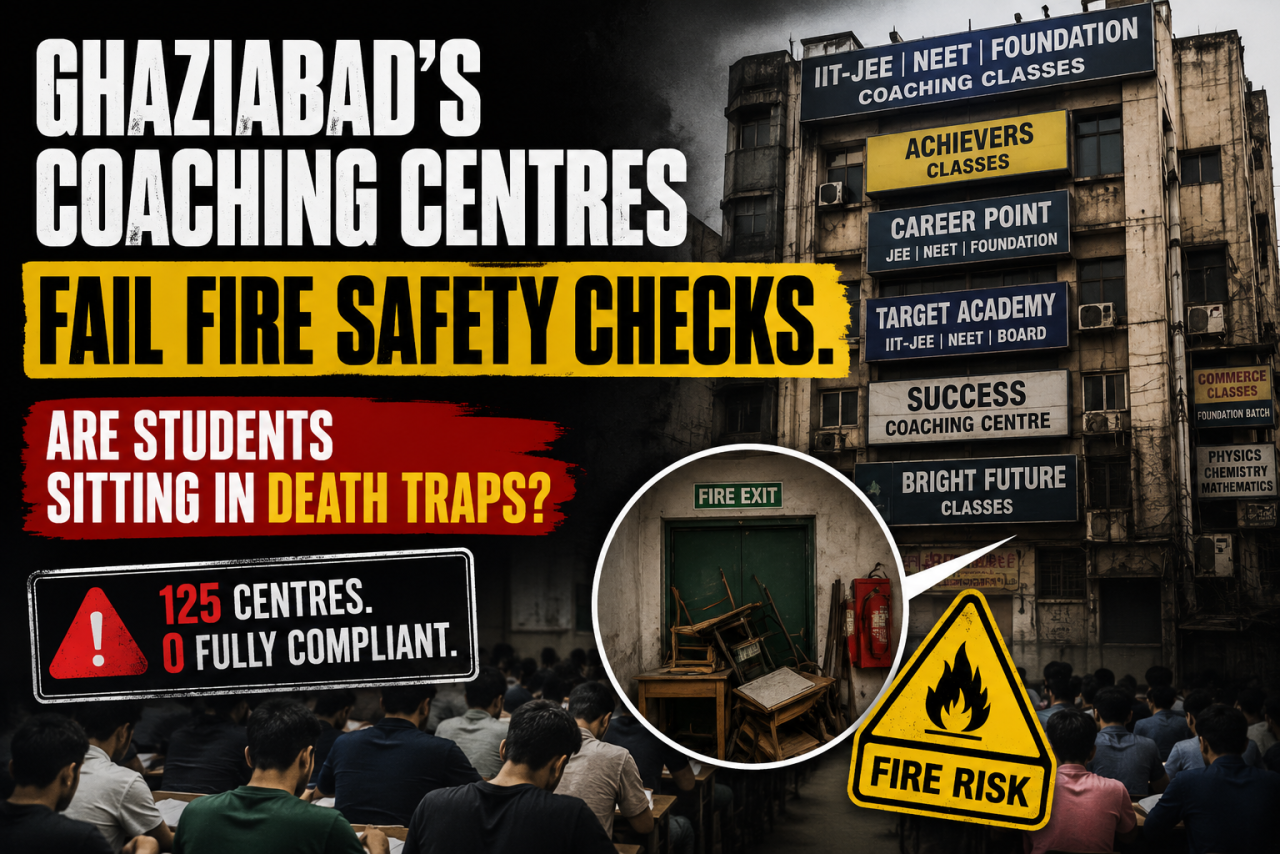
A routine inspection exposed a shocking reality in Ghaziabad: not one coaching centre passed basic fire safety checks. Are thousands of students studying inside unsafe buildings?
Every year, thousands of students walk into coaching centres across Ghaziabad with a single goal to secure a better future. They prepare for engineering and medical entrance examinations, civil services, and government recruitment tests. Their parents invest substantial savings in coaching fees, believing they are paying for opportunity.
What they rarely stop to ask is whether the building itself is safe.
That question has become impossible to ignore after Ghaziabad's fire department inspected coaching centres across the city and uncovered a disturbing reality: not a single one of the 125 centres issued notices was found to be fully compliant with basic fire safety norms.
The findings expose more than isolated negligence. They point to a systemic failure that has quietly placed thousands of students at risk every day.
Every Inspection Raised Red Flags
The inspections began in the aftermath of the devastating June 23 fire in Lucknow's Aliganj area, where 15 people—most of them students—lost their lives. The tragedy prompted authorities in Ghaziabad to examine whether similar dangers existed closer to home.
According to Chief Fire Officer Rahul Pal, inspection teams surveyed coaching centres across Vaishali, Raj Nagar, Indirapuram, Sahibabad and other localities. The results were alarming.
Most centres operating from commercial buildings lacked a valid fire No Objection Certificate (NOC), the mandatory clearance certifying that a building meets essential fire safety standards. Several buildings had no designated emergency exits, inadequate firefighting equipment, or evacuation routes incapable of handling large numbers of students during an emergency.
Some coaching operators reportedly removed their signboards or temporarily shut their premises during the inspection drive in an apparent attempt to avoid scrutiny. Such tactics may delay inspection, but they do nothing to eliminate the underlying danger.
By last Friday, officials had inspected around 150 coaching centres and served notices to 125 of them. Nearly 250 coaching institutes are believed to be operating across the city.
When the Building Becomes the Hazard
The concern extends beyond missing paperwork.
Many coaching institutes function out of commercial properties that were never designed to accommodate hundreds of students attending back-to-back classes for hours. Narrow staircases, locked exits, overcrowded classrooms and inadequate ventilation can quickly turn a manageable fire into a deadly disaster.
In such situations, the greatest threat is often not the fire itself but the inability of people to escape.
Students attending coaching classes rarely think about evacuation plans or emergency exits. Their attention is naturally focused on examinations. Ensuring their safety is therefore the responsibility of coaching operators, landlords and regulatory authorities—not the students themselves.
A Familiar Pattern After Every Tragedy
The Lucknow fire is only the latest reminder.
India has repeatedly witnessed disasters linked to unsafe educational facilities. Last year, three civil services aspirants drowned in the flooded basement of a coaching institute in Delhi's Old Rajinder Nagar. Other fatal incidents in different parts of the country have similarly exposed glaring safety violations.
Each tragedy follows an almost identical script.
Lives are lost. Authorities launch inspections. Notices are issued. Public attention intensifies for a few weeks. Eventually, enforcement weakens, institutions resume business, and the cycle continues until the next disaster.
The recurring problem suggests that India's coaching industry has expanded far more rapidly than its regulatory oversight.
Many institutes operate from converted apartments, upper floors of commercial complexes or basement spaces where safety standards were never designed for educational use. Commercial incentives encourage landlords to lease available spaces, while coaching operators prioritise classroom capacity over infrastructure upgrades.
In this environment, safety often becomes an afterthought.
Notices Alone Will Not Save Lives
Fire department officials have stated that action will be initiated after inspection reports are submitted to the Ghaziabad Development Authority (GDA). Coaching centres found violating safety norms may face further regulatory measures.
That is an important first step.
The real measure of success, however, will be what happens after the notices expire.
Across India, similar enforcement drives have often lost momentum once public attention faded. Many establishments simply paid penalties, made cosmetic changes or resumed operations without addressing fundamental safety deficiencies.
If Ghaziabad intends to avoid becoming the site of another preventable tragedy, enforcement must go beyond paperwork.
Coaching centres operating without mandatory fire clearances should not be permitted to function until they fully comply with safety requirements. Regular inspections—not one-time crackdowns triggered by disasters—must become the norm.
The Question Every Parent Should Ask
Parents routinely compare faculty, batch size, success rates and fee structures before enrolling their children.
They should add one more question to that checklist:
Does this building have a valid fire NOC, and where are the emergency exits?
If a coaching institute cannot answer those questions immediately and transparently, that should raise serious concerns about how seriously it treats student safety.
The young people studying inside these classrooms are investing years of their lives in pursuit of better opportunities. The least society owes them is an environment where their dreams are not endangered by the very buildings meant to help them achieve them.
No examination is worth risking a life for.
Every year, thousands of students walk into coaching centres across Ghaziabad with a single goal to secure a better future. They prepare for engineering and medical entrance examinations, civil services, and government recruitment tests. Their parents invest substantial savings in coaching fees, believing they are paying for opportunity.
What they rarely stop to ask is whether the building itself is safe.
That question has become impossible to ignore after Ghaziabad's fire department inspected coaching centres across the city and uncovered a disturbing reality: not a single one of the 125 centres issued notices was found to be fully compliant with basic fire safety norms.
The findings expose more than isolated negligence. They point to a systemic failure that has quietly placed thousands of students at risk every day.
Every Inspection Raised Red Flags
The inspections began in the aftermath of the devastating June 23 fire in Lucknow's Aliganj area, where 15 people—most of them students—lost their lives. The tragedy prompted authorities in Ghaziabad to examine whether similar dangers existed closer to home.
According to Chief Fire Officer Rahul Pal, inspection teams surveyed coaching centres across Vaishali, Raj Nagar, Indirapuram, Sahibabad and other localities. The results were alarming.
Most centres operating from commercial buildings lacked a valid fire No Objection Certificate (NOC), the mandatory clearance certifying that a building meets essential fire safety standards. Several buildings had no designated emergency exits, inadequate firefighting equipment, or evacuation routes incapable of handling large numbers of students during an emergency.
Some coaching operators reportedly removed their signboards or temporarily shut their premises during the inspection drive in an apparent attempt to avoid scrutiny. Such tactics may delay inspection, but they do nothing to eliminate the underlying danger.
By last Friday, officials had inspected around 150 coaching centres and served notices to 125 of them. Nearly 250 coaching institutes are believed to be operating across the city.
When the Building Becomes the Hazard
The concern extends beyond missing paperwork.
Many coaching institutes function out of commercial properties that were never designed to accommodate hundreds of students attending back-to-back classes for hours. Narrow staircases, locked exits, overcrowded classrooms and inadequate ventilation can quickly turn a manageable fire into a deadly disaster.
In such situations, the greatest threat is often not the fire itself but the inability of people to escape.
Students attending coaching classes rarely think about evacuation plans or emergency exits. Their attention is naturally focused on examinations. Ensuring their safety is therefore the responsibility of coaching operators, landlords and regulatory authorities—not the students themselves.
A Familiar Pattern After Every Tragedy
The Lucknow fire is only the latest reminder.
India has repeatedly witnessed disasters linked to unsafe educational facilities. Last year, three civil services aspirants drowned in the flooded basement of a coaching institute in Delhi's Old Rajinder Nagar. Other fatal incidents in different parts of the country have similarly exposed glaring safety violations.
Each tragedy follows an almost identical script.
Lives are lost. Authorities launch inspections. Notices are issued. Public attention intensifies for a few weeks. Eventually, enforcement weakens, institutions resume business, and the cycle continues until the next disaster.
The recurring problem suggests that India's coaching industry has expanded far more rapidly than its regulatory oversight.
Many institutes operate from converted apartments, upper floors of commercial complexes or basement spaces where safety standards were never designed for educational use. Commercial incentives encourage landlords to lease available spaces, while coaching operators prioritise classroom capacity over infrastructure upgrades.
In this environment, safety often becomes an afterthought.
Notices Alone Will Not Save Lives
Fire department officials have stated that action will be initiated after inspection reports are submitted to the Ghaziabad Development Authority (GDA). Coaching centres found violating safety norms may face further regulatory measures.
That is an important first step.
The real measure of success, however, will be what happens after the notices expire.
Across India, similar enforcement drives have often lost momentum once public attention faded. Many establishments simply paid penalties, made cosmetic changes or resumed operations without addressing fundamental safety deficiencies.
If Ghaziabad intends to avoid becoming the site of another preventable tragedy, enforcement must go beyond paperwork.
Coaching centres operating without mandatory fire clearances should not be permitted to function until they fully comply with safety requirements. Regular inspections—not one-time crackdowns triggered by disasters—must become the norm.
The Question Every Parent Should Ask
Parents routinely compare faculty, batch size, success rates and fee structures before enrolling their children.
They should add one more question to that checklist:
Does this building have a valid fire NOC, and where are the emergency exits?
If a coaching institute cannot answer those questions immediately and transparently, that should raise serious concerns about how seriously it treats student safety.
The young people studying inside these classrooms are investing years of their lives in pursuit of better opportunities. The least society owes them is an environment where their dreams are not endangered by the very buildings meant to help them achieve them.
No examination is worth risking a life for.


























Leave a Comment