
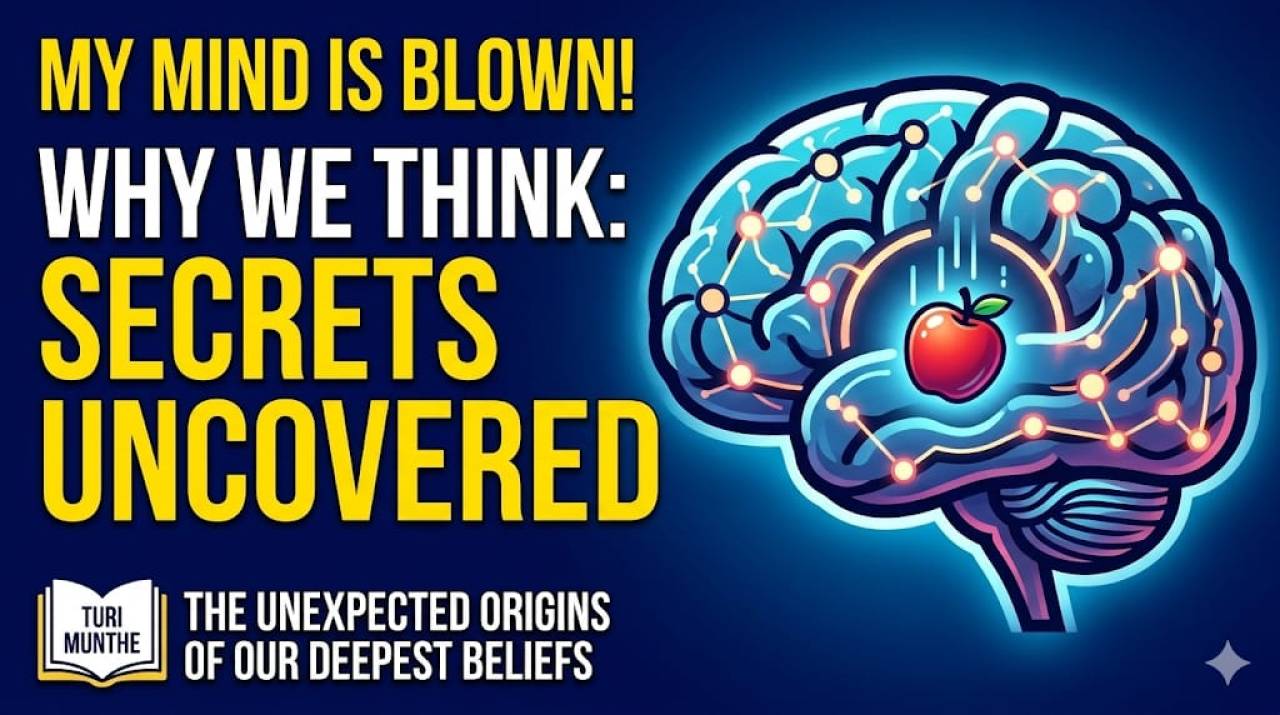
What if your strongest beliefs were shaped long before you formed them? Turi Munthe's fascinating book challenges everything you assume about thinking.
We like to imagine ourselves as fiercely independent and rational thinkers. Our political views, moral beliefs, and social values often feel like the product of careful reasoning and objective evidence. But what if the foundations of our worldview were shaped long before we consciously began to think for ourselves?
In Why We Think What We Think: The Unexpected Origins of Our Deepest Beliefs, journalist and media entrepreneur Turi Munthe challenges one of our most cherished assumptions: that our convictions are primarily the result of reason. Drawing on research from history, biology, geography, psychology, and sociology, Munthe reveals the hidden forces that quietly shape how we see the world.
The result is a fascinating and thought-provoking exploration of the origins of belief—one that feels particularly relevant in an age marked by polarization, ideological conflict, and shrinking spaces for meaningful dialogue.
The Invisible Forces Behind Our Opinions
At the heart of Munthe’s argument lies a simple but unsettling idea: our beliefs are often influenced by factors we neither choose nor recognize.
Rather than being products of pure logic, our opinions emerge from a complex interplay of environmental, cultural, biological, and historical influences. Throughout the book, Munthe presents a wealth of surprising research that challenges conventional assumptions about how people form their views.
Among the most striking examples is the enduring impact of ancient agricultural practices. Munthe highlights research suggesting that communities historically dependent on rice farming tend to develop more collective and interdependent social values, while regions shaped by grain farming often encourage greater individualism. These cultural patterns, established centuries ago, continue to influence attitudes today.
The book also ventures into the surprising relationship between biology and ideology. Munthe examines studies indicating that physical traits and neurological differences can correlate with political preferences. From physical attractiveness to variations in sensory perception, seemingly unrelated biological factors may subtly shape how individuals interpret the world around them.
Equally compelling is the role of geography and climate in the development of religious and political systems. Munthe explores evidence suggesting that environmental conditions have historically influenced societal structures, leadership styles, and even concepts of divinity. Harsh or unpredictable environments often foster beliefs that emphasize authority, order, and discipline, while more stable conditions can encourage different cultural values.
Taken together, these examples reveal a powerful truth: human beings are not merely truth-seeking creatures. We are also social creatures whose minds evolved to ensure survival, cooperation, and belonging.
Beyond Determinism
A book built around the hidden origins of belief could easily become a pessimistic exercise in determinism. If our opinions are shaped by forces beyond our control, what hope is there for independent thought?
Munthe avoids this trap.
Rather than arguing that people are prisoners of their biology or environment, he emphasizes the importance of recognizing these influences. Awareness, he suggests, is the first step toward intellectual freedom.
This is where Why We Think What We Think moves beyond an engaging survey of human psychology and becomes a compelling argument for a healthier public discourse.
One of the book’s most memorable ideas is captured in Munthe’s observation:
“Thinking is a contact sport.”
The phrase serves as a powerful reminder that our best ideas rarely emerge in isolation. Genuine understanding develops through conversation, disagreement, and the testing of assumptions against alternative perspectives.
In a world increasingly shaped by social media algorithms, ideological echo chambers, and political tribalism, Munthe argues that disagreement is not a problem to be eliminated—it is an essential ingredient of intellectual growth. Exposure to competing viewpoints challenges our blind spots, refines our thinking, and strengthens democratic societies.
A Timely and Important Read
What makes the book especially effective is Munthe’s ability to balance scholarly rigor with engaging storytelling. Complex research findings are presented in a clear and accessible manner, making the book appealing to both casual readers and those interested in psychology, politics, or social science.
The writing is lively, insightful, and often surprising. Readers will frequently find themselves questioning assumptions they previously regarded as self-evident. It is this capacity to unsettle without alienating that gives the book its lasting impact.
Final Take
Why We Think What We Think is more than a book about belief. It is a guide to understanding the hidden architecture of the human mind and the forces that shape modern society.
At a time when certainty is abundant but understanding is scarce, Munthe offers a valuable lesson in intellectual humility. He reminds readers that many of the convictions they hold most dearly may have origins far beyond conscious reasoning—and that recognizing this fact can make us not weaker thinkers, but better ones.
For anyone seeking to understand why people disagree, why societies become polarized, and how meaningful dialogue can still thrive, this book is an essential read.
We like to imagine ourselves as fiercely independent and rational thinkers. Our political views, moral beliefs, and social values often feel like the product of careful reasoning and objective evidence. But what if the foundations of our worldview were shaped long before we consciously began to think for ourselves?
In Why We Think What We Think: The Unexpected Origins of Our Deepest Beliefs, journalist and media entrepreneur Turi Munthe challenges one of our most cherished assumptions: that our convictions are primarily the result of reason. Drawing on research from history, biology, geography, psychology, and sociology, Munthe reveals the hidden forces that quietly shape how we see the world.
The result is a fascinating and thought-provoking exploration of the origins of belief—one that feels particularly relevant in an age marked by polarization, ideological conflict, and shrinking spaces for meaningful dialogue.
The Invisible Forces Behind Our Opinions
At the heart of Munthe’s argument lies a simple but unsettling idea: our beliefs are often influenced by factors we neither choose nor recognize.
Rather than being products of pure logic, our opinions emerge from a complex interplay of environmental, cultural, biological, and historical influences. Throughout the book, Munthe presents a wealth of surprising research that challenges conventional assumptions about how people form their views.
Among the most striking examples is the enduring impact of ancient agricultural practices. Munthe highlights research suggesting that communities historically dependent on rice farming tend to develop more collective and interdependent social values, while regions shaped by grain farming often encourage greater individualism. These cultural patterns, established centuries ago, continue to influence attitudes today.
The book also ventures into the surprising relationship between biology and ideology. Munthe examines studies indicating that physical traits and neurological differences can correlate with political preferences. From physical attractiveness to variations in sensory perception, seemingly unrelated biological factors may subtly shape how individuals interpret the world around them.
Equally compelling is the role of geography and climate in the development of religious and political systems. Munthe explores evidence suggesting that environmental conditions have historically influenced societal structures, leadership styles, and even concepts of divinity. Harsh or unpredictable environments often foster beliefs that emphasize authority, order, and discipline, while more stable conditions can encourage different cultural values.
Taken together, these examples reveal a powerful truth: human beings are not merely truth-seeking creatures. We are also social creatures whose minds evolved to ensure survival, cooperation, and belonging.
Beyond Determinism
A book built around the hidden origins of belief could easily become a pessimistic exercise in determinism. If our opinions are shaped by forces beyond our control, what hope is there for independent thought?
Munthe avoids this trap.
Rather than arguing that people are prisoners of their biology or environment, he emphasizes the importance of recognizing these influences. Awareness, he suggests, is the first step toward intellectual freedom.
This is where Why We Think What We Think moves beyond an engaging survey of human psychology and becomes a compelling argument for a healthier public discourse.
One of the book’s most memorable ideas is captured in Munthe’s observation:
“Thinking is a contact sport.”
The phrase serves as a powerful reminder that our best ideas rarely emerge in isolation. Genuine understanding develops through conversation, disagreement, and the testing of assumptions against alternative perspectives.
In a world increasingly shaped by social media algorithms, ideological echo chambers, and political tribalism, Munthe argues that disagreement is not a problem to be eliminated—it is an essential ingredient of intellectual growth. Exposure to competing viewpoints challenges our blind spots, refines our thinking, and strengthens democratic societies.
A Timely and Important Read
What makes the book especially effective is Munthe’s ability to balance scholarly rigor with engaging storytelling. Complex research findings are presented in a clear and accessible manner, making the book appealing to both casual readers and those interested in psychology, politics, or social science.
The writing is lively, insightful, and often surprising. Readers will frequently find themselves questioning assumptions they previously regarded as self-evident. It is this capacity to unsettle without alienating that gives the book its lasting impact.
Final Take
Why We Think What We Think is more than a book about belief. It is a guide to understanding the hidden architecture of the human mind and the forces that shape modern society.
At a time when certainty is abundant but understanding is scarce, Munthe offers a valuable lesson in intellectual humility. He reminds readers that many of the convictions they hold most dearly may have origins far beyond conscious reasoning—and that recognizing this fact can make us not weaker thinkers, but better ones.
For anyone seeking to understand why people disagree, why societies become polarized, and how meaningful dialogue can still thrive, this book is an essential read.
























Leave a Comment