
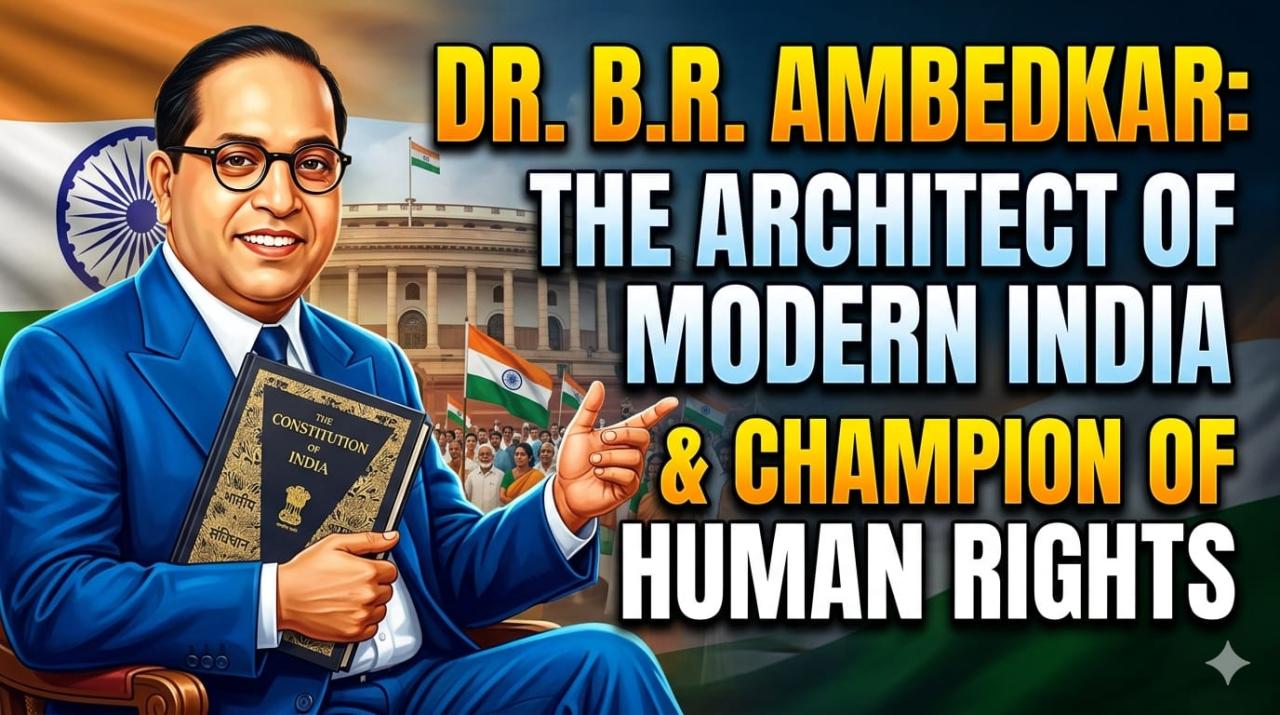
Dr. B.R. Ambedkar did not just write the Constitution of India—he reshaped the moral and social foundation of the nation through law, resistance, and vision.
B. R. Ambedkar was one of the most influential figures in modern Indian history. He worked across multiple fields, including law, economics, politics, and social reform. His contributions played a decisive role in shaping India into a democratic republic. His ideas were rooted in justice, equality, and human dignity. Throughout his life, he worked consistently to eliminate discrimination and to establish a society based on equal rights.
Role in Framing the Indian Constitution
Dr. Ambedkar is widely known for his role as the Chairman of the Drafting Committee of the Indian Constitution. He led the effort to prepare a legal structure for a newly independent nation. This responsibility required balancing diverse interests and expectations.
He ensured that the Constitution protected the rights of every citizen. He strongly supported the inclusion of Fundamental Rights. These rights guarantee equality before the law, freedom of expression, and protection from discrimination. He also supported the Directive Principles of State Policy, which guide the government in ensuring social and economic welfare.
One of his most significant contributions was the inclusion of Article 17, which abolished untouchability. This provision gave legal strength to the fight against caste-based discrimination. Through constitutional safeguards, he aimed to create a just and inclusive society.
Struggle Against the Caste System
Dr. Ambedkar dedicated his life to opposing the caste system. He believed that political independence had no meaning without social equality. His own experiences of discrimination shaped his understanding of injustice.
He led several movements to demand equal rights for marginalized communities. The Mahad Satyagraha of 1927 was one such important movement. It asserted the right of Dalits to access public water sources. This act directly challenged social exclusion.
In his well-known work Annihilation of Caste, he explained the structural problems of the caste system. He argued that it divided society and limited progress. He believed that true reform required dismantling caste-based hierarchies.
He also supported reservation policies for Scheduled Castes and Scheduled Tribes. These policies created opportunities in education and public employment. They became an important tool for social mobility.
Contribution to Women’s Rights
Dr. Ambedkar strongly believed in gender equality. He often stated that the progress of a society depends on the progress of its women. As India’s first Law Minister, he introduced the Hindu Code Bill.
The bill aimed to reform Hindu personal laws. It proposed rights for women in property, marriage, and divorce. It also supported legal equality and monogamy.
The bill faced resistance and was not passed in its original form during his tenure. However, its core ideas were later implemented through separate laws. These reforms became the foundation of modern legal rights for women in India.
Economic Vision and Institutional Impact
Dr. Ambedkar was also an accomplished economist. He studied economics in depth and wrote on financial systems and public policy. His research on currency and monetary stability influenced India’s economic framework.
His work contributed to the establishment of the Reserve Bank of India in 1935. He had earlier highlighted the need for a central banking institution to regulate currency and credit.
He also examined issues related to agriculture, industrial growth, and public finance. He believed that economic policies should benefit all sections of society, especially the marginalized.
Labor Reforms and Worker Rights
Dr. Ambedkar played an important role in shaping labor policies in India. As a member of the Viceroy’s Executive Council, he handled labor-related matters. He introduced several reforms to improve working conditions.
He supported the reduction of working hours and helped establish the eight-hour workday. He also advocated for equal pay for equal work. He worked toward providing maternity benefits and improving workplace conditions.
He also promoted the establishment of employment exchanges. These institutions helped workers find jobs and improved labor organization. His reforms strengthened the rights of workers across industries.
A Lasting Legacy
Dr. Ambedkar’s work was centered on empowering individuals through law and education. His message of “Educate, Agitate, Organize” continues to inspire movements for justice.
His decision to convert to Buddhism later in life reflected his rejection of caste-based hierarchy. It also showed his commitment to equality and rational thinking.
Today, Dr. Ambedkar is remembered not only as the architect of the Constitution but also as a leader who fought for human rights. His ideas continue to guide India’s progress toward equality and social justice.
B. R. Ambedkar was one of the most influential figures in modern Indian history. He worked across multiple fields, including law, economics, politics, and social reform. His contributions played a decisive role in shaping India into a democratic republic. His ideas were rooted in justice, equality, and human dignity. Throughout his life, he worked consistently to eliminate discrimination and to establish a society based on equal rights.
Role in Framing the Indian Constitution
Dr. Ambedkar is widely known for his role as the Chairman of the Drafting Committee of the Indian Constitution. He led the effort to prepare a legal structure for a newly independent nation. This responsibility required balancing diverse interests and expectations.
He ensured that the Constitution protected the rights of every citizen. He strongly supported the inclusion of Fundamental Rights. These rights guarantee equality before the law, freedom of expression, and protection from discrimination. He also supported the Directive Principles of State Policy, which guide the government in ensuring social and economic welfare.
One of his most significant contributions was the inclusion of Article 17, which abolished untouchability. This provision gave legal strength to the fight against caste-based discrimination. Through constitutional safeguards, he aimed to create a just and inclusive society.
Struggle Against the Caste System
Dr. Ambedkar dedicated his life to opposing the caste system. He believed that political independence had no meaning without social equality. His own experiences of discrimination shaped his understanding of injustice.
He led several movements to demand equal rights for marginalized communities. The Mahad Satyagraha of 1927 was one such important movement. It asserted the right of Dalits to access public water sources. This act directly challenged social exclusion.
In his well-known work Annihilation of Caste, he explained the structural problems of the caste system. He argued that it divided society and limited progress. He believed that true reform required dismantling caste-based hierarchies.
He also supported reservation policies for Scheduled Castes and Scheduled Tribes. These policies created opportunities in education and public employment. They became an important tool for social mobility.
Contribution to Women’s Rights
Dr. Ambedkar strongly believed in gender equality. He often stated that the progress of a society depends on the progress of its women. As India’s first Law Minister, he introduced the Hindu Code Bill.
The bill aimed to reform Hindu personal laws. It proposed rights for women in property, marriage, and divorce. It also supported legal equality and monogamy.
The bill faced resistance and was not passed in its original form during his tenure. However, its core ideas were later implemented through separate laws. These reforms became the foundation of modern legal rights for women in India.
Economic Vision and Institutional Impact
Dr. Ambedkar was also an accomplished economist. He studied economics in depth and wrote on financial systems and public policy. His research on currency and monetary stability influenced India’s economic framework.
His work contributed to the establishment of the Reserve Bank of India in 1935. He had earlier highlighted the need for a central banking institution to regulate currency and credit.
He also examined issues related to agriculture, industrial growth, and public finance. He believed that economic policies should benefit all sections of society, especially the marginalized.
Labor Reforms and Worker Rights
Dr. Ambedkar played an important role in shaping labor policies in India. As a member of the Viceroy’s Executive Council, he handled labor-related matters. He introduced several reforms to improve working conditions.
He supported the reduction of working hours and helped establish the eight-hour workday. He also advocated for equal pay for equal work. He worked toward providing maternity benefits and improving workplace conditions.
He also promoted the establishment of employment exchanges. These institutions helped workers find jobs and improved labor organization. His reforms strengthened the rights of workers across industries.
A Lasting Legacy
Dr. Ambedkar’s work was centered on empowering individuals through law and education. His message of “Educate, Agitate, Organize” continues to inspire movements for justice.
His decision to convert to Buddhism later in life reflected his rejection of caste-based hierarchy. It also showed his commitment to equality and rational thinking.
Today, Dr. Ambedkar is remembered not only as the architect of the Constitution but also as a leader who fought for human rights. His ideas continue to guide India’s progress toward equality and social justice.




























Leave a Comment