
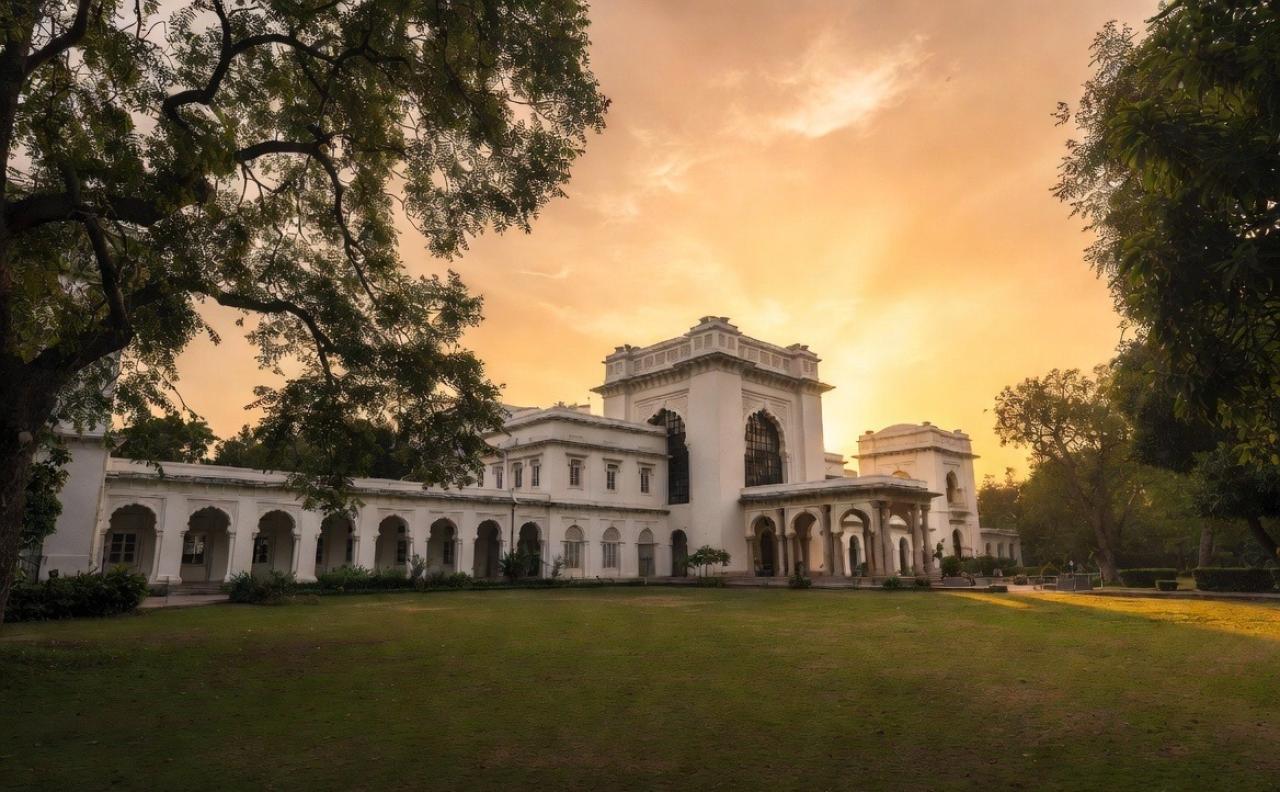
Can a colonial-era elite club still justify occupying prime public land in the heart of India’s democracy? The Delhi Gymkhana row is forcing the capital to confront uncomfortable questions about privilege and heritage.
In the heart of Lutyens’ Delhi, where wide boulevards and stately bungalows still whisper of imperial grandeur, a quiet but fierce battle is unfolding over 27.3 acres of prime land near Safdarjung Road. The Delhi Gymkhana Club, an institution older than independent India itself, has been ordered by the Centre to vacate its premises. The intervention of the Delhi High Court has reopened a larger question that Delhiites have debated for years in drawing rooms and on social media alike: in a city gasping for public space, whose Delhi is it anyway?
What makes this story more than routine bureaucratic muscle-flexing is its timing and symbolism. Delhi is India’s most ambitious capital — a city that wants to host international summits like G20, expand metro lines, build modern airports, and showcase world-class infrastructure — yet remains shaped by pockets of exclusivity inherited from the Raj. The Gymkhana Club, with membership fees reportedly touching ₹30 lakh and waiting lists stretching for years, represents one of the last bastions of an old elite order where senior bureaucrats, politicians, and established families still gather over bridge games, single malts, and quiet networking away from the chaos of “Aam Aadmi” Delhi.
Critics see the club as an anachronism. Supporters view it as a cultural anchor. The truth, as often in Delhi, lies somewhere within the city’s layered history and competing aspirations.
Established in the early 20th century as a social institution for British officers and Indian elites, the Gymkhana has survived Partition, socialist decades, economic liberalisation, and changing political regimes. Today, nearly half of its members are serving or retired government officials — a reality that makes the eviction notice both ironic and politically charged. The government argues that the land is required for “strengthening infrastructure and securing defence establishments.” The club, meanwhile, maintains that it has been paying rent regularly and describes the move as excessive and abrupt.
Yet the controversy extends far beyond one institution. It reflects Delhi’s deeper identity crisis. In the capital, land is more precious than gold. From the farmhouses of Chattarpur to the commercial complexes of Saket, every acre tells a story of negotiation between public need and private privilege. The Gymkhana occupies one of the city’s greenest and most exclusive zones — an area where ordinary citizens often feel like visitors in their own capital. While schoolchildren in Rohini and Dwarka struggle with shrinking playgrounds and worsening air quality, a relatively small circle of privileged members enjoys manicured lawns, colonial architecture, and sprawling recreational facilities.
At the same time, dismissing the club as nothing more than elitism would amount to simplistic analysis. Institutions like Gymkhana have historically functioned as informal spaces where policy conversations occur away from cameras and partisan theatre, where professional and political relationships survive ideological divides, and where Delhi’s enduring “durbar culture” finds a physical setting. In an age shaped by polarised politics and digital echo chambers, such spaces — however exclusive — can still facilitate the quiet consensus that governance often depends upon.
The real tension lies in changing public expectations. Today’s Delhi is no longer merely the administrative seat of power; it is a metropolis of more than 20 million people, driven by a younger and more aspirational population increasingly impatient with inherited privilege. Social media has amplified this frustration. As reports about the club’s high membership fees and years-long waiting lists circulated online, many citizens began to see it as a symbol of everything associated with “VIP Delhi” — from red-beacon culture to sprawling Lutyens-era bungalows.
Perhaps the answer lies not in outright eviction but in reinvention. Could parts of the club’s sprawling campus be opened for public use through evening access, cultural programmes, or sports facilities for underprivileged children while preserving its historic identity? Could the institution evolve into a modern, merit-based cultural space that reflects the confidence and diversity of 21st-century India rather than the exclusivity of 1920s Delhi?
The Gymkhana controversy is ultimately not just about one club or one parcel of land. It is about how Delhi chooses to reconcile its colonial inheritance with its democratic future. As the legal battle unfolds, the city watches closely. Will Lutyens’ Delhi finally open its gates, or will the old walls continue to hold?
In a capital that prides itself on being the soul of the world’s largest democracy, the answer may reveal as much about India’s collective aspirations as it does about real estate, privilege, and power.
In the heart of Lutyens’ Delhi, where wide boulevards and stately bungalows still whisper of imperial grandeur, a quiet but fierce battle is unfolding over 27.3 acres of prime land near Safdarjung Road. The Delhi Gymkhana Club, an institution older than independent India itself, has been ordered by the Centre to vacate its premises. The intervention of the Delhi High Court has reopened a larger question that Delhiites have debated for years in drawing rooms and on social media alike: in a city gasping for public space, whose Delhi is it anyway?
What makes this story more than routine bureaucratic muscle-flexing is its timing and symbolism. Delhi is India’s most ambitious capital — a city that wants to host international summits like G20, expand metro lines, build modern airports, and showcase world-class infrastructure — yet remains shaped by pockets of exclusivity inherited from the Raj. The Gymkhana Club, with membership fees reportedly touching ₹30 lakh and waiting lists stretching for years, represents one of the last bastions of an old elite order where senior bureaucrats, politicians, and established families still gather over bridge games, single malts, and quiet networking away from the chaos of “Aam Aadmi” Delhi.
Critics see the club as an anachronism. Supporters view it as a cultural anchor. The truth, as often in Delhi, lies somewhere within the city’s layered history and competing aspirations.
Established in the early 20th century as a social institution for British officers and Indian elites, the Gymkhana has survived Partition, socialist decades, economic liberalisation, and changing political regimes. Today, nearly half of its members are serving or retired government officials — a reality that makes the eviction notice both ironic and politically charged. The government argues that the land is required for “strengthening infrastructure and securing defence establishments.” The club, meanwhile, maintains that it has been paying rent regularly and describes the move as excessive and abrupt.
Yet the controversy extends far beyond one institution. It reflects Delhi’s deeper identity crisis. In the capital, land is more precious than gold. From the farmhouses of Chattarpur to the commercial complexes of Saket, every acre tells a story of negotiation between public need and private privilege. The Gymkhana occupies one of the city’s greenest and most exclusive zones — an area where ordinary citizens often feel like visitors in their own capital. While schoolchildren in Rohini and Dwarka struggle with shrinking playgrounds and worsening air quality, a relatively small circle of privileged members enjoys manicured lawns, colonial architecture, and sprawling recreational facilities.
At the same time, dismissing the club as nothing more than elitism would amount to simplistic analysis. Institutions like Gymkhana have historically functioned as informal spaces where policy conversations occur away from cameras and partisan theatre, where professional and political relationships survive ideological divides, and where Delhi’s enduring “durbar culture” finds a physical setting. In an age shaped by polarised politics and digital echo chambers, such spaces — however exclusive — can still facilitate the quiet consensus that governance often depends upon.
The real tension lies in changing public expectations. Today’s Delhi is no longer merely the administrative seat of power; it is a metropolis of more than 20 million people, driven by a younger and more aspirational population increasingly impatient with inherited privilege. Social media has amplified this frustration. As reports about the club’s high membership fees and years-long waiting lists circulated online, many citizens began to see it as a symbol of everything associated with “VIP Delhi” — from red-beacon culture to sprawling Lutyens-era bungalows.
Perhaps the answer lies not in outright eviction but in reinvention. Could parts of the club’s sprawling campus be opened for public use through evening access, cultural programmes, or sports facilities for underprivileged children while preserving its historic identity? Could the institution evolve into a modern, merit-based cultural space that reflects the confidence and diversity of 21st-century India rather than the exclusivity of 1920s Delhi?
The Gymkhana controversy is ultimately not just about one club or one parcel of land. It is about how Delhi chooses to reconcile its colonial inheritance with its democratic future. As the legal battle unfolds, the city watches closely. Will Lutyens’ Delhi finally open its gates, or will the old walls continue to hold?
In a capital that prides itself on being the soul of the world’s largest democracy, the answer may reveal as much about India’s collective aspirations as it does about real estate, privilege, and power.






















Leave a Comment