
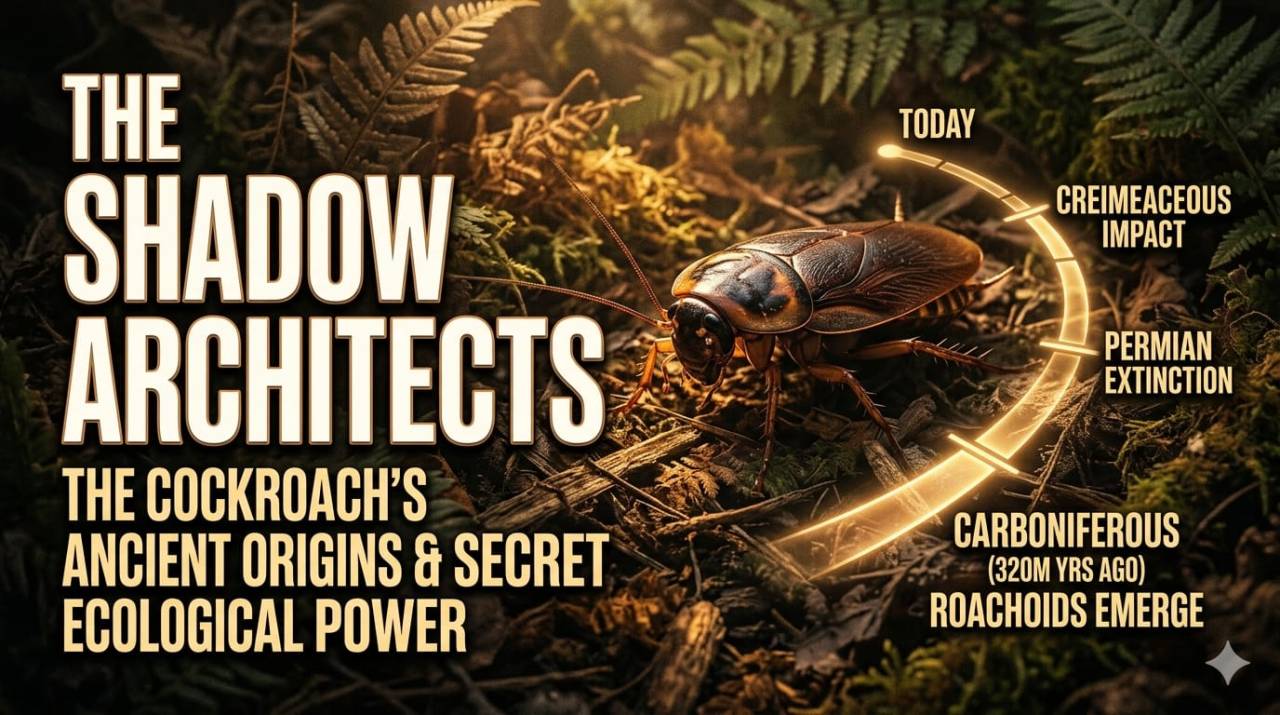
They survived the extinction that killed the dinosaurs, outlived countless species, and still quietly sustain Earth’s ecosystems. Behind the reviled image of the cockroach lies one of nature’s oldest and most important survival stories.
When most people think of cockroaches, the reaction is immediate: disgust, fear, or the instinct to reach for insect spray. They are often treated as symbols of dirt and decay, unwelcome intruders in homes and cities. Yet beyond this human perception lies one of nature’s greatest survival stories.
Cockroaches are among the oldest and most resilient life forms on Earth. Long before dinosaurs roamed the planet, their ancestors were already thriving in prehistoric forests. Even today, after surviving mass extinctions that erased countless species, they continue to play a silent but essential role in maintaining ecological balance.
Far from being mere pests, cockroaches are among nature’s most efficient recyclers, helping forests regenerate and ecosystems remain healthy.
The Ancient Origins of Cockroaches
The story of cockroaches begins roughly 320 million years ago during the Carboniferous period, a time when Earth was covered in dense swamp forests rich in oxygen. Early ancestors of modern cockroaches, often called “roachoids” by paleontologists, emerged during this era.
These primitive insects evolved features that proved remarkably successful: flattened bodies that allowed them to hide in narrow spaces, flexible exoskeletons for protection, and omnivorous diets that enabled them to consume almost anything organic. Over millions of years, while countless species evolved dramatically or disappeared entirely, the basic body design of the cockroach remained largely unchanged.
Their evolutionary success becomes even more astonishing when viewed through the lens of history. Cockroaches survived the Permian-Triassic extinction event, often called the “Great Dying,” which wiped out nearly 90 percent of Earth’s species. Later, they also survived the asteroid impact that led to the extinction of the dinosaurs.
Very few creatures can claim such a record of endurance. In many ways, cockroaches are living relics of prehistoric Earth.
Nature’s Hidden Recycling System
Despite their reputation in urban spaces, the overwhelming majority of cockroach species do not live inside human homes. Scientists estimate that out of more than 4,600 known species, only around 30 regularly interact with humans. The rest inhabit forests, caves, grasslands, and tropical ecosystems across the world.
In these natural environments, cockroaches perform one of the most important ecological functions imaginable: decomposition.
Breaking Down Organic Waste
Wild cockroaches feed on decaying leaves, dead wood, fungi, animal waste, and other forms of organic debris. By consuming this material, they help accelerate decomposition and prevent ecosystems from becoming overloaded with waste.
This process is critical because it releases nutrients back into the soil, especially nitrogen, which plants require for growth. Without decomposers like cockroaches, forests would struggle to recycle nutrients efficiently, leading to slower plant growth and weaker ecosystems.
In simple terms, cockroaches help convert death and decay into new life.
Supporting Soil Health
As cockroaches digest organic matter, their waste enriches the soil with nutrients and microorganisms. This supports the growth of fungi, bacteria, and plants that form the foundation of forest ecosystems.
Healthy soil is not created by trees alone. It depends on millions of tiny organisms working continuously beneath the surface. Cockroaches are an important part of this invisible network.
A Key Link in the Food Chain
Cockroaches also serve as a major food source for birds, reptiles, amphibians, spiders, and small mammals. Because they reproduce in large numbers, they provide a stable supply of nutrition for countless species.
If cockroach populations were suddenly removed from natural ecosystems, the impact would spread rapidly through the food web. Predators that depend on insects for survival would decline, creating ripple effects throughout forests and grasslands.
What Would Happen If Cockroaches Disappeared?
The idea may sound appealing to some people, but the disappearance of cockroaches would create serious ecological consequences.
Dead plant matter and organic waste would accumulate much faster in forests. Nutrient recycling would slow down, reducing soil fertility over time. Many insect-eating animals would lose a reliable food source, leading to population declines among birds, frogs, and reptiles.
Agriculture could also be indirectly affected, as weaker soil ecosystems would reduce plant productivity in the long term.
Nature operates through interconnected systems, and even the least appreciated creatures often play essential roles. Cockroaches are one of those overlooked foundations holding ecosystems together quietly and efficiently.
Why Humans Misunderstand Cockroaches
Human hostility toward cockroaches largely comes from the small number of species that adapt well to urban life. These species thrive in dark, damp environments and can spread bacteria in unsanitary conditions, making them legitimate household pests.
However, judging all cockroaches by these few species is similar to judging all birds by pigeons in crowded cities. The vast majority of cockroaches spend their lives far away from humans, contributing positively to natural ecosystems.
Their negative image says more about human environments than about the insects themselves.
The Survival Lessons of the Cockroach
Cockroaches are reminders that survival in nature is not always about beauty, size, or strength. Sometimes, survival belongs to adaptability, resilience, and efficiency.
For more than 300 million years, these insects have endured climate shifts, continental changes, natural disasters, and mass extinctions. While humanity often celebrates large and charismatic animals, ecosystems frequently depend just as much on the smallest and least admired organisms.
Cockroaches may never inspire affection, but they deserve recognition. Hidden beneath fallen leaves and forest debris, they continue to perform the quiet labor that keeps the natural world functioning.
The next time a cockroach appears, it may still trigger discomfort. But it is worth remembering that these ancient survivors are not merely pests. They are among Earth’s oldest ecological workers, carrying out a task that has helped sustain life on this planet for hundreds of millions of years.
When most people think of cockroaches, the reaction is immediate: disgust, fear, or the instinct to reach for insect spray. They are often treated as symbols of dirt and decay, unwelcome intruders in homes and cities. Yet beyond this human perception lies one of nature’s greatest survival stories.
Cockroaches are among the oldest and most resilient life forms on Earth. Long before dinosaurs roamed the planet, their ancestors were already thriving in prehistoric forests. Even today, after surviving mass extinctions that erased countless species, they continue to play a silent but essential role in maintaining ecological balance.
Far from being mere pests, cockroaches are among nature’s most efficient recyclers, helping forests regenerate and ecosystems remain healthy.
The Ancient Origins of Cockroaches
The story of cockroaches begins roughly 320 million years ago during the Carboniferous period, a time when Earth was covered in dense swamp forests rich in oxygen. Early ancestors of modern cockroaches, often called “roachoids” by paleontologists, emerged during this era.
These primitive insects evolved features that proved remarkably successful: flattened bodies that allowed them to hide in narrow spaces, flexible exoskeletons for protection, and omnivorous diets that enabled them to consume almost anything organic. Over millions of years, while countless species evolved dramatically or disappeared entirely, the basic body design of the cockroach remained largely unchanged.
Their evolutionary success becomes even more astonishing when viewed through the lens of history. Cockroaches survived the Permian-Triassic extinction event, often called the “Great Dying,” which wiped out nearly 90 percent of Earth’s species. Later, they also survived the asteroid impact that led to the extinction of the dinosaurs.
Very few creatures can claim such a record of endurance. In many ways, cockroaches are living relics of prehistoric Earth.
Nature’s Hidden Recycling System
Despite their reputation in urban spaces, the overwhelming majority of cockroach species do not live inside human homes. Scientists estimate that out of more than 4,600 known species, only around 30 regularly interact with humans. The rest inhabit forests, caves, grasslands, and tropical ecosystems across the world.
In these natural environments, cockroaches perform one of the most important ecological functions imaginable: decomposition.
Breaking Down Organic Waste
Wild cockroaches feed on decaying leaves, dead wood, fungi, animal waste, and other forms of organic debris. By consuming this material, they help accelerate decomposition and prevent ecosystems from becoming overloaded with waste.
This process is critical because it releases nutrients back into the soil, especially nitrogen, which plants require for growth. Without decomposers like cockroaches, forests would struggle to recycle nutrients efficiently, leading to slower plant growth and weaker ecosystems.
In simple terms, cockroaches help convert death and decay into new life.
Supporting Soil Health
As cockroaches digest organic matter, their waste enriches the soil with nutrients and microorganisms. This supports the growth of fungi, bacteria, and plants that form the foundation of forest ecosystems.
Healthy soil is not created by trees alone. It depends on millions of tiny organisms working continuously beneath the surface. Cockroaches are an important part of this invisible network.
A Key Link in the Food Chain
Cockroaches also serve as a major food source for birds, reptiles, amphibians, spiders, and small mammals. Because they reproduce in large numbers, they provide a stable supply of nutrition for countless species.
If cockroach populations were suddenly removed from natural ecosystems, the impact would spread rapidly through the food web. Predators that depend on insects for survival would decline, creating ripple effects throughout forests and grasslands.
What Would Happen If Cockroaches Disappeared?
The idea may sound appealing to some people, but the disappearance of cockroaches would create serious ecological consequences.
Dead plant matter and organic waste would accumulate much faster in forests. Nutrient recycling would slow down, reducing soil fertility over time. Many insect-eating animals would lose a reliable food source, leading to population declines among birds, frogs, and reptiles.
Agriculture could also be indirectly affected, as weaker soil ecosystems would reduce plant productivity in the long term.
Nature operates through interconnected systems, and even the least appreciated creatures often play essential roles. Cockroaches are one of those overlooked foundations holding ecosystems together quietly and efficiently.
Why Humans Misunderstand Cockroaches
Human hostility toward cockroaches largely comes from the small number of species that adapt well to urban life. These species thrive in dark, damp environments and can spread bacteria in unsanitary conditions, making them legitimate household pests.
However, judging all cockroaches by these few species is similar to judging all birds by pigeons in crowded cities. The vast majority of cockroaches spend their lives far away from humans, contributing positively to natural ecosystems.
Their negative image says more about human environments than about the insects themselves.
The Survival Lessons of the Cockroach
Cockroaches are reminders that survival in nature is not always about beauty, size, or strength. Sometimes, survival belongs to adaptability, resilience, and efficiency.
For more than 300 million years, these insects have endured climate shifts, continental changes, natural disasters, and mass extinctions. While humanity often celebrates large and charismatic animals, ecosystems frequently depend just as much on the smallest and least admired organisms.
Cockroaches may never inspire affection, but they deserve recognition. Hidden beneath fallen leaves and forest debris, they continue to perform the quiet labor that keeps the natural world functioning.
The next time a cockroach appears, it may still trigger discomfort. But it is worth remembering that these ancient survivors are not merely pests. They are among Earth’s oldest ecological workers, carrying out a task that has helped sustain life on this planet for hundreds of millions of years.





















Leave a Comment