
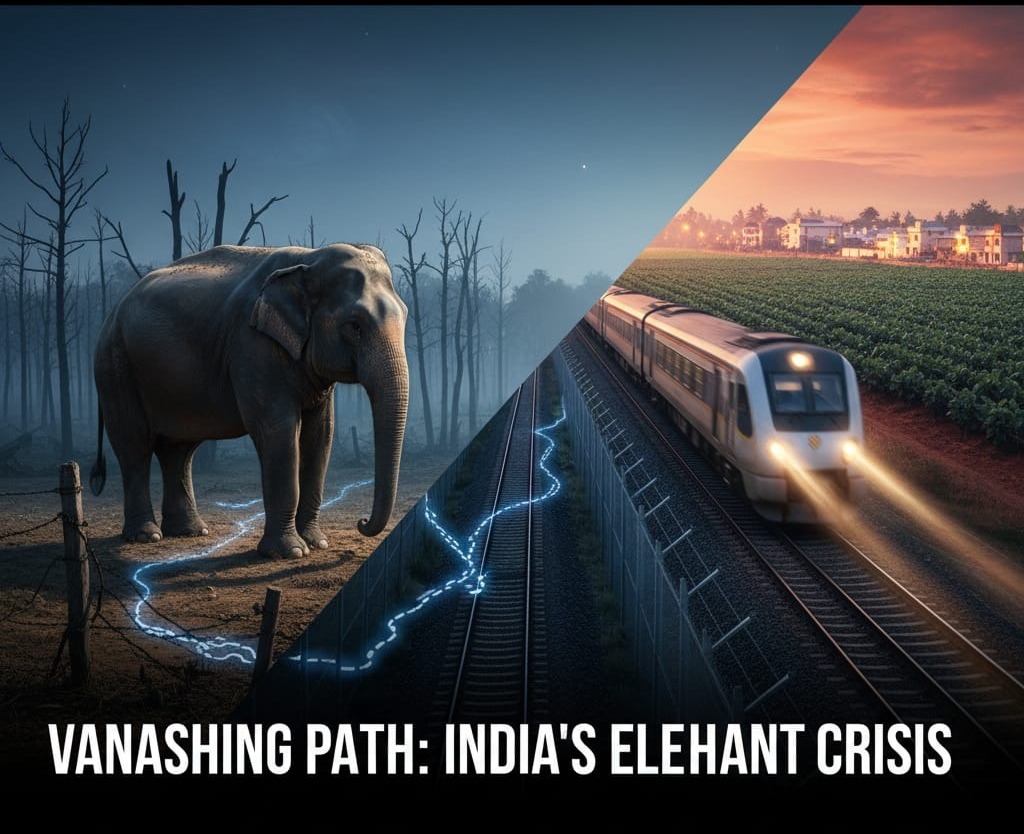
India’s elephants are losing their way, and with them, a vital part of the country’s ecological soul. The latest numbers raise urgent concern. Just a few years ago, census figures recorded 27,312 elephants. Now, a DNA-based projection estimates only about 22,446. The sharp fall is not just a population crisis but the slow disappearance of an ancient wisdom: the memory of the path.
For centuries, elephants have followed migration routes carved into India’s forests and plains. These green highways connected habitats, guided seasonal movement, and helped sustain the balance of the ecosystem. Today, these routes are being buried under concrete, highways, and human ambition. The result is tragic. The majestic herds that once roamed freely are now trapped, confused, and pushed into dangerous proximity with people.
The Western Ghats reveal the starkest picture. Once one of the most connected forest belts in Asia, this biodiversity hotspot is breaking apart into isolated fragments. The cause is not a sudden disaster, but the steady spread of human enterprise. Expanding tea and coffee plantations, invasive alien species choking native vegetation, electric fences guarding farmlands, and roads slicing through old corridors—all are shrinking the elephants’ living space. The forests they once navigated by instinct have turned into a maze of barriers. This destruction interrupts their breeding, feeding, and seasonal migration, eroding the very rhythm of their existence.
As the forest shrinks, desperation grows. Elephants are compelled to wander into farms and villages in search of food and water. What follows is predictable and heartbreaking: human-elephant conflict. Crops are trampled, lives are lost, and retaliatory killings rise. The jungles of East-Central India, already fragmented by highways, railways, and mining projects, are becoming conflict zones. Each encounter is less an act of aggression and more a cry for space.
The country’s railway tracks tell another sorrowful story. From Kerala and Bengal to Assam, collisions between elephants and trains are increasing every year. These are not random accidents. They are the direct result of elephant corridors being blocked or destroyed by development. Once seamless migration routes are now sliced apart by metal tracks, turning ancient trails into lethal traps.
The crisis deepens in India’s Northeast, which shelters the second-largest elephant population. Here, natural resource exploitation and recurring floods along international borders have disrupted both the land and the elephants’ movement patterns. As herds lose access to their feeding grounds, they are forced to compete with humans for survival. Every loss of forest cover tightens this struggle, pushing both sides toward inevitable conflict.
Debates over numbers, whether the population stands closer to 22,000 or 30,000, miss the larger point. The elephant is under siege. Even the most optimistic counts cannot disguise the rapid deterioration of their habitat and the growing threat to their genetic and ecological health. Conservation experts warn that without immediate restoration of migration corridors, the species’ future will remain precarious, regardless of how many are left to count.
The elephant is not just another animal on India’s wildlife list. It is a keystone species. Its presence ensures the regeneration of forests, dispersal of seeds, and maintenance of biodiversity. When the elephant thrives, the forest thrives. Its disappearance would mark not just the loss of a species but the unraveling of entire ecosystems.
India now stands at a crossroads. Protecting elephants demands more than ceremonial declarations. Project Elephant, launched decades ago to secure the species’ future, must evolve into a stronger, better-funded national mission. Policies must prioritize reconnecting fragmented habitats, curbing unplanned infrastructure, and regulating commercial plantations in critical corridors.
Saving the elephant is, in truth, saving ourselves. The gentle giant carries within its memory the blueprint of India’s forests. If that memory fades, so will the forests that feed rivers, store carbon, and sustain millions. The path ahead must ensure that the elephant’s ancient map is not lost to human haste. Otherwise, the forests will fall silent, their greatest guardian gone forever.























Leave a Comment