
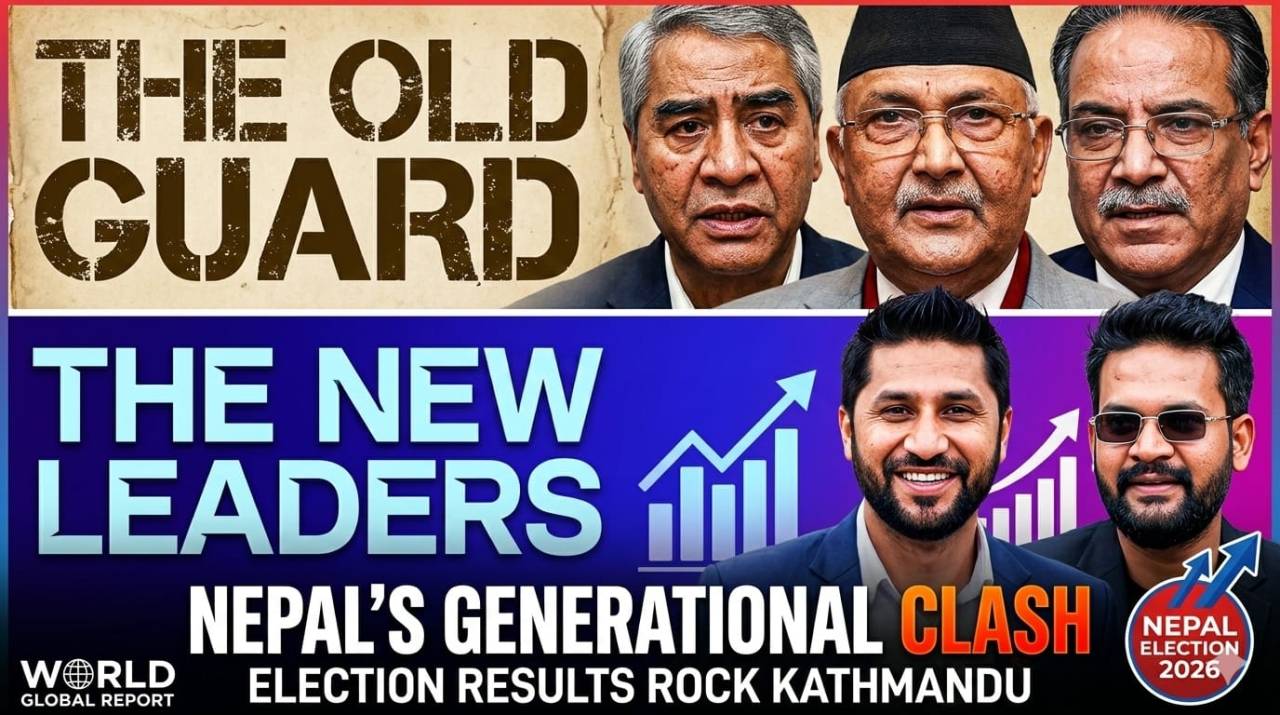
Six months after students filled the streets demanding change, Nepal’s youth are now reshaping the nation from the ballot box—turning protest into political power and challenging a generation that has ruled Kathmandu for decades.
The Himalayan air in Kathmandu carries a scent of transformation today. As the sun rose over the Bagmati River on Friday morning, the first trends of Nepal’s historic General Elections began to trickle in, signaling a seismic shift in the country's political landscape. Just six months after a student-led uprising toppled the established government, the youth of Nepal—the so-called “Gen Z” generation—are proving that they can do more than just protest; they can lead.
From the Streets to the Parliament
The journey to the March 5, 2026 polls was paved with the determination of thousands of young Nepalis. In September 2025, a massive rebellion sparked by frustration over corruption, unemployment, and a ban on social media platforms brought the nation to a standstill. The uprising led to the resignation of then-Prime Minister K.P. Sharma Oli and the appointment of an interim government led by the country’s first female Chief Justice, Sushila Karki.
Karki’s sole mandate was to steer the country toward these very elections. Today, as early results show the youth-centric Rastriya Swatantra Party (RSP) leading in over 45 constituencies, it appears the “old guard” of septuagenarian leaders is facing its toughest challenge in decades.
The Battle of Generations
The most symbolic contest of this election is taking place in the Jhapa-5 constituency. Balendra Shah, the 35-year-old former Mayor of Kathmandu and a popular rapper, is currently leading against veteran politician K.P. Sharma Oli. For many, this isn't just a political race; it is a clash between two different visions for Nepal.
The Old Guard: Represented by leaders like Deuba, Oli, and Prachanda, who have rotated power among themselves for thirty years.
The New Wave: Represented by professionals, activists, and digital-savvy youth who campaigned largely on platforms like Discord and Instagram, promising transparency and a “digitized” government.
Out of the 18.9 million registered voters, nearly one million were young citizens who joined the electoral rolls only after the September protests. Their influence is visible in the long queues at polling stations, where school and college students stood alongside their grandparents, demanding a “system reset.”
The Indian Perspective: Stability and Security
For India, these elections are more than just a domestic affair of a neighbor. New Delhi has watched the “Nepal-like protests” with a mix of caution and concern, especially as similar youth movements began to stir in parts of India.
Stability in Kathmandu is crucial for India’s “Neighborhood First” policy. A stable Nepal ensures that the 1,850 km open border remains secure against smuggling and extremist movements. Furthermore, India remains Nepal's largest trading partner. A government that prioritizes economic growth and job creation—key demands of the Nepali youth—could lead to more robust cross-border energy projects and smoother trade routes.
“India seeks a partner in Nepal that is stable and focused on development,” says a senior diplomatic analyst in New Delhi. “While the new leaders are fiercely independent, their focus on ending corruption and improving governance aligns with the long-term interests of the entire region.”
A Test of Democracy
The interim Prime Minister, Sushila Karki, had described this election as a “non-negotiable mandate” to restore civilian rule. While the voter turnout of 60% was slightly lower than previous years—possibly due to a mix of hope and skepticism in rural areas—the energy in the cities suggests a nation reborn.
As the counting continues through the weekend, the world is watching to see if Nepal will successfully transition from a state of “permanent opposition” to a functional, youth-led democracy. For the students who marched in their uniforms six months ago, the ballot paper has become the strongest weapon in their arsenal.
Whether the new leaders can fulfill their tall promises of fixing the economy and stopping the “brain drain” of youth to foreign lands remains to be seen. But for now, one thing is certain: the old ways of doing politics in Kathmandu have changed forever.
















Leave a Comment