
After months of protests and legal battles, Ghaziabad residents finally get relief as the government rolls back property tax calculations. But how much will you actually save?
Residents of Ghaziabad have received a significant update regarding their financial obligations to the city. The Uttar Pradesh government has officially announced a reduction in the rental values used for property tax calculations. This move follows a period of intense public dissatisfaction and legal challenges. The decision aims to lower the overall tax burden on property owners across the municipal area.
The New Financial Structure
The Ghaziabad Nagar Nigam received a formal communication from the state government on Friday. This document detailed a slight but impactful reduction in rental values. These values are the primary metrics used to determine how much property tax a resident owes. The new rates apply to properties with RCC or concrete roofs located on roads at least 24 meters wide.
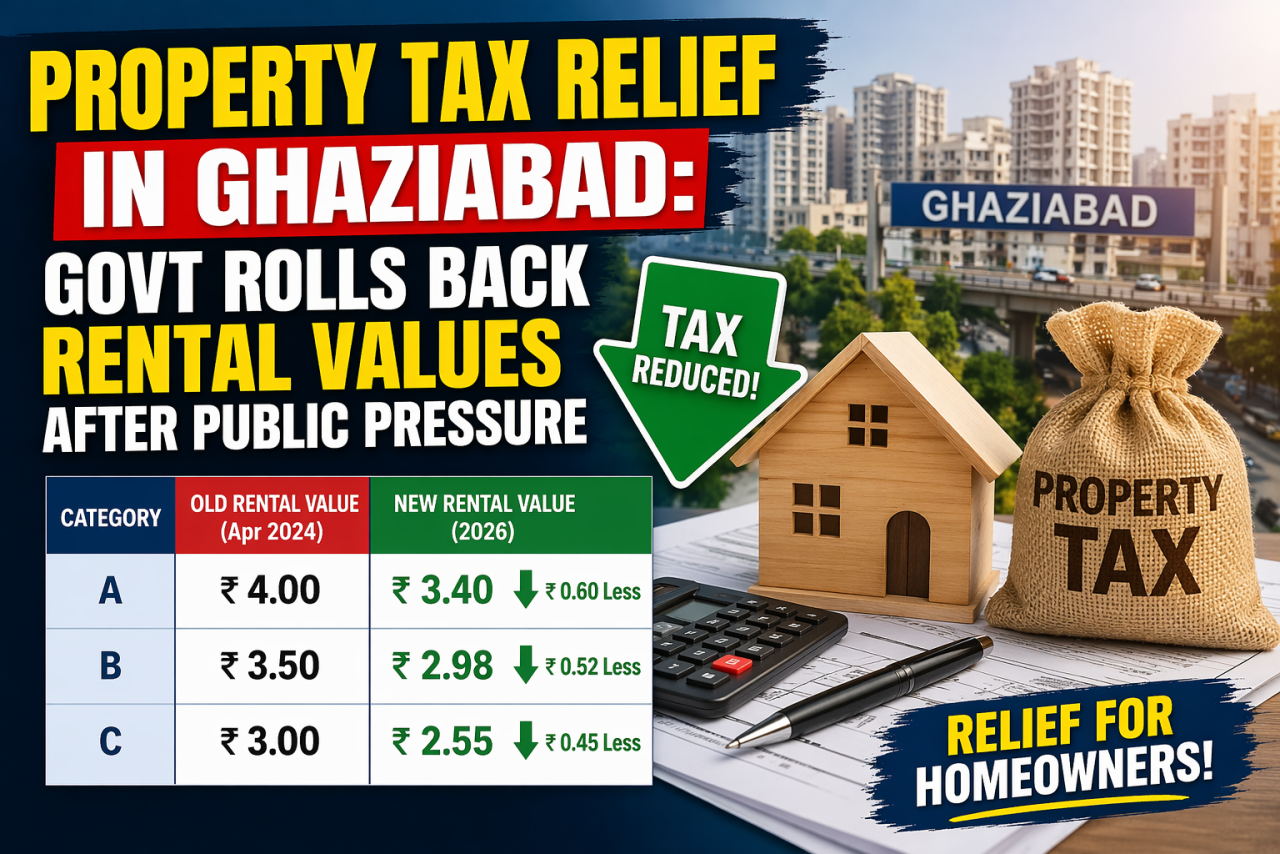
The government has divided properties into three distinct categories: A, B, and C. The adjustments vary depending on these classifications. Under the previous system established in April 2024, the rental values were set at ₹4, ₹3.5, and ₹3 per square foot. The revised figures show a noticeable drop.
- Category A: ₹3.4 per sq ft (down by ₹0.6)
- Category B: ₹2.98 per sq ft (down by ₹0.52)
- Category C: ₹2.55 per sq ft (down by ₹0.45)
Officials expect to incorporate these new rates into the official system within the next few days.
Context of the Reduction
The need for this revision stems from a controversial hike in April 2024. During that period, the municipal corporation increased rental values significantly. Residents, traders, and Resident Welfare Associations (RWAs) immediately protested the change. Many argued that the hike increased their tax burden by three to five times the original amount.
The protests were not limited to the public. Councillors at the municipal headquarters also voiced their opposition in July 2025. Furthermore, three former councillors moved the Allahabad High Court last year, contending that the tax hike was excessive and unfair. While the court dismissed the petition on February 25, 2026, sustained pressure eventually forced the government to act.
Mayor Sunita Dayal explained the government's stance during a press conference, stating that authorities took cognizance of residents' concerns. The latest revision aims to provide relief, with the effective property tax increase now expected to hover around 10% on average.
Implementation and Compliance
The Ghaziabad Municipal Corporation oversees approximately 772,000 taxable properties. Records indicate that around 200,000 property owners did not pay the hiked tax in 2025. To address this, the government has introduced a grace period for those with outstanding balances.
Municipal Commissioner Vikramaditya Malik announced that residents have three months—from April 15 to July 15—to clear dues without penalties or interest. Payments made during this window will also be eligible for standard rebates.
For those who already paid the higher tax rates over the past two years, the government has provided a safeguard. The excess amount paid will be adjusted against future tax liabilities, ensuring that compliant taxpayers are not disadvantaged.
The city will also deploy specialized personnel to ensure accurate tax calculations under the revised system.
Former Kavi Nagar councillor Himanshu Mittal noted that while the reduction is modest, its real impact will depend on final calculations and applicable rebates. Despite this cautious optimism, the move marks a clear example of civic pressure influencing policy decisions in Ghaziabad.
Residents of Ghaziabad have received a significant update regarding their financial obligations to the city. The Uttar Pradesh government has officially announced a reduction in the rental values used for property tax calculations. This move follows a period of intense public dissatisfaction and legal challenges. The decision aims to lower the overall tax burden on property owners across the municipal area.
The New Financial Structure
The Ghaziabad Nagar Nigam received a formal communication from the state government on Friday. This document detailed a slight but impactful reduction in rental values. These values are the primary metrics used to determine how much property tax a resident owes. The new rates apply to properties with RCC or concrete roofs located on roads at least 24 meters wide.
The government has divided properties into three distinct categories: A, B, and C. The adjustments vary depending on these classifications. Under the previous system established in April 2024, the rental values were set at ₹4, ₹3.5, and ₹3 per square foot. The revised figures show a noticeable drop.
- Category A: ₹3.4 per sq ft (down by ₹0.6)
- Category B: ₹2.98 per sq ft (down by ₹0.52)
- Category C: ₹2.55 per sq ft (down by ₹0.45)
Officials expect to incorporate these new rates into the official system within the next few days.
Context of the Reduction
The need for this revision stems from a controversial hike in April 2024. During that period, the municipal corporation increased rental values significantly. Residents, traders, and Resident Welfare Associations (RWAs) immediately protested the change. Many argued that the hike increased their tax burden by three to five times the original amount.
The protests were not limited to the public. Councillors at the municipal headquarters also voiced their opposition in July 2025. Furthermore, three former councillors moved the Allahabad High Court last year, contending that the tax hike was excessive and unfair. While the court dismissed the petition on February 25, 2026, sustained pressure eventually forced the government to act.
Mayor Sunita Dayal explained the government's stance during a press conference, stating that authorities took cognizance of residents' concerns. The latest revision aims to provide relief, with the effective property tax increase now expected to hover around 10% on average.
Implementation and Compliance
The Ghaziabad Municipal Corporation oversees approximately 772,000 taxable properties. Records indicate that around 200,000 property owners did not pay the hiked tax in 2025. To address this, the government has introduced a grace period for those with outstanding balances.
Municipal Commissioner Vikramaditya Malik announced that residents have three months—from April 15 to July 15—to clear dues without penalties or interest. Payments made during this window will also be eligible for standard rebates.
For those who already paid the higher tax rates over the past two years, the government has provided a safeguard. The excess amount paid will be adjusted against future tax liabilities, ensuring that compliant taxpayers are not disadvantaged.
The city will also deploy specialized personnel to ensure accurate tax calculations under the revised system.
Former Kavi Nagar councillor Himanshu Mittal noted that while the reduction is modest, its real impact will depend on final calculations and applicable rebates. Despite this cautious optimism, the move marks a clear example of civic pressure influencing policy decisions in Ghaziabad.





















Leave a Comment