
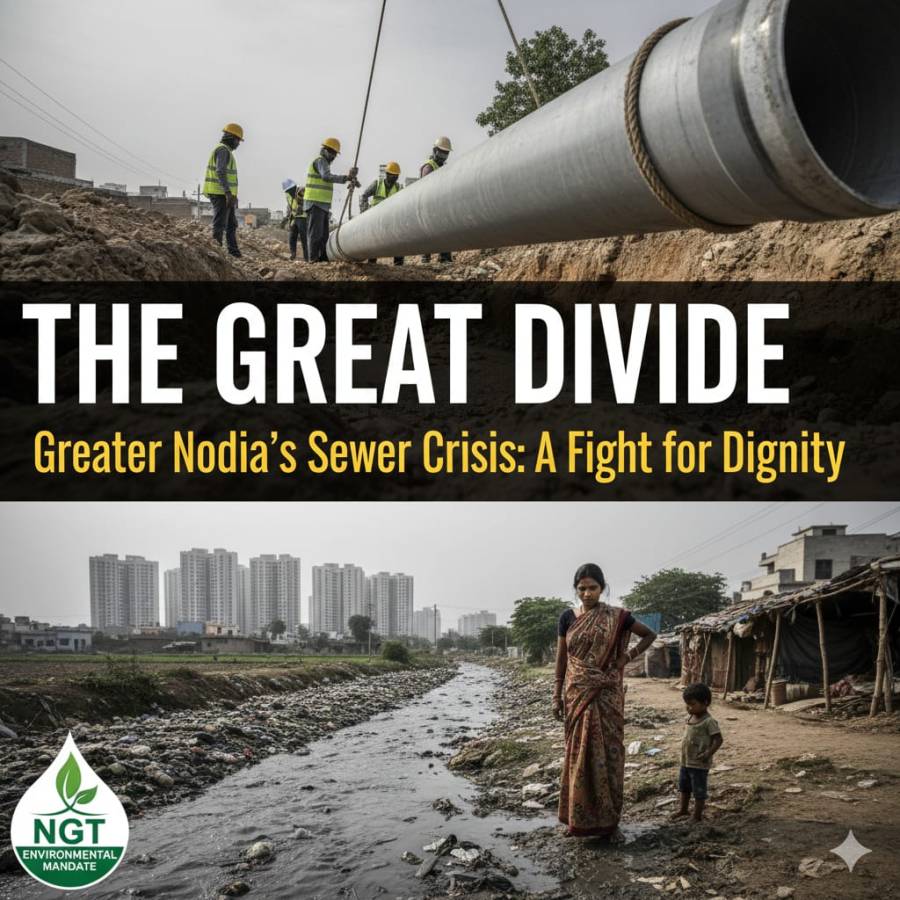
For the thousands of families living in the rural heart of Greater Noida, the "smart city" dream has often felt like a postcard from a distant land. While sleek glass facades and high-speed expressways define the urban horizon, the ground beneath their feet has told a different, murkier story.
The recent directive by the National Green Tribunal (NGT)—mandating 100% sewer connectivity in Greater Noida villages—is far more than a bureaucratic milestone. It is a decisive intervention into a quiet environmental and health crisis that has been simmering for years.
The Ground Reality: Beyond the Statistics
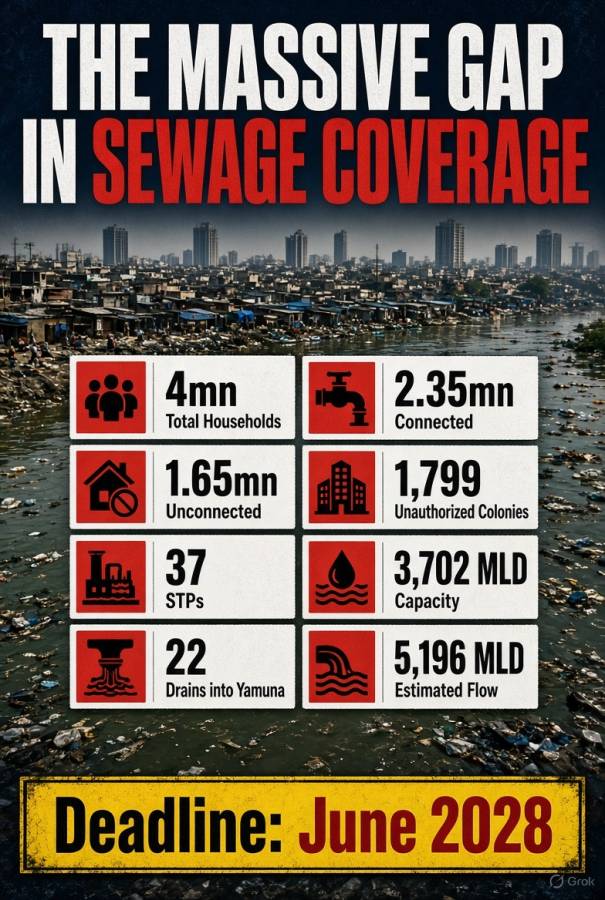
On December 15, 2025, a bench led by NGT Chairperson Justice Prakash Shrivastava flagged a grim reality: untreated sewage from 115 villages is being discharged directly into open land, storm water drains, and public roads.
To the casual observer, this sounds like a logistical lapse. But to a mother in a village like Nawada or Sunpura, it looks like a stagnant pool of grey water where her children play. It smells like the foul odor that permeates the air after a light rain. It feels like the constant threat of waterborne diseases such as hepatitis, cholera and chronic skin ailments have become unwelcome neighbors in these communities.
"Joint Effort" Matters
The NGT didn't just issue a command; it acknowledged a breakdown in governance. The Greater Noida Industrial Development Authority (GNIDA) admitted to a lack of "policing power," noting that while infrastructure exists in some pockets, enforcement is a ghost.
By forming a Joint Committee comprising the District Magistrate of Gautam Budh Nagar, GNIDA, and the Uttar Pradesh Pollution Control Board (UPPCB)—the tribunal has removed the "it’s not my department" excuse. This is a crucial shift. When environmental policy meets local administration and industrial oversight, the responsibility becomes shared and, more importantly, unavoidable.
The Psychology of Reluctance
Interestingly, GNIDA pointed to a "reluctance" among villagers to connect to the sewer lines. At first glance, this seems baffling. Why would anyone refuse a cleaner home?
The answer lies in the human element. For many, a "free" connection today feels like a "tax" tomorrow. There is a deep-seated apprehension that once hooked into the grid, hefty monthly charges will follow.
This is where the NGT’s order turns into a social mission. The committee is tasked not just with laying pipes, but with sensitizing the residents. True progress in India’s peri-urban areas doesn't happen through concrete alone; it happens through trust. The authorities must bridge the gap between "imposing a system" and "improving a life."
The Environmental Ripple Effect
Why does this matter to you, even if you live in a high-rise kilometers away?
- Groundwater Contamination: Open sewage doesn't just sit there; it seeps. Greater Noida’s groundwater is a shared resource. When village soil is saturated with untreated waste, the toxins eventually find their way into the aquifers that feed the entire region.
- The Urban Heat Island & Hygiene: Stagnant sewage is a breeding ground for mosquitoes, contributing to the regional outbreaks of Dengue and Malaria that ignore village-sector boundaries.
- The Model for Modern India: Greater Noida is a blueprint for how India manages the "Rurban" (Rural-Urban) transition. If we cannot provide basic sanitation to the very villages that gave up their land for our malls and tech parks, the foundation of our urban growth is ethically and ecologically hollow.
A 10-Week Ultimatum
The clock is now ticking. The joint committee has been given 10 weeks to show results. The NGT has even authorized "environmental compensation" (fines) for those who continue to violate norms.
This isn't just about plumbing; it’s about dignity. It’s about ensuring that the progress reaches the narrow lanes of Jaitpur and Malakpur as effectively as it reaches the sectors.
The message from the green tribunal is loud and clear: A city is only as clean as its least-connected village.






















Leave a Comment