
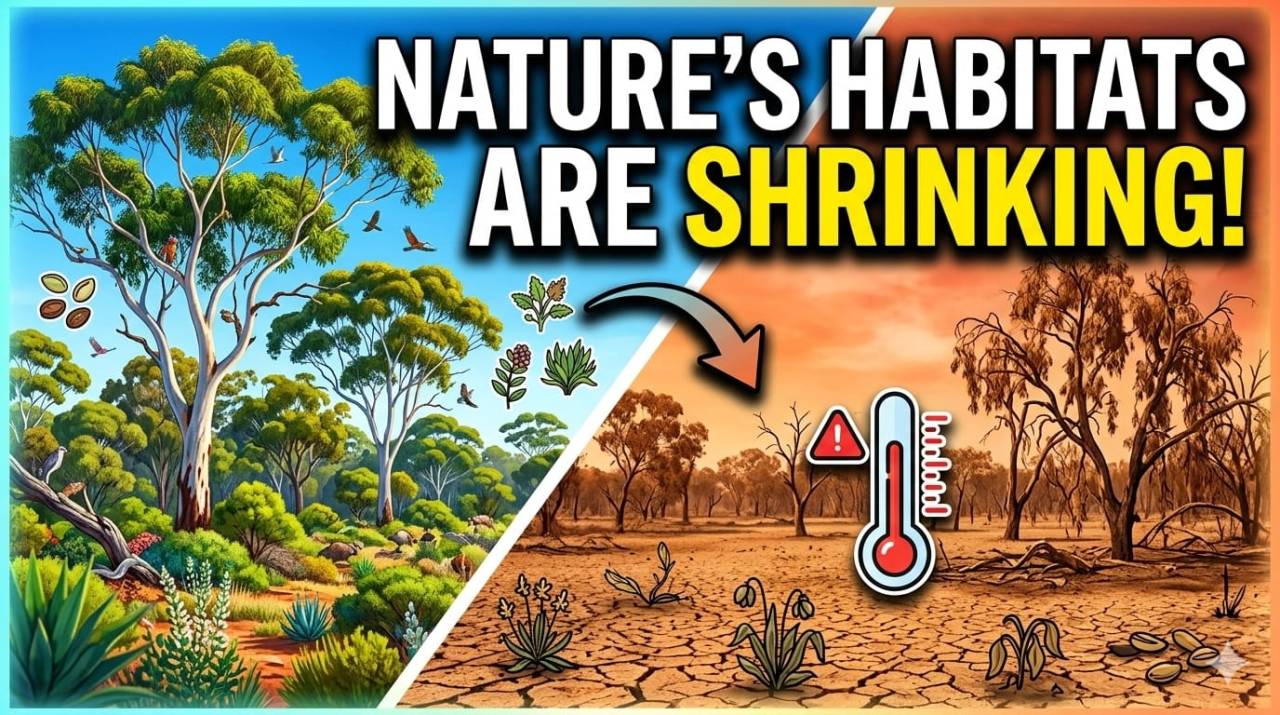
Climate change is silently destroying the plant life that supports Earth’s ecosystems. Scientists warn that shrinking habitats could push thousands of plant species toward extinction by the end of the century.
When people think about climate change, they often picture melting glaciers, rising sea levels, deadly heatwaves, or endangered polar bears struggling to survive. Yet one of the most dangerous environmental crises is unfolding far more quietly — in forests, grasslands, mountains, wetlands, and deserts across the world. Earth’s plant life is under growing threat, and scientists warn that climate change is rapidly shrinking the habitats plants need to survive.
Plants form the backbone of life on Earth. They produce oxygen, stabilize soils, regulate water cycles, absorb carbon dioxide, and provide food and shelter for countless species. Yet global warming is now disrupting the delicate environmental conditions that plants depend upon, creating a slow-moving ecological emergency that could permanently reshape ecosystems by the end of this century.
The Disappearing “Climate Envelope”
A plant’s habitat is much more than a location on a map. Every species survives within a highly specific combination of temperature, rainfall, soil quality, seasonal cycles, sunlight, and landscape conditions. Scientists often describe this survival zone as a plant’s “climate envelope.”
As greenhouse gas emissions continue to warm the planet, these climate envelopes are shifting. Regions that were once cool and stable are becoming hotter and drier, forcing many plant species to migrate toward higher altitudes or cooler northern and southern regions in search of suitable conditions.
However, migration is not as simple as it sounds. A plant may find favorable temperatures elsewhere, but survival also depends on suitable soil, water availability, pollinators, and the absence of human barriers such as cities, highways, or farmlands. Even if one condition improves, the overall habitat may still become unlivable.
Scientists warn that the combination of conditions required for many plants to survive is shrinking rapidly, leaving fewer safe ecosystems where species can thrive.
A Global Threat to Biodiversity
Recent scientific studies examining tens of thousands of plant species paint an alarming picture of the future. Researchers analyzed millions of historical plant records alongside climate projections for the years 2081 to 2100. Their findings reveal that climate change may dramatically reduce the geographical range of many species.
According to the projections, between 7% and 16% of vascular plant species could lose more than 90% of their current habitat range. Such a drastic decline would push many species dangerously close to extinction.
The threat extends far beyond rare or isolated plants. Some of the world’s most recognizable and ecologically important species are also at risk. Scientists have identified severe habitat loss risks for the Catalina ironwood tree in California, ancient bluish spike-moss species that trace their origins back hundreds of millions of years, and nearly one-third of Australia’s eucalyptus species — plants that form the foundation of entire ecosystems.
The potential consequences are enormous. When plant populations collapse, the insects, birds, mammals, and microorganisms that depend on them also face survival challenges, triggering widespread ecological instability.
Why Plants Cannot Simply “Move”
One common assumption is that plants will naturally adapt by spreading seeds into newly suitable regions. Plants have always dispersed through wind, water, animals, and natural cycles over long periods of time.
But climate change is unfolding at a speed that many species cannot match.
Researchers tested scenarios where plants were assumed to have unlimited ability to disperse into new habitats. Surprisingly, extinction risks remained extremely high. The problem is not simply that plants are moving too slowly — it is that the total amount of suitable habitat itself is shrinking.
In many regions, there may simply be nowhere left to go.
Coastal plants, for example, can become trapped between rising temperatures and the ocean. Mountain species are pushed higher until they eventually run out of elevation. Arctic plants adapted to freezing conditions face severe competition as warmer-climate species move northward into their ecosystems.
The climate crisis is effectively compressing life into smaller and smaller ecological spaces.
Regional Ecological Emergencies
The effects of climate change on plants vary across different parts of the world, creating distinct regional crises.
Arctic Regions
Cold-adapted Arctic vegetation is among the most vulnerable. As temperatures rise, the extreme cold conditions these plants require are disappearing. Species that evolved over thousands of years to survive freezing climates may soon face extinction as warmer ecosystems spread northward.
Drylands and Mediterranean Regions
In dry ecosystems, including parts of the western United States and Mediterranean-climate regions, plants are facing worsening droughts, declining soil moisture, and increasingly destructive wildfires. Heat stress and water scarcity are pushing many species beyond their survival limits.
Australia’s Coastal Ecosystems
Australia faces a unique challenge because many plant species attempting to migrate toward cooler southern regions eventually encounter coastlines. With no further land available, species become trapped in rapidly warming environments.
Why Humanity Should Be Concerned
The loss of plant biodiversity is not only an environmental issue — it is a direct threat to human civilization.
Plants support agriculture, maintain healthy soils, regulate rainfall patterns, and help purify air and water. Many modern medicines are derived from plant compounds, while forests and wetlands play a critical role in absorbing carbon emissions and reducing climate impacts.
If plant ecosystems begin collapsing on a large scale, food systems, water security, wildlife populations, and even local economies could face severe disruption.
The disappearance of plants also weakens Earth’s natural defenses against climate change itself. Fewer forests and ecosystems mean less carbon absorption, creating a dangerous feedback loop that accelerates global warming further.
The Urgent Need for Action
Scientists emphasize that conservation alone will not solve this crisis. Protecting isolated forests or creating small reserves may help temporarily, but long-term survival depends on stabilizing the climate itself.
Reducing greenhouse gas emissions remains the most critical step. At the same time, governments and environmental organizations must protect ecological corridors that allow species to migrate naturally between habitats.
The challenge is immense, but the stakes are even greater. The green landscapes humanity takes for granted today may look dramatically different by the end of this century if climate change continues unchecked.
Earth’s plant life has survived ice ages, volcanic eruptions, and natural climate shifts over millions of years. But the speed and intensity of modern climate change are creating pressures unlike anything many species have faced before.
The crisis may be quieter than melting glaciers or rising seas, but its consequences could reshape life on Earth for generations to come.
When people think about climate change, they often picture melting glaciers, rising sea levels, deadly heatwaves, or endangered polar bears struggling to survive. Yet one of the most dangerous environmental crises is unfolding far more quietly — in forests, grasslands, mountains, wetlands, and deserts across the world. Earth’s plant life is under growing threat, and scientists warn that climate change is rapidly shrinking the habitats plants need to survive.
Plants form the backbone of life on Earth. They produce oxygen, stabilize soils, regulate water cycles, absorb carbon dioxide, and provide food and shelter for countless species. Yet global warming is now disrupting the delicate environmental conditions that plants depend upon, creating a slow-moving ecological emergency that could permanently reshape ecosystems by the end of this century.
The Disappearing “Climate Envelope”
A plant’s habitat is much more than a location on a map. Every species survives within a highly specific combination of temperature, rainfall, soil quality, seasonal cycles, sunlight, and landscape conditions. Scientists often describe this survival zone as a plant’s “climate envelope.”
As greenhouse gas emissions continue to warm the planet, these climate envelopes are shifting. Regions that were once cool and stable are becoming hotter and drier, forcing many plant species to migrate toward higher altitudes or cooler northern and southern regions in search of suitable conditions.
However, migration is not as simple as it sounds. A plant may find favorable temperatures elsewhere, but survival also depends on suitable soil, water availability, pollinators, and the absence of human barriers such as cities, highways, or farmlands. Even if one condition improves, the overall habitat may still become unlivable.
Scientists warn that the combination of conditions required for many plants to survive is shrinking rapidly, leaving fewer safe ecosystems where species can thrive.
A Global Threat to Biodiversity
Recent scientific studies examining tens of thousands of plant species paint an alarming picture of the future. Researchers analyzed millions of historical plant records alongside climate projections for the years 2081 to 2100. Their findings reveal that climate change may dramatically reduce the geographical range of many species.
According to the projections, between 7% and 16% of vascular plant species could lose more than 90% of their current habitat range. Such a drastic decline would push many species dangerously close to extinction.
The threat extends far beyond rare or isolated plants. Some of the world’s most recognizable and ecologically important species are also at risk. Scientists have identified severe habitat loss risks for the Catalina ironwood tree in California, ancient bluish spike-moss species that trace their origins back hundreds of millions of years, and nearly one-third of Australia’s eucalyptus species — plants that form the foundation of entire ecosystems.
The potential consequences are enormous. When plant populations collapse, the insects, birds, mammals, and microorganisms that depend on them also face survival challenges, triggering widespread ecological instability.
Why Plants Cannot Simply “Move”
One common assumption is that plants will naturally adapt by spreading seeds into newly suitable regions. Plants have always dispersed through wind, water, animals, and natural cycles over long periods of time.
But climate change is unfolding at a speed that many species cannot match.
Researchers tested scenarios where plants were assumed to have unlimited ability to disperse into new habitats. Surprisingly, extinction risks remained extremely high. The problem is not simply that plants are moving too slowly — it is that the total amount of suitable habitat itself is shrinking.
In many regions, there may simply be nowhere left to go.
Coastal plants, for example, can become trapped between rising temperatures and the ocean. Mountain species are pushed higher until they eventually run out of elevation. Arctic plants adapted to freezing conditions face severe competition as warmer-climate species move northward into their ecosystems.
The climate crisis is effectively compressing life into smaller and smaller ecological spaces.
Regional Ecological Emergencies
The effects of climate change on plants vary across different parts of the world, creating distinct regional crises.
Arctic Regions
Cold-adapted Arctic vegetation is among the most vulnerable. As temperatures rise, the extreme cold conditions these plants require are disappearing. Species that evolved over thousands of years to survive freezing climates may soon face extinction as warmer ecosystems spread northward.
Drylands and Mediterranean Regions
In dry ecosystems, including parts of the western United States and Mediterranean-climate regions, plants are facing worsening droughts, declining soil moisture, and increasingly destructive wildfires. Heat stress and water scarcity are pushing many species beyond their survival limits.
Australia’s Coastal Ecosystems
Australia faces a unique challenge because many plant species attempting to migrate toward cooler southern regions eventually encounter coastlines. With no further land available, species become trapped in rapidly warming environments.
Why Humanity Should Be Concerned
The loss of plant biodiversity is not only an environmental issue — it is a direct threat to human civilization.
Plants support agriculture, maintain healthy soils, regulate rainfall patterns, and help purify air and water. Many modern medicines are derived from plant compounds, while forests and wetlands play a critical role in absorbing carbon emissions and reducing climate impacts.
If plant ecosystems begin collapsing on a large scale, food systems, water security, wildlife populations, and even local economies could face severe disruption.
The disappearance of plants also weakens Earth’s natural defenses against climate change itself. Fewer forests and ecosystems mean less carbon absorption, creating a dangerous feedback loop that accelerates global warming further.
The Urgent Need for Action
Scientists emphasize that conservation alone will not solve this crisis. Protecting isolated forests or creating small reserves may help temporarily, but long-term survival depends on stabilizing the climate itself.
Reducing greenhouse gas emissions remains the most critical step. At the same time, governments and environmental organizations must protect ecological corridors that allow species to migrate naturally between habitats.
The challenge is immense, but the stakes are even greater. The green landscapes humanity takes for granted today may look dramatically different by the end of this century if climate change continues unchecked.
Earth’s plant life has survived ice ages, volcanic eruptions, and natural climate shifts over millions of years. But the speed and intensity of modern climate change are creating pressures unlike anything many species have faced before.
The crisis may be quieter than melting glaciers or rising seas, but its consequences could reshape life on Earth for generations to come.



















Leave a Comment