
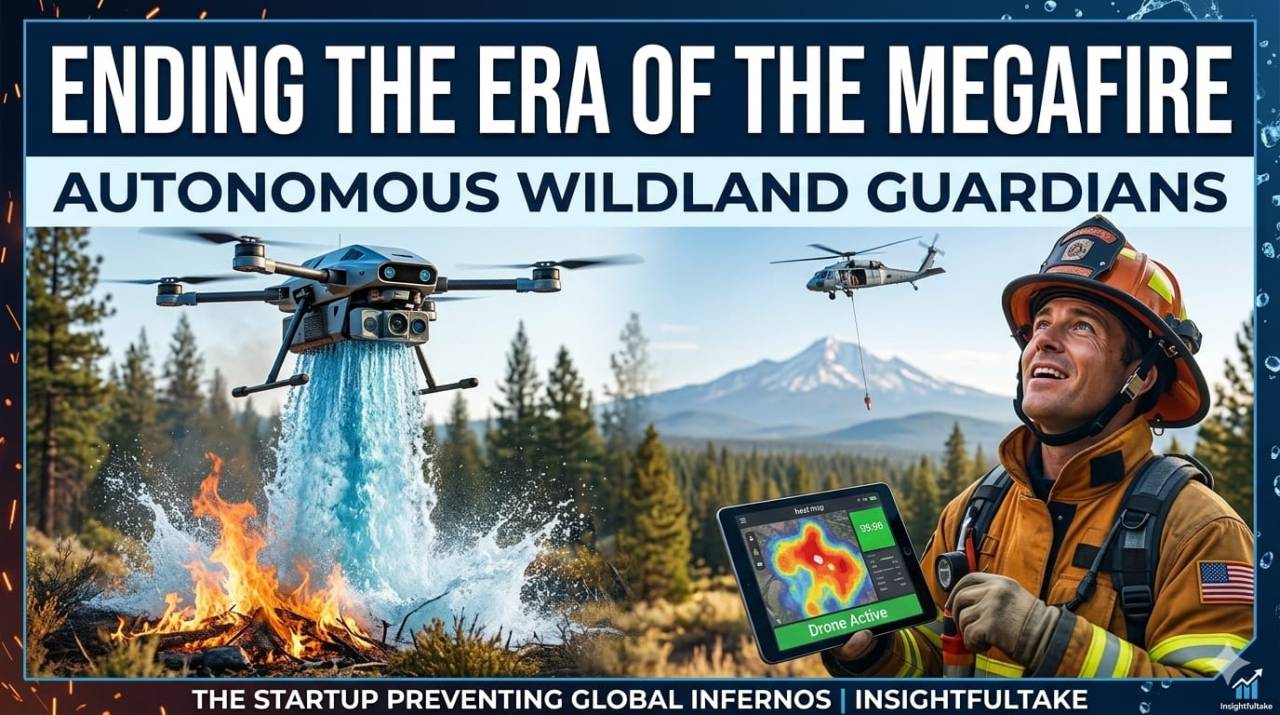
Wildfires no longer start as disasters—they become disasters because we are too slow to respond. What if a fire could be detected and stopped within minutes of ignition, long before it turns into a megafire?
Wildfires are no longer seasonal disasters. They are becoming faster, larger, and far more destructive than ever before. What once took days to escalate can now spiral out of control within hours. The traditional firefighting methods are struggling to keep up.
For decades, wildfire response has relied on human detection, ground crews, and piloted aircraft. But in the time it takes to report a fire and mobilize resources, a small spark can grow into a massive blaze. In an era shaped by climate change, this delay is proving costly.
A new approach is emerging—one that focuses not on fighting fires after they spread, but on stopping them before they begin.
The 10-Minute Window That Changes Everything
The most critical moment in any wildfire is the first few minutes after ignition. This is when a fire is still small, manageable, and easier to contain. Miss this window, and the situation can escalate rapidly.
Startups like Rain are working to solve this problem using artificial intelligence and autonomous aircraft. Their idea is simple but powerful to detect fires instantly and respond within minutes.
AI-powered cameras placed across high-risk areas continuously monitor landscapes. When they detect unusual heat or smoke patterns, they trigger an immediate response. Instead of waiting for human intervention, autonomous helicopters and drones are deployed automatically.
These aircraft can take off without a pilot, navigate difficult terrain, and deliver precise water or retardant drops—all within minutes of detection. By the time traditional crews are alerted, the fire may already be under control.
This shift from delayed reaction to immediate action could redefine wildfire management.
Building a Digital Nervous System for Fire Response
What makes this system effective is not just speed, but coordination. Think of it as a digital nervous system.
Sensors act as the eyes. AI processes the data as the brain. Autonomous aircraft serve as the muscles, executing rapid response.
This interconnected system allows for real-time decision-making. It removes the delays caused by human reporting chains and manual approvals. More importantly, it reduces the risk faced by firefighters who are often sent into dangerous and unpredictable environments.
The goal is not to replace human firefighters, but to support them. By handling early-stage fires, these systems allow ground teams to focus on larger, more complex situations.
Solving the Chaos in the Sky
One of the biggest challenges in wildfire response is managing crowded and hazardous airspace. Smoke reduces visibility, and multiple aircraft often operate in the same area under extreme conditions.
To address this, NASA has developed the Portable Airspace Management System (PAMS). It acts like a compact air traffic control system designed specifically for wildfire zones.
PAMS allows drones, helicopters, and other aircraft to communicate with each other in real time. It shares flight paths, positions, and mission data, ensuring that all units operate safely even in low-visibility conditions.
This technology is especially important as more autonomous systems enter the airspace. Without proper coordination, the risk of mid-air collisions would increase significantly.
By making this system portable and accessible, even smaller firefighting units can benefit from advanced airspace management.
Engineering Meets Environmental Reality
Wildfires are unpredictable. Wind patterns shift, temperatures rise suddenly, and terrain can influence how flames spread. Designing machines that can operate effectively in such conditions is a major challenge.
Engineers are now building systems that can understand and adapt to these variables. AI models are trained to interpret wind behavior, thermal activity, and terrain data in real time. This allows autonomous aircraft to make smarter decisions during missions.
At the same time, there is a growing focus on environmental responsibility. Precision drops reduce water wastage and limit damage to surrounding ecosystems. The aim is not just to fight fires, but to do so in a way that respects the environment.
From Reaction to Prevention
The larger shift here is philosophical. Wildfire management is moving from reaction to prevention.
Instead of waiting for fires to grow and then responding with massive resources, the focus is now on early intervention. Small fires are easier to control, less expensive to manage, and far less destructive.
With climate change increasing the frequency and intensity of wildfires, this proactive approach may become essential rather than optional.
A Glimpse Into the Future
Recent years have seen record-breaking wildfire seasons, with millions of hectares lost globally. These events have highlighted the limits of existing systems.
Autonomous aerial firefighting offers a different path forward. It combines speed, precision, and intelligence in a way that traditional methods cannot match.
The idea of “lakes in the air” is no longer just a metaphor. It is becoming a network of machines ready to act at a moment’s notice.
If scaled effectively, this technology could transform how we protect forests, communities, and ecosystems. It offers a future where fires are stopped before they become disasters.
And in that future, the sky itself becomes the first line of defense.






















Leave a Comment