
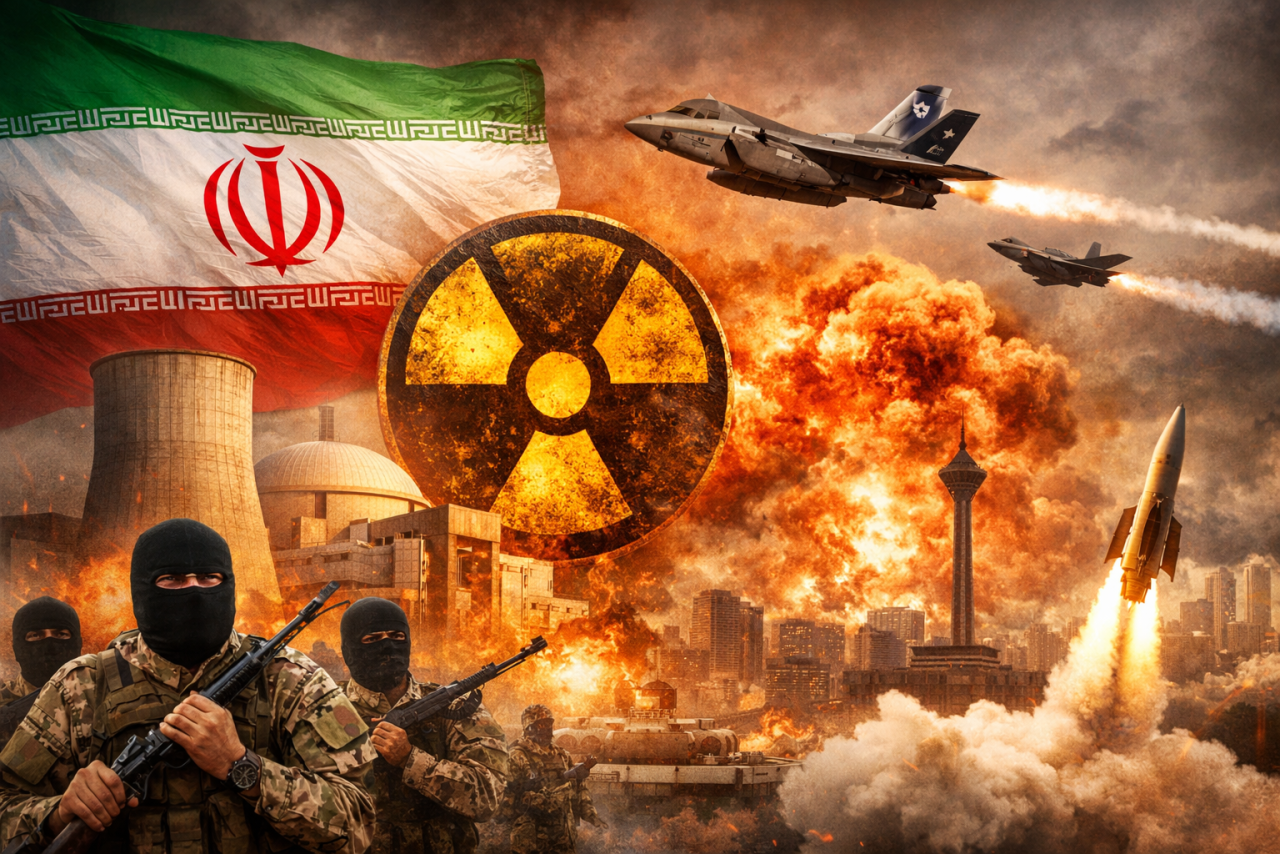
The Middle East is once again holding its breath. As nuclear doubts deepen and military pressure intensifies, Iran stands at a decisive crossroads — where a single strategic move could either reopen diplomacy or ignite a far wider confrontation.
Iran is entering one of the most volatile phases in its modern strategic history. What makes this moment different from previous flare-ups is not simply military confrontation or stalled diplomacy — it is the convergence of nuclear uncertainty, direct security pressure, and narrowing diplomatic space. Together, these forces are pushing Tehran toward decisions that could redefine its regional and global standing.
A Crisis Rooted in Uncertainty
At the heart of the current escalation lies a deepening verification gap surrounding Iran’s nuclear program. International inspectors have acknowledged they cannot fully confirm the present scale, enrichment levels, or storage locations of Iran’s uranium stockpile. Before monitoring access was curtailed, Iran had accumulated a substantial quantity of uranium enriched to 60 percent purity — technically below weapons-grade but significantly closer to it than civilian nuclear fuel requirements.
Nuclear experts frequently stress that enrichment capability — not bomb design — is the true strategic threshold. Once enrichment reaches higher levels, the timeline to potential weapons-grade material shortens dramatically. Even if Iran insists its program remains peaceful, the absence of full transparency creates what analysts describe as “strategic ambiguity,” a condition that often breeds worst-case assumptions among rivals.
And in geopolitics, perception can escalate faster than proof.
Military Signaling Reaches a New Level
The situation intensified following reported coordinated strikes by Israel, with U.S. backing, on Iranian targets. These actions signal a shift from deterrence messaging to pre-emptive disruption. Israel’s long-standing doctrine has emphasized preventing adversaries from crossing nuclear thresholds. The latest developments suggest decision-makers believe the margin for waiting has narrowed.
For Washington, the approach appears dual-tracked: keep diplomacy alive while reinforcing military leverage. The deployment of additional regional assets underscores a readiness posture designed to deter retaliation while increasing pressure on Tehran to re-engage under stricter terms.
Iran, meanwhile, has responded with defiant rhetoric and warnings of retaliation. Such signalling plays well domestically, projecting resilience in the face of external pressure. Yet it also raises the risk of miscalculation, especially in a region where proxy actors and rapid-response systems operate on compressed timelines.
Diplomacy Under Strain
Indirect talks aimed at reviving constraints on Iran’s nuclear program have yielded limited clarity. While mediators have hinted at possible concessions — including limits on stockpiling highly enriched material — concrete verification mechanisms remain unclear.
Diplomacy without inspection access, however, struggles to inspire confidence. Western negotiators increasingly emphasize that declarations must be backed by measurable compliance: unrestricted inspections, updated inventories, and enforceable enrichment caps.
The broader diplomatic environment is also shifting. European governments, once firm advocates of engagement-first approaches, are showing greater alignment with stricter compliance demands. Russia and China have maintained dialogue with Tehran but appear cautious about openly defending nuclear opacity in a fragile global non-proliferation climate.
In effect, Iran is discovering that strategic ambiguity, once useful as leverage, may now be contributing to its isolation.
Domestic Pressures Add Complexity
Internally, Iran faces mounting economic strain. Years of sanctions have weakened currency stability, fuelled inflation, and intensified public frustration. Energy exports remain critical to economic survival, and any disruption linked to escalating conflict would deepen financial vulnerabilities.
This economic backdrop limits Tehran’s maneuvering room. Sustained confrontation risks amplifying domestic dissatisfaction. Yet overt compromise without visible gains could be politically costly for leadership factions invested in projecting strength.
The result is a strategic balancing act with shrinking margins.
Why This Moment Matters
Security analysts describe the present environment not as inevitable war, but as a closing window for recalibration. The nuclear non-proliferation framework depends on transparency and verification. When those mechanisms erode, geopolitical trust follows.
If Iran restores full inspection access and clarifies enrichment levels, it could slow momentum toward confrontation and rebuild diplomatic channels. If opacity persists, external pressure — economic and military — is likely to intensify.
The stakes extend beyond the Middle East. How this episode unfolds will influence global perceptions of nuclear enforcement norms. Other threshold-capable states are watching closely. The credibility of international monitoring institutions is also on the line.
The Road Ahead
Iran’s leadership now faces a defining strategic choice: double down on ambiguity and resistance, or pivot toward measurable transparency to stabilize its position. Neither path is simple. But delay may prove the riskiest option of all.
Nuclear doubts and military pressure have converged in a way that leaves little space for incremental maneuvering. Whether this moment becomes a gateway to renewed diplomacy or a prelude to broader conflict will depend on decisions made in the coming days.
For now, Iran stands at the brink — not only of confrontation, but of a transformation in how the world engages with it.

















Leave a Comment