
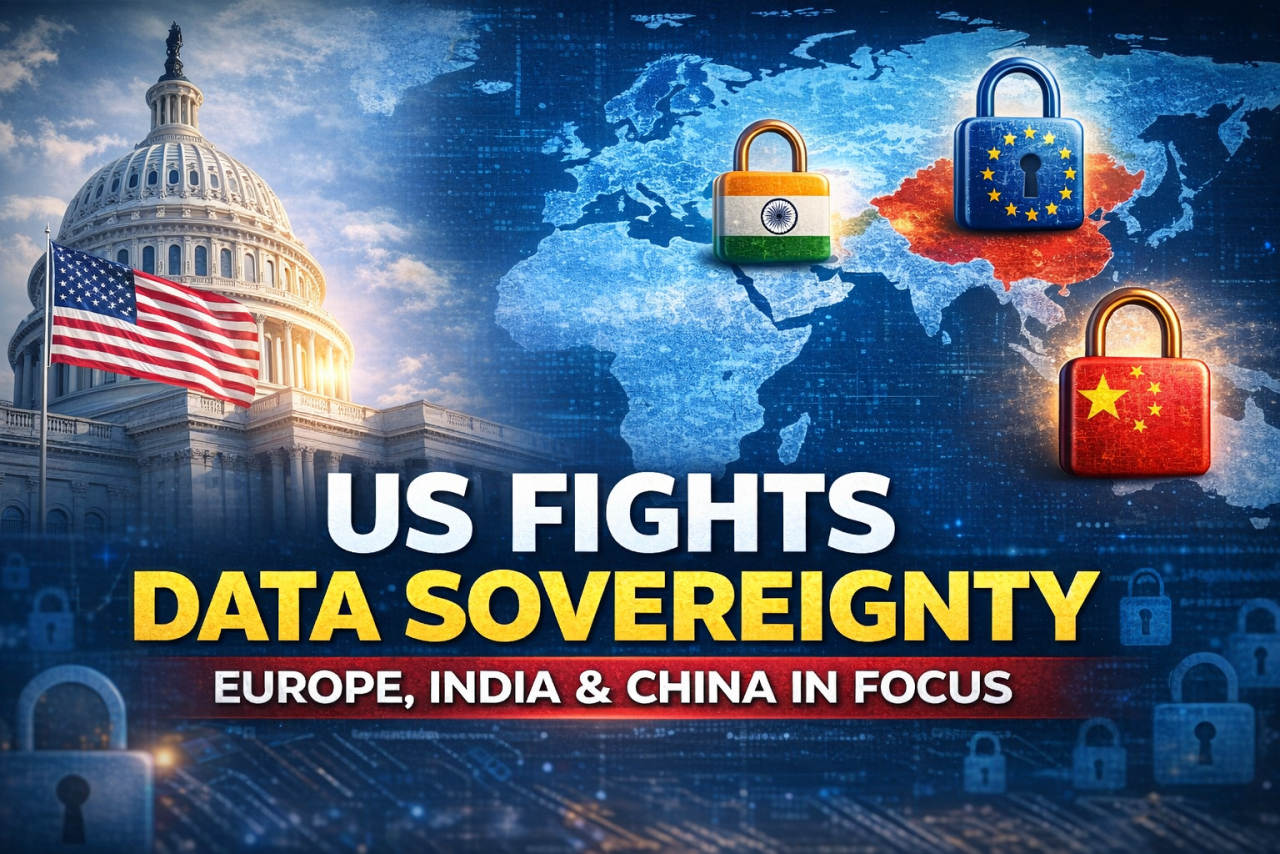
The battle for the world’s data has officially gone diplomatic. As nations tighten control over how citizens’ information is stored and shared, the United States is pushing back—setting the stage for a high-stakes global showdown over privacy, power, and the future of the internet.
In a move that could reshape the global digital order, the United States has reportedly directed its diplomats to counter foreign data sovereignty and data localisation measures that may restrict the flow of information across borders. The development signals a sharper American stance at a time when countries across Europe and Asia are tightening rules on how citizens’ data is stored, processed and transferred.
According to a diplomatic cable cited by Reuters, the US administration has asked its envoys to lobby against regulations that could limit American technology companies’ ability to operate freely in overseas markets. The directive reflects Washington’s growing concern that stringent data localisation laws could disrupt global data flows, increase costs for businesses, and hamper innovation in artificial intelligence (AI) and cloud services.
Why Data Sovereignty Is Becoming a Flashpoint
Data sovereignty refers to the principle that digital information is subject to the laws of the country where it is collected or stored. In practice, many governments are pushing for “data localisation” — requiring companies to store certain types of data within national borders.
The debate has intensified in the wake of privacy scandals, cybersecurity threats, and geopolitical tensions. The dominance of US tech giants in AI, cloud computing, and social media has heightened concerns in Europe and elsewhere about data protection, surveillance, and market power.
The European Union’s landmark General Data Protection Regulation (GDPR) is often cited as a model for robust data protection. Enforced since 2018, it restricts how personal data can be processed and transferred outside the EU, and has led to hefty fines for major American tech firms. European regulators argue that such frameworks are essential to safeguard citizens’ privacy and digital rights.
However, US officials reportedly view some of these rules as “unnecessarily burdensome,” warning they could fragment the internet and create barriers to trade.
The AI and Cloud Computing Angle
At the heart of the dispute lies the future of AI. Modern AI systems depend on vast volumes of cross-border data to train models, refine algorithms, and deliver global services. American companies, which lead in AI innovation, rely heavily on seamless international data transfers.
Washington fears that widespread localisation mandates could create digital silos, increasing operational costs and reducing efficiency. Smaller companies may struggle the most, unable to afford building data centers in every country where they operate.
The concern is not just economic but strategic. Control over data is increasingly seen as a source of geopolitical leverage. As countries tighten regulations, the global digital ecosystem risks splitting into competing blocs with incompatible standards.
Europe’s Growing Assertiveness
European policymakers have steadily toughened their approach toward US tech companies. Privacy enforcement actions under GDPR, digital market regulations, and scrutiny of cross-border data transfers reflect a broader push to assert digital sovereignty.
European officials argue that data protection is not protectionism. Instead, they frame it as a necessary defense of civil liberties in a digital age marked by surveillance capitalism and cyber threats.
The transatlantic relationship has already faced strains over trade and technology policies. This latest diplomatic push suggests that digital governance could become another arena of contention.
China in the Background
Though not explicitly the focus, China’s data governance model looms large in the global conversation. Beijing has tightened rules on how companies store and transfer data, while promoting its own digital infrastructure projects abroad. Washington is wary that restrictive data frameworks could expand China’s technological influence or enable state surveillance models to gain traction internationally.
As major powers adopt divergent regulatory philosophies, businesses operating globally must navigate a complex web of compliance requirements.
What It Means for India and Emerging Economies
For countries like India, which has debated its own data localisation requirements under evolving digital protection laws, the US stance adds another layer of complexity. India must balance privacy, national security, and economic competitiveness while positioning itself as a global technology hub.
Stricter localisation may encourage domestic data infrastructure growth, but could also deter foreign investment if compliance costs rise significantly. Policymakers face the delicate task of protecting citizens’ data without isolating their digital economies.
The Bigger Picture: A Fragmented Internet?
The clash over data sovereignty highlights a broader question: will the internet remain globally interconnected, or evolve into regionally regulated networks shaped by national interests?
The US pushback against localisation measures suggests that digital trade and data flows will remain central to diplomatic negotiations in the years ahead. As AI, cloud computing, and digital commerce expand, the rules governing data may prove as consequential as traditional trade agreements.
In the end, the outcome will determine not only how companies operate, but how billions of people experience privacy, innovation, and freedom online.


























Leave a Comment