
A reported clash between Donald Trump and Benjamin Netanyahu has exposed the difficult balancing act at the heart of U.S. Middle East policy—supporting allies while trying to prevent a wider regional war.
A reported phone call between U.S. President Donald Trump and Israeli Prime Minister Benjamin Netanyahu has drawn attention to growing tensions within one of Washington's closest alliances.
According to reports first published by Axios and later cited by multiple media outlets, Trump sharply criticized Netanyahu over Israel's military posture in Lebanon, reportedly using unusually blunt language as concerns mounted over the risk of a wider regional conflict.
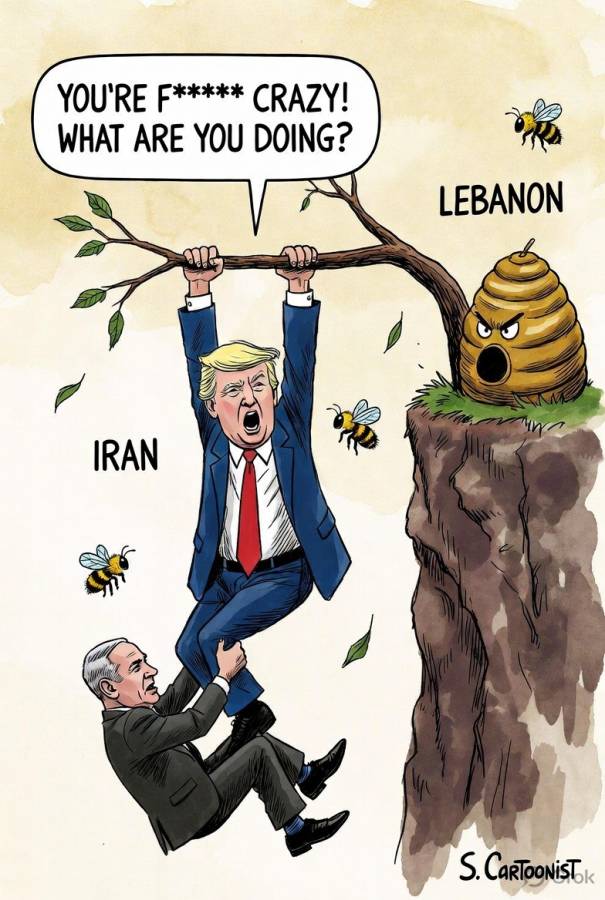
The episode has gained additional visibility through a widely shared political cartoon depicting Trump clinging to a tree branch amid escalating tensions with Iran while Netanyahu hangs below near a beehive labeled "Lebanon." The image references reports that Trump questioned Israel's actions at a time when his administration was pursuing diplomatic efforts with Iran.
The reported exchange came against the backdrop of delicate negotiations aimed at limiting Iran's nuclear activities and reducing tensions across the region. U.S. officials have been attempting to balance pressure on Tehran with efforts to prevent another major military escalation in the Middle East.
According to media reports, Trump expressed frustration that renewed Israeli military action in Lebanon could jeopardize those diplomatic efforts. The administration has reportedly been working through regional intermediaries to explore possible understandings with Iran while also maintaining support for Israel's security concerns.
Competing Strategic Priorities
The disagreement reflects a broader challenge facing the Trump administration.
On one hand, Washington continues to support Israel's right to defend itself against threats from groups such as Hezbollah. On the other, U.S. officials are seeking to avoid a regional conflict that could draw in Iran, disrupt global energy markets, and complicate ongoing diplomatic initiatives.
Israeli leaders argue that Hezbollah's military capabilities represent a direct security threat that requires continued pressure. However, critics of further escalation warn that expanded operations in Lebanon could trigger retaliation from Iran and undermine efforts to stabilize the region.
Reports suggest that Trump urged restraint during the conversation and sought to prevent a larger military operation. If accurate, the intervention would indicate that the White House views de-escalation as a priority despite its traditionally strong support for Israel.
The incident also illustrates the highly personalized nature of Trump's approach to foreign policy. Throughout his political career, Trump has often relied on direct relationships with world leaders and has shown a willingness to express disagreements publicly and privately in unusually candid terms.
Regional and Global Implications
The stakes extend beyond the U.S.-Israel relationship.
Any major escalation involving Lebanon, Hezbollah, and Iran could have significant consequences for regional stability. Markets remain sensitive to developments in the Middle East, particularly those that could affect shipping routes or energy supplies.
Oil prices have repeatedly reacted to signs of increased tension in the region. Investors and governments alike are closely watching whether diplomatic efforts can prevent another cycle of military confrontation.
For Iran, the reported disagreement between Washington and Jerusalem may be viewed as evidence of differing priorities between the two allies. For Israel, it highlights the challenge of addressing immediate security concerns while maintaining international support during a period of heightened scrutiny.
A Test for U.S. Policy
The reported phone call offers a glimpse into the difficult balancing act facing the Trump administration.
The White House is attempting to deter Iran, support Israel, and avoid a broader regional war at the same time. Those objectives are not always easily compatible, particularly when events on the ground move faster than diplomatic negotiations.
Whether the reported remarks accurately reflect Trump's exact words is ultimately less significant than what the episode reveals about current tensions. The disagreement underscores the challenges of managing alliances, pursuing diplomacy, and containing conflict in one of the world's most volatile regions.
As negotiations continue and regional tensions remain high, both Washington and Jerusalem face decisions that could shape the trajectory of the Middle East in the months ahead. The reported exchange serves as a reminder that even close allies can find themselves at odds when strategic priorities begin to diverge.
A reported phone call between U.S. President Donald Trump and Israeli Prime Minister Benjamin Netanyahu has drawn attention to growing tensions within one of Washington's closest alliances.
According to reports first published by Axios and later cited by multiple media outlets, Trump sharply criticized Netanyahu over Israel's military posture in Lebanon, reportedly using unusually blunt language as concerns mounted over the risk of a wider regional conflict.
The episode has gained additional visibility through a widely shared political cartoon depicting Trump clinging to a tree branch amid escalating tensions with Iran while Netanyahu hangs below near a beehive labeled "Lebanon." The image references reports that Trump questioned Israel's actions at a time when his administration was pursuing diplomatic efforts with Iran.
The reported exchange came against the backdrop of delicate negotiations aimed at limiting Iran's nuclear activities and reducing tensions across the region. U.S. officials have been attempting to balance pressure on Tehran with efforts to prevent another major military escalation in the Middle East.
According to media reports, Trump expressed frustration that renewed Israeli military action in Lebanon could jeopardize those diplomatic efforts. The administration has reportedly been working through regional intermediaries to explore possible understandings with Iran while also maintaining support for Israel's security concerns.
Competing Strategic Priorities
The disagreement reflects a broader challenge facing the Trump administration.
On one hand, Washington continues to support Israel's right to defend itself against threats from groups such as Hezbollah. On the other, U.S. officials are seeking to avoid a regional conflict that could draw in Iran, disrupt global energy markets, and complicate ongoing diplomatic initiatives.
Israeli leaders argue that Hezbollah's military capabilities represent a direct security threat that requires continued pressure. However, critics of further escalation warn that expanded operations in Lebanon could trigger retaliation from Iran and undermine efforts to stabilize the region.
Reports suggest that Trump urged restraint during the conversation and sought to prevent a larger military operation. If accurate, the intervention would indicate that the White House views de-escalation as a priority despite its traditionally strong support for Israel.
The incident also illustrates the highly personalized nature of Trump's approach to foreign policy. Throughout his political career, Trump has often relied on direct relationships with world leaders and has shown a willingness to express disagreements publicly and privately in unusually candid terms.
Regional and Global Implications
The stakes extend beyond the U.S.-Israel relationship.
Any major escalation involving Lebanon, Hezbollah, and Iran could have significant consequences for regional stability. Markets remain sensitive to developments in the Middle East, particularly those that could affect shipping routes or energy supplies.
Oil prices have repeatedly reacted to signs of increased tension in the region. Investors and governments alike are closely watching whether diplomatic efforts can prevent another cycle of military confrontation.
For Iran, the reported disagreement between Washington and Jerusalem may be viewed as evidence of differing priorities between the two allies. For Israel, it highlights the challenge of addressing immediate security concerns while maintaining international support during a period of heightened scrutiny.
A Test for U.S. Policy
The reported phone call offers a glimpse into the difficult balancing act facing the Trump administration.
The White House is attempting to deter Iran, support Israel, and avoid a broader regional war at the same time. Those objectives are not always easily compatible, particularly when events on the ground move faster than diplomatic negotiations.
Whether the reported remarks accurately reflect Trump's exact words is ultimately less significant than what the episode reveals about current tensions. The disagreement underscores the challenges of managing alliances, pursuing diplomacy, and containing conflict in one of the world's most volatile regions.
As negotiations continue and regional tensions remain high, both Washington and Jerusalem face decisions that could shape the trajectory of the Middle East in the months ahead. The reported exchange serves as a reminder that even close allies can find themselves at odds when strategic priorities begin to diverge.


.jpeg)


















Leave a Comment