
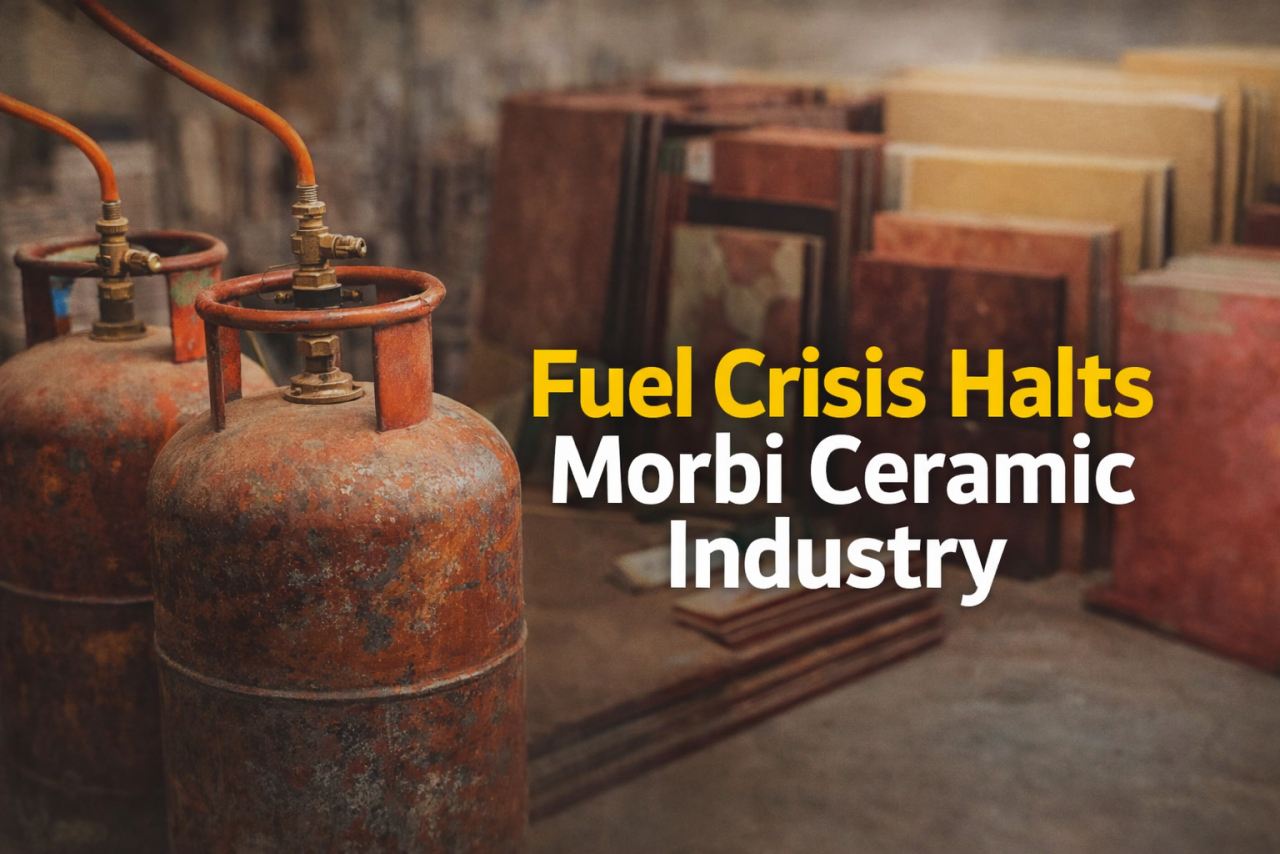
As fuel supplies dry up in Morbi, hundreds of ceramic factories face closure — putting thousands of jobs and India’s tile exports at risk.
The ripple effects of geopolitical tensions in West Asia are now being felt far beyond the region’s borders. In India, the impact has reached Morbi in Gujarat — the country’s largest hub for ceramic tiles and sanitaryware — where a shortage of propane gas has forced several factories to shut down operations in recent days.
Industry leaders say the situation could worsen quickly if fuel supplies do not stabilize, potentially threatening one of India’s most important export-driven manufacturing clusters.
Factories Begin Shutting Down
Morbi’s ceramic industry relies heavily on propane gas to fire kilns used in manufacturing tiles and sanitaryware. However, supply disruptions linked to the ongoing conflict in West Asia have led to a sudden shortage of the fuel.
According to industry estimates, around 100 ceramic factories have already halted production in the past few days due to the shortage. Many more units could follow if the crisis continues.
Entrepreneurs in Morbi say the situation developed rapidly, leaving manufacturers with little time to prepare. Several factory owners have begun suspending operations temporarily as propane supplies become increasingly uncertain.
Some companies are exploring alternative fuels or operational adjustments to reduce the impact, but experts warn that switching energy sources is neither quick nor easy for kiln-based industries.
A Major Industrial Cluster Under Stress
Morbi is widely regarded as the ceramic capital of India. The region produces a vast share of the country’s ceramic tiles, exporting products to markets across the Middle East, Europe, Africa and Latin America.
Industry estimates suggest that the Morbi ceramic sector generates an annual turnover of nearly ₹60,000 crore and employs roughly four lakh workers directly and indirectly.
With such a large workforce dependent on the industry, prolonged disruptions could have significant economic consequences for the region.
Manufacturers warn that production slowdowns not only threaten jobs but could also disrupt global supply chains for ceramic products that rely on Morbi’s output.
West Asia Conflict Disrupts Energy Supply
The fuel shortage stems from broader geopolitical tensions in the Middle East involving major regional and global powers. One key factor behind the disruption is uncertainty surrounding shipping routes and energy infrastructure in the region.
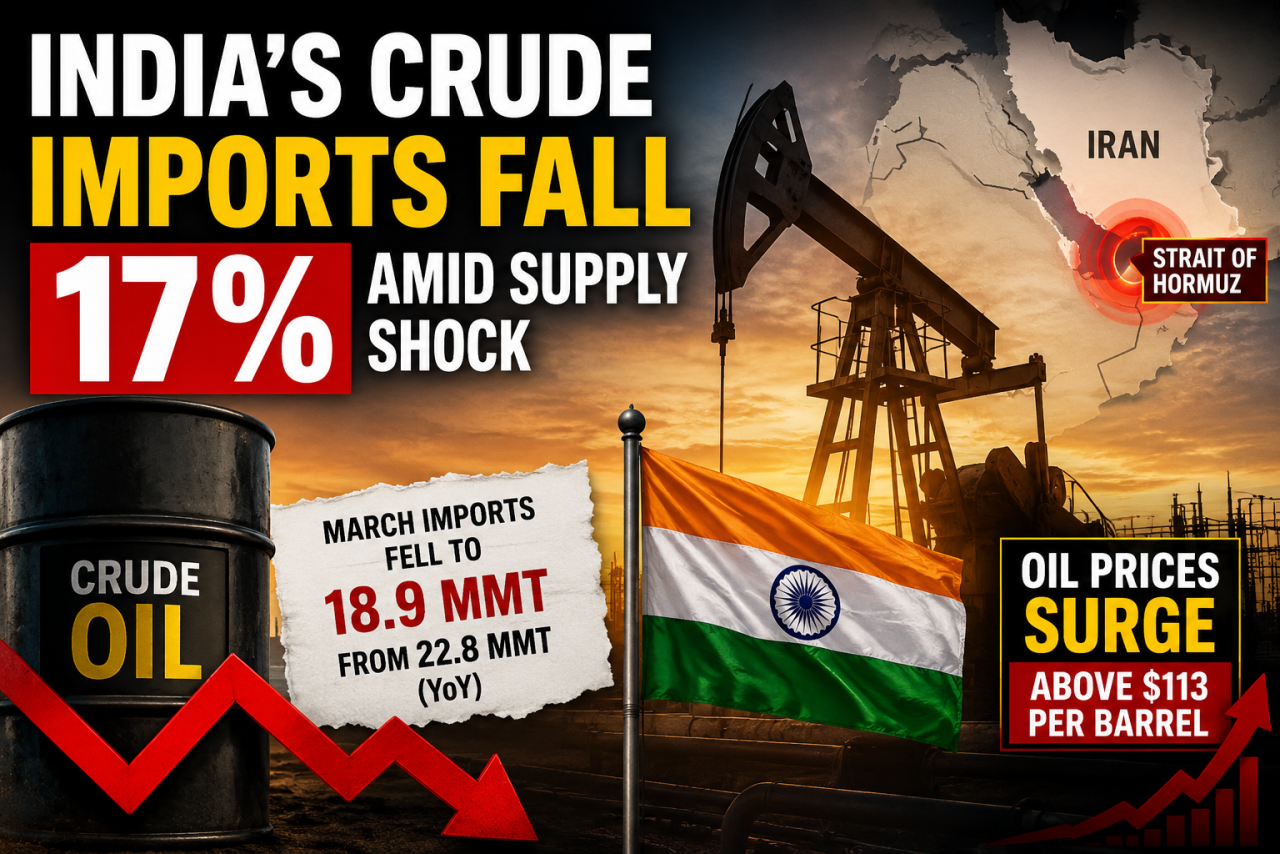
Energy supply chains have been affected by developments around the Strait of Hormuz, a critical maritime route through which a large portion of global oil and gas shipments pass.
Further pressure came after operations were disrupted at Qatar’s Ras Laffan LNG terminal, one of the world’s largest liquefied natural gas export facilities. Qatar alone accounts for roughly 40–45 percent of India’s natural gas imports, making any disruption there particularly significant for Indian industries.
The uncertainty has quickly translated into supply constraints for industrial users of propane and related fuels.
Gas Supplies Being Restricted
In response to the situation, Gujarat Gas Limited — a subsidiary of Gujarat State Petroleum Corporation — recently declared force majeure, citing supply disruptions.
The company has begun restricting gas supply to industrial consumers in order to manage the shortage.
So far, domestic piped natural gas for households, cooking gas supplies and compressed natural gas used in vehicles remain largely unaffected. Authorities appear to be prioritizing essential public consumption over industrial usage.
Government officials have also directed state-owned refiners to focus on increasing production of liquefied petroleum gas (LPG) to safeguard domestic cooking gas availability.
Industry Warns of More Closures
Industry representatives say the current stock of propane in Morbi could last only a few days. Out of roughly 700 ceramic units operating in the region, nearly 450 depend on propane gas for production.
If supply conditions do not improve quickly, industry leaders fear hundreds more factories may be forced to suspend operations.
Exporters are also facing logistical challenges. Shipments to West Asian markets — which typically account for about one quarter of Morbi’s monthly export containers — have reportedly slowed due to disruptions in shipping routes and rising freight costs.
Some shipping companies have already increased freight charges by 20–30 percent, further eroding the competitiveness of exports.
A Reminder of Global Interdependence
The situation unfolding in Morbi highlights how deeply interconnected global supply chains have become. A conflict thousands of kilometers away can rapidly disrupt industrial production, employment, and trade in distant regions.
For India’s ceramic hub, the coming weeks will be crucial. If energy supplies stabilize soon, the industry may weather the disruption. But if geopolitical tensions continue to escalate, Morbi’s factories could face a longer and more painful slowdown.
For now, manufacturers are waiting anxiously — hoping that the global crisis does not turn into a prolonged industrial setback at home.
























Leave a Comment