
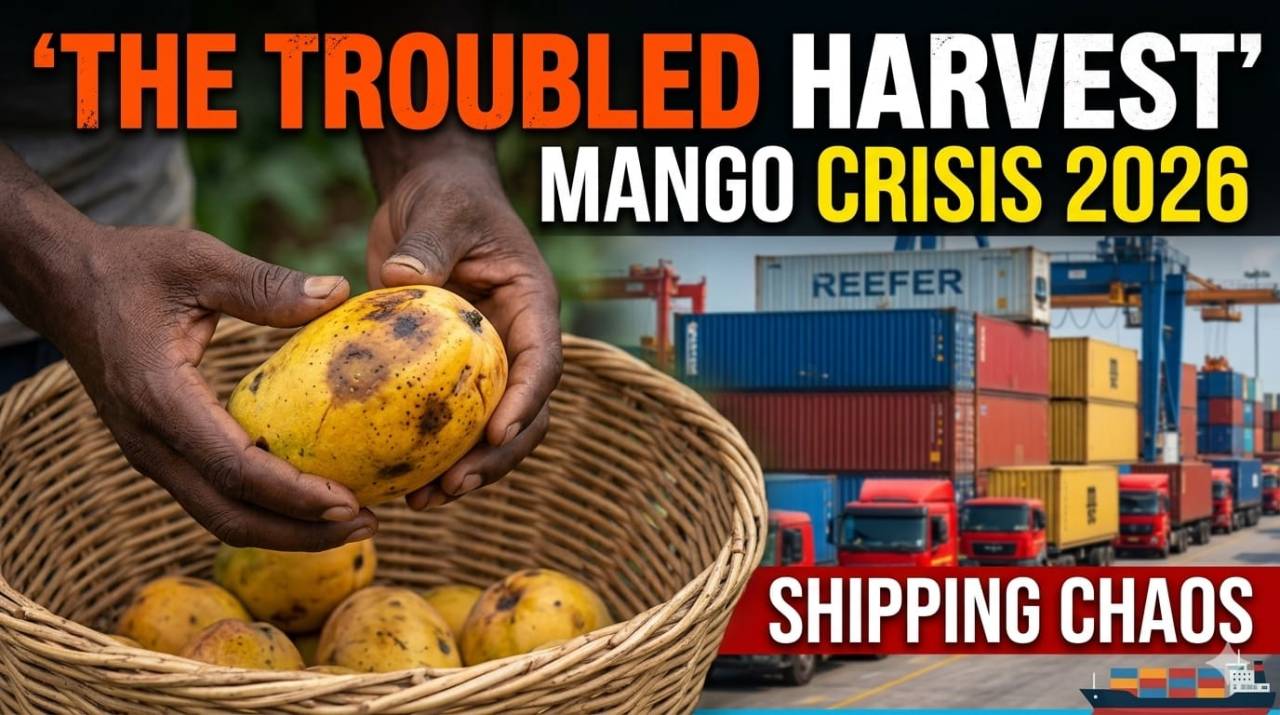
For millions of Indian farmers, the mango season isn’t bringing profits this year—it’s bringing uncertainty.
As summer ripens across India, the orchards of Ratnagiri and Malihabad should be buzzing with optimism. The air is fragrant with Alphonso and Dasheri mangoes nearing peak harvest—a season that traditionally brings prosperity to farmers and exporters alike. But in 2026, that familiar sweetness is overshadowed by deep uncertainty.
India’s mango export season, an important pillar of agricultural trade and cultural diplomacy, is facing one of its most severe disruptions in recent times. A combination of geopolitical instability, logistical bottlenecks, and soaring shipping costs has created a perfect storm, threatening not just exports but the livelihoods of millions tied to the “King of Fruits.”
The Geopolitical Shockwave
The crisis begins far from Indian soil, in the volatile maritime corridors of the Red Sea and the Strait of Hormuz. These routes are critical arteries for Indian exports heading to key markets such as the UAE, Saudi Arabia, and Europe.
Ongoing tensions in West Asia have forced global shipping companies to reroute vessels away from the Suez Canal, opting instead for the much longer journey around the Cape of Good Hope. What was once a 2–3 week voyage has now stretched beyond a month.
For mangoes, a fruit highly sensitive to time and temperature, this delay is devastating. Extended transit accelerates ripening, increases spoilage risk, and often renders shipments unsellable by the time they arrive. What looks like a logistical adjustment on paper becomes a commercial disaster in practice.
The Reefer Container Crisis
At the center of the export ecosystem lies the refrigerated container, or “reefer,” which maintains mangoes at a controlled temperature of 13°C to 15°C. These containers are essential for preserving quality during transit.
However, global shipping disruptions have triggered a severe shortage of reefers. Many are stuck at transshipment hubs or tied up on longer routes, creating a supply-demand imbalance.
The result is a dramatic spike in freight costs. Where exporters once paid around $1,200 per container, rates have now surged to $4,000–$4,500. This nearly 300% increase has made sea exports economically unviable for many.
For exporters, the equation is simple: higher costs combined with higher risk equals shrinking margins—or outright losses.
The Domestic Market Fallout
When exports falter, the impact cascades back home. India produces roughly 21 million tonnes of mangoes annually, nearly 44% of global output. While exports account for a relatively small share, they absorb the premium-grade produce that commands higher prices.
With export channels blocked, this premium fruit is now flooding domestic markets. The sudden oversupply is pushing prices downward, creating a paradox where consumers benefit from cheaper mangoes while farmers suffer heavy financial losses.
Export-quality cultivation is cost-intensive. Farmers invest in pest control, fruit bagging, and compliance with international standards. When prices crash, they struggle to recover even their basic input costs—fueling debt and financial instability in rural economies.
Policy Gaps Exposed
This crisis has laid bare structural weaknesses in India’s agricultural export strategy—particularly its dependence on limited shipping routes and foreign logistics infrastructure.
1. Building Strategic Logistics Capacity
India needs to invest in its own fleet of refrigerated containers. Strengthening domestic capacity through agencies like the Container Corporation of India can reduce reliance on global shipping lines during crises.
2. Creating an Air-Freight Safety Net
In the short term, targeted subsidies for air transport could help exporters bypass maritime disruptions. While costly, air freight ensures speed and preserves quality—especially for premium markets in Europe and North America.
3. Diversifying Export Markets
Reducing dependence on West Asia is critical. Expanding access to markets like Japan, South Korea, and Australia requires investment in advanced treatment facilities such as Vapour Heat Treatment and irradiation centers.
4. Strengthening Processing Infrastructure
A significant portion of India’s mango harvest still goes unprocessed. By boosting investments in food processing—such as pulp production, freeze-drying, and aseptic packaging—surplus fruit can be preserved and monetized instead of wasted.
A Defining Moment for India’s Mango Economy
The current disruption is more than a seasonal setback—it is a stress test for India’s agricultural resilience. Mangoes are not just a fruit but an economic lifeline and a symbol of India’s soft power in global markets.
If timely policy interventions are not implemented, the 2026 season risks being remembered as a lost opportunity—not due to poor harvests, but due to fragile supply chains and inadequate preparedness.
India’s mango industry now stands at a crossroads. The path forward demands investment in infrastructure, diversification of markets, and strategic foresight. Only then can the “King of Fruits” reclaim its throne—not just in orchards, but in global trade.
























Leave a Comment