
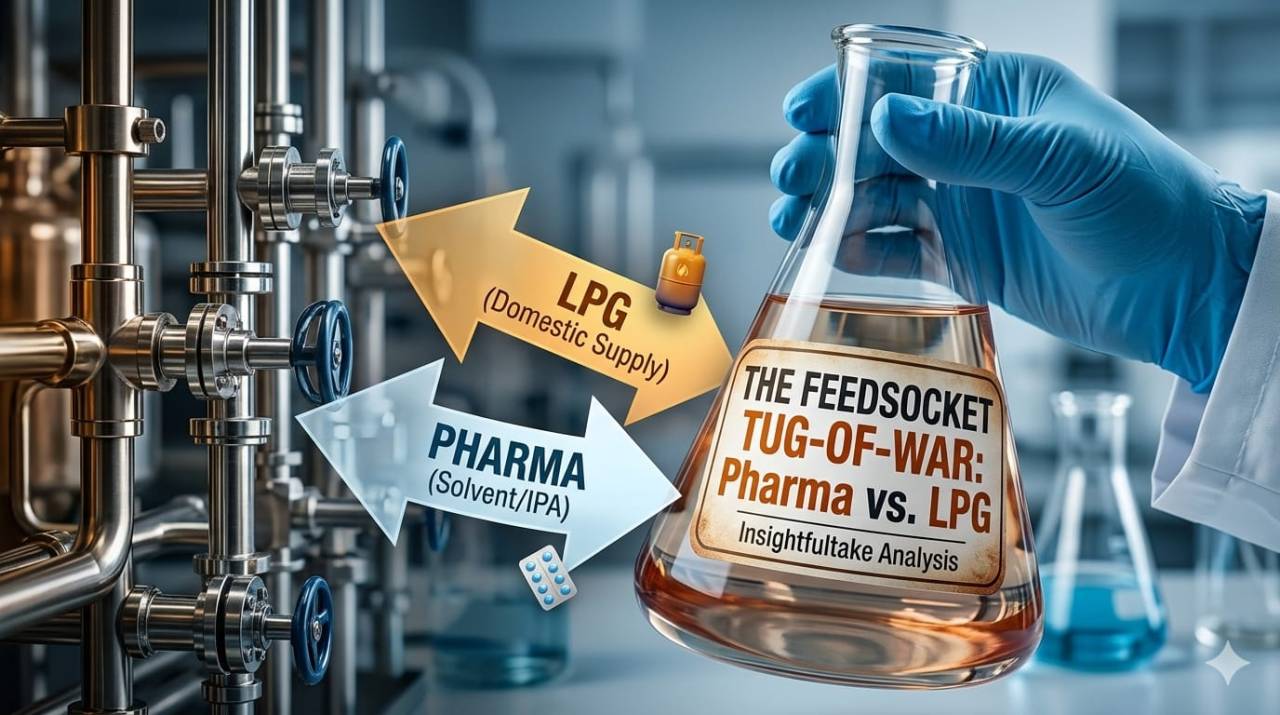
A basic chemical nearly disrupted India’s medicine supply—until a last-minute government intervention stepped in.
India recently came close to facing a serious disruption in its pharmaceutical sector—one that could have affected the availability of medicines both domestically and globally. What makes this episode significant is that it was not triggered by a health emergency, but by a shortage of a basic industrial chemical: Isopropyl Alcohol (IPA).
In late March 2026, concerns began to surface within India’s $50 billion pharmaceutical industry, widely known as the “pharmacy of the world.” Companies started flagging an unusual but critical issue—a sudden squeeze in the supply of IPA, a solvent essential to the production of a wide range of medicines.
The Domino Effect of Geopolitics
The roots of the problem lie far beyond India’s borders. The ongoing conflict in West Asia disrupted global crude oil and gas supply chains, creating pressure on energy availability. In response, the Indian government moved to safeguard domestic households from a possible cooking gas shortage.
To achieve this, refinery feedstocks—specifically C3 and C4 streams—were diverted towards the production of Liquefied Petroleum Gas (LPG). The decision ensured that kitchens across the country continued to receive fuel without interruption.
However, this move came with unintended consequences. The same feedstocks—propylene and propane—are also essential inputs for petrochemical industries, particularly for the production of IPA. As supply to these industries tightened, IPA production began to slow.
IPA plays a crucial role in pharmaceutical manufacturing. It is used as a solvent in producing common medicines like paracetamol and antibiotics, as well as more complex Active Pharmaceutical Ingredients (APIs). Without adequate supply, production lines can quickly stall.
A Supply Chain Under Pressure
By mid-March, the situation had become serious. Manufacturers such as Deepak Fertilisers and Petrochemicals Corp. Ltd (DFPCL), one of India’s key suppliers of pharma-grade IPA, began experiencing significant constraints.
As inventories dropped, major pharmaceutical companies—including Sun Pharma, Zydus Lifesciences, and the Serum Institute of India—raised urgent concerns with the government. Their warning was clear: if the shortage continued, medicine production could be affected within weeks.
Given India’s role in supplying nearly 20% of the world’s generic medicines, the implications were not limited to the domestic market. A prolonged disruption could have had global consequences, particularly for countries dependent on Indian drug exports.
The April 1 Intervention
Recognising the urgency, the government stepped in on April 1, 2026, with a set of targeted measures aimed at stabilising the situation.
First, refineries were directed to restore a minimum supply of propylene and propane to petrochemical units, allowing IPA production to resume. This move was critical in easing immediate supply constraints.
Second, to facilitate imports, customs duty on key petrochemicals—including IPA, phenol, and acetone—was temporarily removed until June 30, 2026. This helped companies access alternative sources without facing additional cost pressures.
Third, the allocation of commercial LPG was increased to 70% of pre-crisis levels, with priority given to industries and sectors linked to healthcare. This ensured that industrial operations could continue without excessive disruption.
A Deeper Structural Concern
While the immediate crisis has eased, it has also exposed a structural vulnerability in India’s industrial ecosystem—its dependence on petrochemical feedstocks linked to global energy markets.
Hari Kiran Chereddi, CEO of HRV Pharma, highlighted that such disruptions underline the importance of petrochemicals in healthcare manufacturing. Even a temporary imbalance in supply can have cascading effects across the pharmaceutical value chain.
In response, the Department of Chemicals & Petrochemicals has initiated an audit of 11 critical chemical inputs. Companies have been asked to share real-time stock positions, assess the importance of each chemical in their production processes, and explore possible alternatives or backup sourcing strategies.
Final Take
For now, the situation appears to be stabilising. Companies like Zydus Lifesciences have indicated that production is gradually returning to normal levels. However, the episode has triggered a broader conversation about balancing energy priorities with industrial needs.
As one industry observer noted, the impact of such disruptions goes beyond economics—it directly affects the availability and affordability of medicines.
To reduce future risks, the government is encouraging a shift from LPG to alternatives such as Piped Natural Gas (PNG) and electric cooking solutions. This transition could free up valuable refinery feedstocks for industrial use.
For India’s pharmaceutical sector, the focus is now shifting towards building greater resilience. Ensuring reliable access to critical inputs is becoming as important as manufacturing capacity itself. The goal is clear: the next time global disruptions occur, India’s role as the pharmacy of the world should remain secure and uninterrupted.

























Leave a Comment