
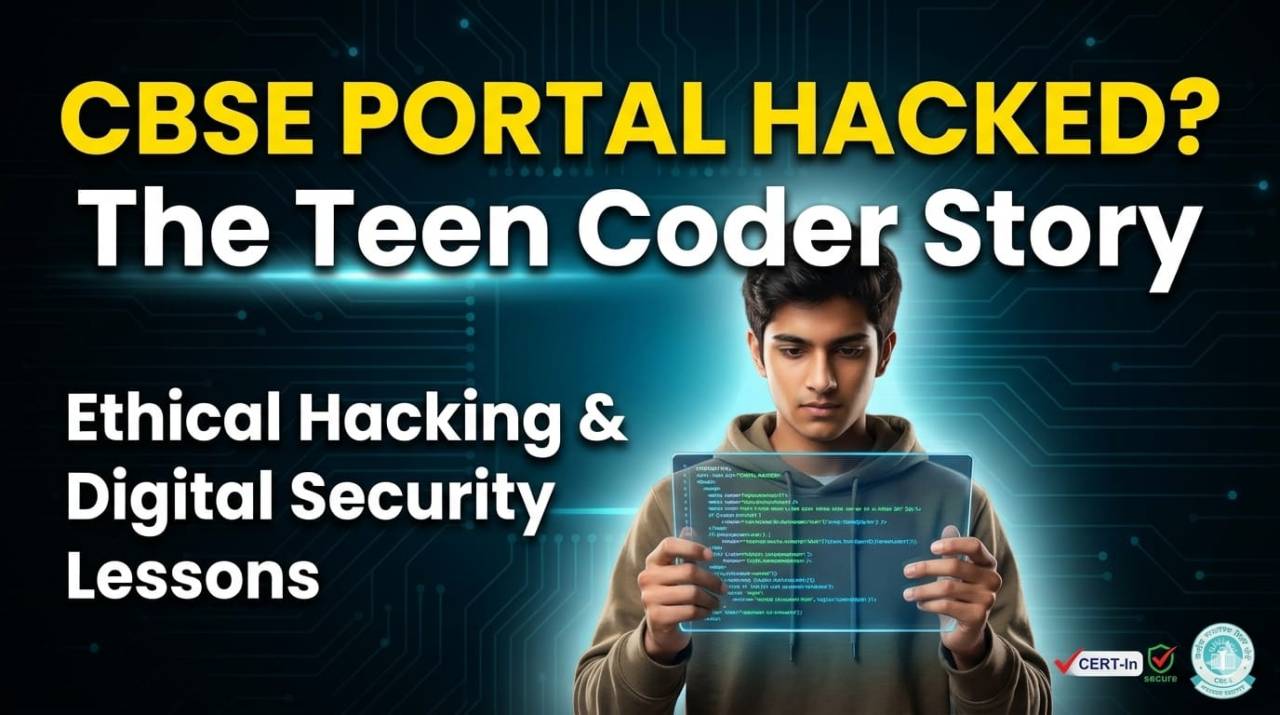
What began as a teenager’s curiosity after board exams soon evolved into a nationwide conversation on cybersecurity, ethical hacking, and the hidden vulnerabilities inside India’s growing digital infrastructure.
A fascinating digital detective story recently unfolded in India’s student community. A 19-year-old student named Nisarga Adhikary found himself at the center of a national cybersecurity discussion after wrapping up his Class 12 board examinations. Driven by curiosity, Nisarga decided to examine the frontend code of the Central Board of Secondary Education’s (CBSE) newly highlighted On-Screen Marking (OSM) portal. What he uncovered quickly caught the attention of the country’s growing technology community.
According to his public findings, Nisarga claimed that the platform contained what he described as “amateur vulnerabilities.” These reportedly included a visible “master password” hardcoded into public JavaScript files, client-side OTP validation, and weak route protection systems. He argued that such flaws could theoretically allow unauthorized users to bypass certain restrictions and access examiner dashboards.
Following responsible disclosure practices, the student reportedly informed the Indian Computer Emergency Response Team (CERT-In) before publicly discussing the issue. His actions immediately sparked debate online about cybersecurity standards in India’s rapidly expanding digital ecosystem.
In response, CBSE issued a formal clarification aimed at reassuring students, parents, and educators. The board stated that the vulnerabilities identified were linked only to a testing platform containing sample data. According to CBSE, the actual live system used for evaluating answer sheets operated through a completely different and secure infrastructure. The board emphasized that no real student marks or examination records were compromised.
While the clarification helped calm concerns about examination security, the episode revealed something much bigger than a temporary technical controversy. It became a real-world lesson in how digital systems function and why cybersecurity awareness is becoming essential for modern India.
The Real Lessons Hidden Behind the Code
For students across the country, this incident serves as an important bridge between textbook computer science and practical technological understanding. It demonstrates that cybersecurity is no longer limited to highly specialized professionals working inside large corporations. Even young students with curiosity and technical discipline can identify weaknesses in digital systems.
Curiosity Can Become Expertise
One of the most inspiring aspects of the episode is the role of self-learning. Nisarga reportedly began coding around Class 7 and explored cybersecurity largely as a personal interest rather than through formal institutional training. His journey reflects a major shift in modern education: learning is no longer confined to classrooms alone.
Today, students can access programming tutorials, coding forums, open-source projects, and cybersecurity documentation from anywhere with an internet connection. This democratization of knowledge allows motivated learners to develop advanced technical skills at an early age. In many ways, curiosity itself has become one of the most valuable educational tools of the digital era.
The incident also reminds parents and educators that hobbies such as coding, ethical hacking, and software experimentation should not automatically be viewed with suspicion. When guided ethically, they can evolve into highly valuable career pathways.
Understanding the Difference Between Frontend and Backend Security
The vulnerabilities discussed in the CBSE testing portal controversy revolve around one of the most basic principles of web security: sensitive verification systems should never rely entirely on the user’s browser.
What Is Client-Side Security?
When users open a website, their browsers download visible resources such as HTML, CSS, and JavaScript files. This is known as the client side. Because these files are accessible to users, any passwords, verification logic, or authentication systems exposed there can potentially be inspected or manipulated.
Cybersecurity experts often warn developers against storing sensitive information directly inside frontend code because browsers are not secure environments for critical security operations.
Why Server-Side Protection Matters
The server side refers to the central infrastructure where websites securely process requests, verify user permissions, validate OTPs, and protect sensitive databases. Proper cybersecurity architecture ensures that confidential operations occur only on protected servers rather than inside publicly accessible browser files.
This distinction may sound technical, but it represents the foundation of secure digital systems used in banking, healthcare, education, and governance.
Ethical Hacking Versus Malicious Hacking
Another major lesson from this incident involves the concept of ethical hacking. Public conversations around hacking often associate the word entirely with cybercrime. However, cybersecurity researchers and ethical hackers play a critical role in strengthening digital safety worldwide.
Ethical hackers identify vulnerabilities and responsibly report them to organizations so that weaknesses can be fixed before malicious actors exploit them. Governments, technology companies, banks, and even military institutions regularly employ cybersecurity researchers to test their digital defenses.
The student’s decision to reportedly alert CERT-In before wider public discussions reflects the importance of responsible disclosure practices. It also highlights the growing need for structured cybersecurity awareness among young internet users.
Why This Matters for India’s Digital Future
India is undergoing one of the world’s fastest digital transformations. Education systems, government services, healthcare platforms, banking networks, and public infrastructure are increasingly dependent on online systems. As digital adoption grows, cybersecurity can no longer remain an afterthought.
The CBSE portal episode demonstrates how even testing or developmental systems require strong security standards. In today’s interconnected environment, weaknesses in one layer of digital infrastructure can quickly become national concerns.
At the same time, the incident also offers hope. It reveals that India’s next generation is not merely consuming technology but actively understanding, questioning, and improving it. Young learners interested in coding, cybersecurity, and ethical research may become essential contributors to the country’s technological future.
For students inspired by this story, the bigger takeaway is simple: the future will not belong only to those who use technology, but to those who understand how it works, how it fails, and how it can be made safer for everyone.
A fascinating digital detective story recently unfolded in India’s student community. A 19-year-old student named Nisarga Adhikary found himself at the center of a national cybersecurity discussion after wrapping up his Class 12 board examinations. Driven by curiosity, Nisarga decided to examine the frontend code of the Central Board of Secondary Education’s (CBSE) newly highlighted On-Screen Marking (OSM) portal. What he uncovered quickly caught the attention of the country’s growing technology community.
According to his public findings, Nisarga claimed that the platform contained what he described as “amateur vulnerabilities.” These reportedly included a visible “master password” hardcoded into public JavaScript files, client-side OTP validation, and weak route protection systems. He argued that such flaws could theoretically allow unauthorized users to bypass certain restrictions and access examiner dashboards.
Following responsible disclosure practices, the student reportedly informed the Indian Computer Emergency Response Team (CERT-In) before publicly discussing the issue. His actions immediately sparked debate online about cybersecurity standards in India’s rapidly expanding digital ecosystem.
In response, CBSE issued a formal clarification aimed at reassuring students, parents, and educators. The board stated that the vulnerabilities identified were linked only to a testing platform containing sample data. According to CBSE, the actual live system used for evaluating answer sheets operated through a completely different and secure infrastructure. The board emphasized that no real student marks or examination records were compromised.
While the clarification helped calm concerns about examination security, the episode revealed something much bigger than a temporary technical controversy. It became a real-world lesson in how digital systems function and why cybersecurity awareness is becoming essential for modern India.
The Real Lessons Hidden Behind the Code
For students across the country, this incident serves as an important bridge between textbook computer science and practical technological understanding. It demonstrates that cybersecurity is no longer limited to highly specialized professionals working inside large corporations. Even young students with curiosity and technical discipline can identify weaknesses in digital systems.
Curiosity Can Become Expertise
One of the most inspiring aspects of the episode is the role of self-learning. Nisarga reportedly began coding around Class 7 and explored cybersecurity largely as a personal interest rather than through formal institutional training. His journey reflects a major shift in modern education: learning is no longer confined to classrooms alone.
Today, students can access programming tutorials, coding forums, open-source projects, and cybersecurity documentation from anywhere with an internet connection. This democratization of knowledge allows motivated learners to develop advanced technical skills at an early age. In many ways, curiosity itself has become one of the most valuable educational tools of the digital era.
The incident also reminds parents and educators that hobbies such as coding, ethical hacking, and software experimentation should not automatically be viewed with suspicion. When guided ethically, they can evolve into highly valuable career pathways.
Understanding the Difference Between Frontend and Backend Security
The vulnerabilities discussed in the CBSE testing portal controversy revolve around one of the most basic principles of web security: sensitive verification systems should never rely entirely on the user’s browser.
What Is Client-Side Security?
When users open a website, their browsers download visible resources such as HTML, CSS, and JavaScript files. This is known as the client side. Because these files are accessible to users, any passwords, verification logic, or authentication systems exposed there can potentially be inspected or manipulated.
Cybersecurity experts often warn developers against storing sensitive information directly inside frontend code because browsers are not secure environments for critical security operations.
Why Server-Side Protection Matters
The server side refers to the central infrastructure where websites securely process requests, verify user permissions, validate OTPs, and protect sensitive databases. Proper cybersecurity architecture ensures that confidential operations occur only on protected servers rather than inside publicly accessible browser files.
This distinction may sound technical, but it represents the foundation of secure digital systems used in banking, healthcare, education, and governance.
Ethical Hacking Versus Malicious Hacking
Another major lesson from this incident involves the concept of ethical hacking. Public conversations around hacking often associate the word entirely with cybercrime. However, cybersecurity researchers and ethical hackers play a critical role in strengthening digital safety worldwide.
Ethical hackers identify vulnerabilities and responsibly report them to organizations so that weaknesses can be fixed before malicious actors exploit them. Governments, technology companies, banks, and even military institutions regularly employ cybersecurity researchers to test their digital defenses.
The student’s decision to reportedly alert CERT-In before wider public discussions reflects the importance of responsible disclosure practices. It also highlights the growing need for structured cybersecurity awareness among young internet users.
Why This Matters for India’s Digital Future
India is undergoing one of the world’s fastest digital transformations. Education systems, government services, healthcare platforms, banking networks, and public infrastructure are increasingly dependent on online systems. As digital adoption grows, cybersecurity can no longer remain an afterthought.
The CBSE portal episode demonstrates how even testing or developmental systems require strong security standards. In today’s interconnected environment, weaknesses in one layer of digital infrastructure can quickly become national concerns.
At the same time, the incident also offers hope. It reveals that India’s next generation is not merely consuming technology but actively understanding, questioning, and improving it. Young learners interested in coding, cybersecurity, and ethical research may become essential contributors to the country’s technological future.
For students inspired by this story, the bigger takeaway is simple: the future will not belong only to those who use technology, but to those who understand how it works, how it fails, and how it can be made safer for everyone.



.jpeg)





















Leave a Comment