
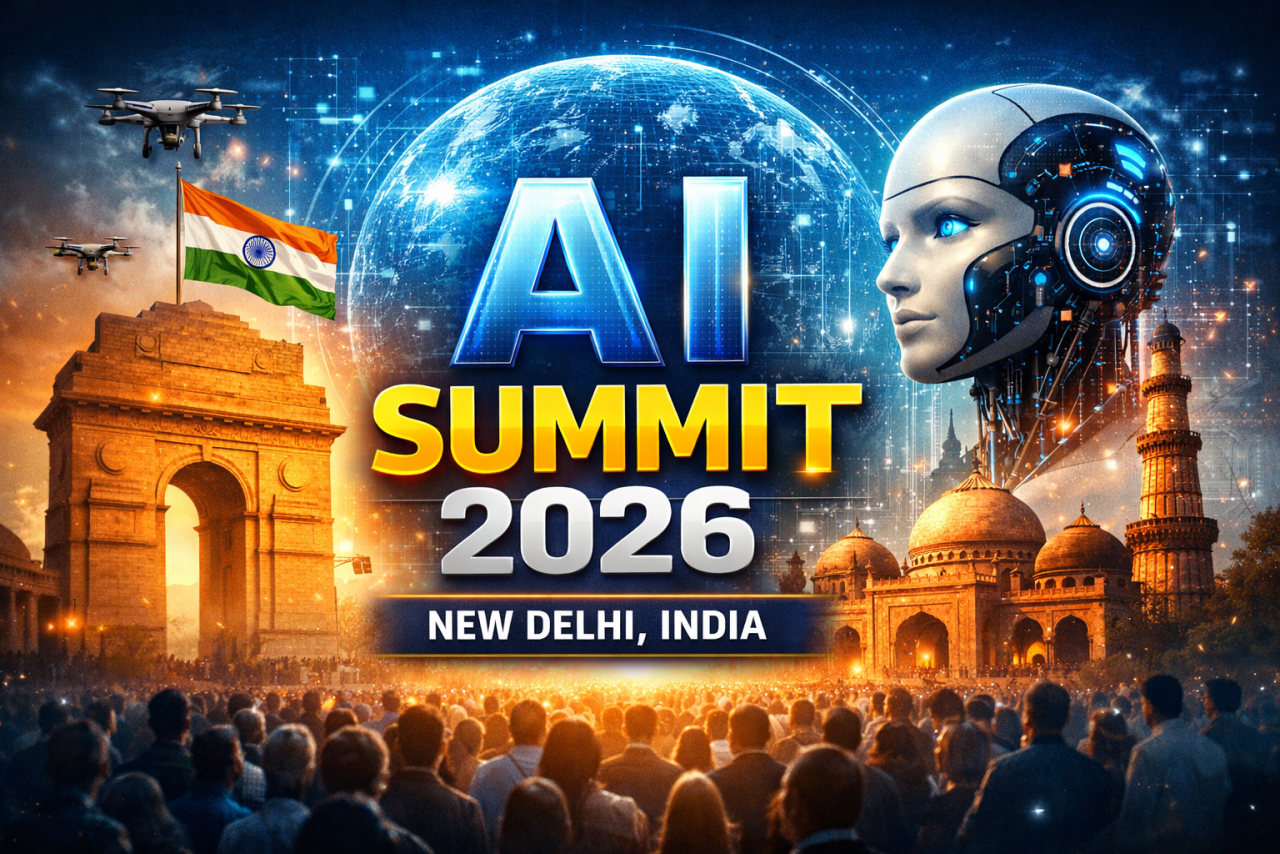
For five days in February, New Delhi is not just hosting a conference — it is hosting the future. As global leaders, tech giants and policymakers gather for the AI Impact Summit 2026, the world’s most urgent technological debate has found its epicentre in India.
India is hosting the AI Impact Summit 2026 in New Delhi from February 16 to February 20, drawing heads of state, policymakers, technology industry executives, journalists, civil society groups and global stakeholders for what promises to be an intense and high-stakes week in the capital.
Officially titled the AI Impact Summit 2026, the event is being held at Bharat Mandapam and has emerged as one of the most significant global technology gatherings of the year. According to a government press release, the summit week features more than 500 events alongside the main programme. It also doubles as a large-scale trade exhibition of artificial intelligence products and solutions, with over 840 exhibitors including national delegations, ministerial groups, technology companies, AI startups and research laboratories. By scale alone, it stands among the most comprehensive AI-focused global convenings hosted in India.
For five charged days, New Delhi has shifted from being India’s political capital to becoming the debating chamber of the artificial intelligence age. Conference halls are filled. Policy roundtables are intense. Outside the venue, discussions have spilled onto social platforms such as X, Facebook and Instagram, where clips, keynote moments and policy debates are circulating in real time.
A Summit at a Defining Moment
Artificial intelligence is no longer experimental technology confined to laboratories. It writes content, predicts trends, diagnoses illnesses, recommends decisions and automates processes across industries. It disrupts traditional job structures even as it creates new opportunities. It offers both efficiency and ethical dilemmas.
Against this global backdrop, India hosting the summit carries symbolic and strategic weight. The country is home to one of the world’s largest digital populations and a fast-growing innovation ecosystem. At the same time, AI applications in agriculture, healthcare, public service delivery and education have the potential to directly affect millions of lives.
When global leaders gather in New Delhi to debate AI governance, they are not speaking in abstraction. They are speaking in the context of scale, diversity and developmental urgency.
Prime Minister Narendra Modi, in his inaugural remarks, emphasised the idea of “AI for all,” underscoring the need for inclusive, human-centric innovation. The phrase quickly gained traction across social media, reinforcing the summit’s broader message that artificial intelligence must serve society rather than widen existing divides.
Who’s in the Room?
The summit has drawn an influential mix of participants from across the globe. Heads of state, ministerial delegations and senior policymakers are engaging with technology executives, researchers and entrepreneurs.
Executives from major technology firms including Google, Microsoft and OpenAI are participating in discussions around AI safety, generative systems and the future of work. Their presence signals how central AI has become to economic competitiveness and national strategy.
Yet the event is not limited to established global corporations. Hundreds of startups are presenting practical solutions tailored to real-world challenges. Exhibitions include AI tools for crop monitoring, predictive healthcare diagnostics, multilingual language models and climate analytics platforms. The diversity of exhibitors reflects a broader shift: innovation is increasingly decentralised.
The Big Debates
Beyond the exhibition floor, the most consequential conversations revolve around governance, employment and ethics.
On governance, delegates are debating how nations can regulate AI responsibly without undermining innovation. The question of international coordination remains complex, particularly as AI development intersects with geopolitical competition.
On employment, discussions focus on reskilling and workforce readiness. Automation anxiety is real, especially in emerging economies. Policymakers are examining how education systems and skill development programmes must evolve in response to AI-driven change.
On ethics, concerns about algorithmic bias, misinformation, privacy and surveillance remain central. Participants repeatedly return to a defining question: can AI systems be powerful and principled at the same time?
A Global Conversation Beyond the Venue
While formal discussions unfold inside Bharat Mandapam, the broader public conversation is taking place online. Hashtags linked to the summit have trended on X, with commentary ranging from optimism about India’s global leadership role to scepticism about implementation challenges.
The digital response mirrors the global mood around artificial intelligence itself — hopeful, cautious and deeply engaged.
Beyond Symbolism
Large international gatherings often risk being reduced to optics. Yet summits of this scale can shape policy trajectories and diplomatic alignments. They create space for negotiation, consensus-building and strategic positioning.
For India, hosting the AI Impact Summit 2026 signals that it does not intend to remain merely a consumer of AI technologies developed elsewhere. It seeks a voice in shaping global governance frameworks and ethical standards.
For the world, the summit underscores an essential reality. Artificial intelligence will affect every society. Its future cannot be determined by a handful of nations alone.
As the five-day summit concludes on February 20, the focus will shift from speeches to outcomes. Whether the commitments and conversations translate into lasting frameworks remains to be seen. But for one pivotal week in February 2026, the world’s most urgent technological debate found its epicentre in New Delhi — and its implications are likely to extend far beyond the capital.
























Leave a Comment