
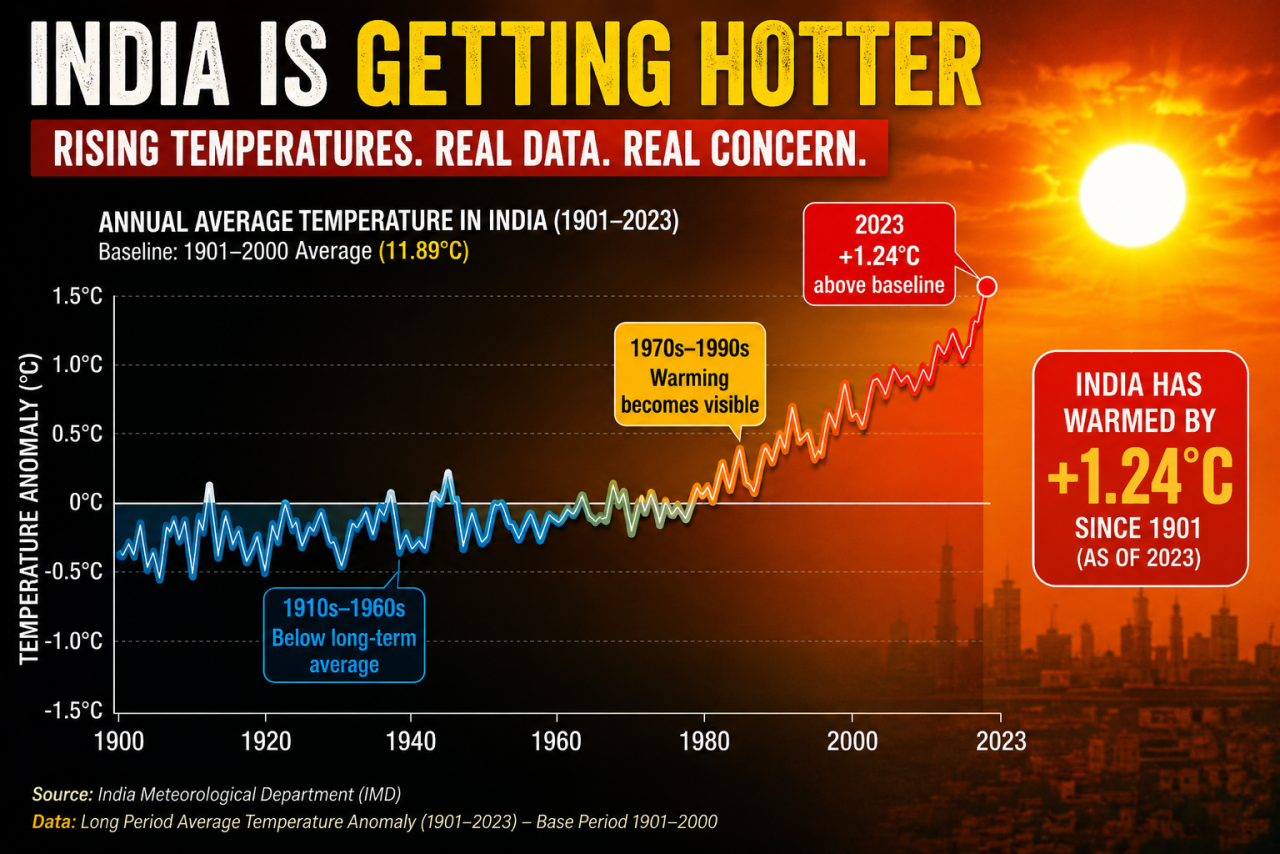
India’s deadly heatwaves are revealing why old monsoon predictions may no longer match the country’s new climate reality.
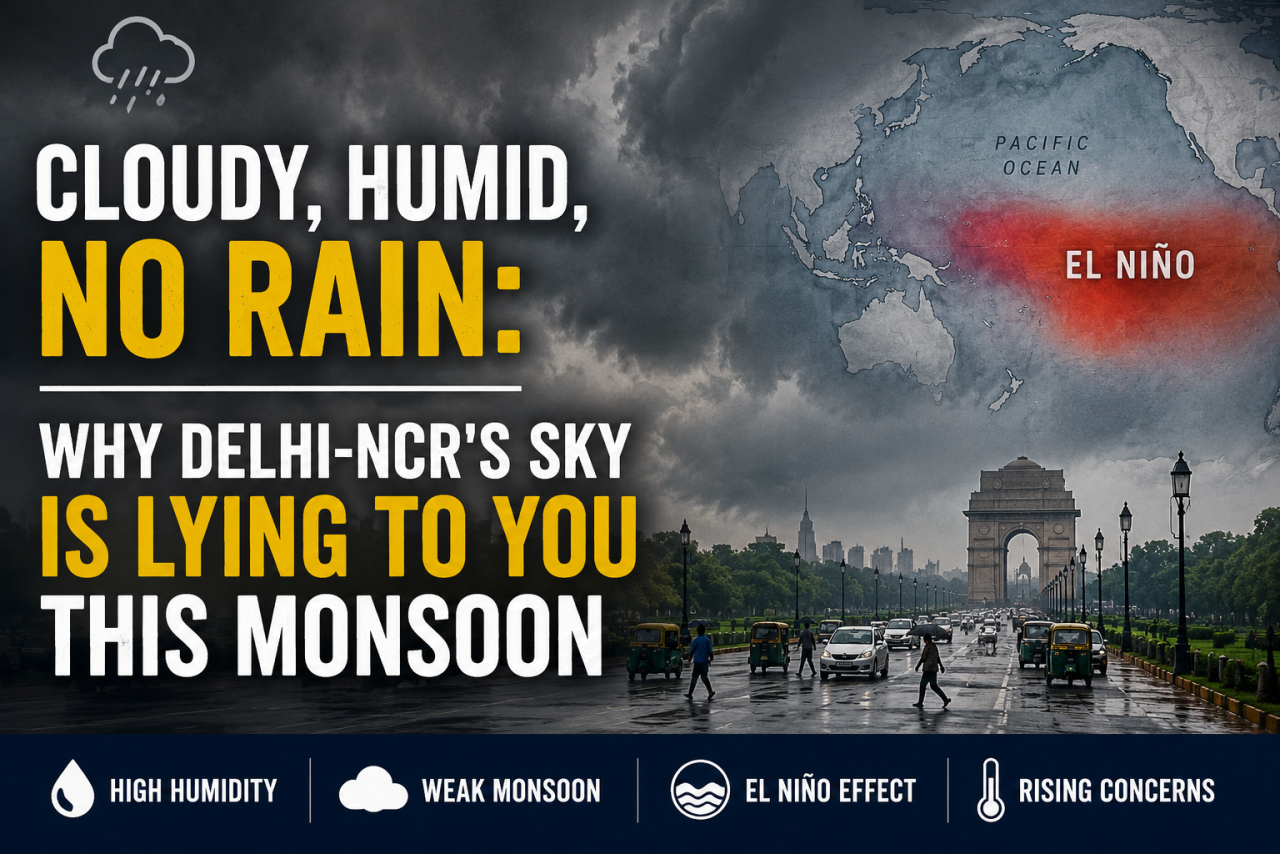
The blistering heatwaves sweeping across India this summer have pushed both people and ecosystems to their limits. From overcrowded cities trapped under layers of trapped heat to rural landscapes struggling with water shortages, the wait for the monsoon has become more desperate than ever. Traditionally, whenever India faces an extreme summer, meteorologists and climate analysts turn to established forecasting systems for answers. More often than not, the explanation points toward a familiar phenomenon: El Niño.
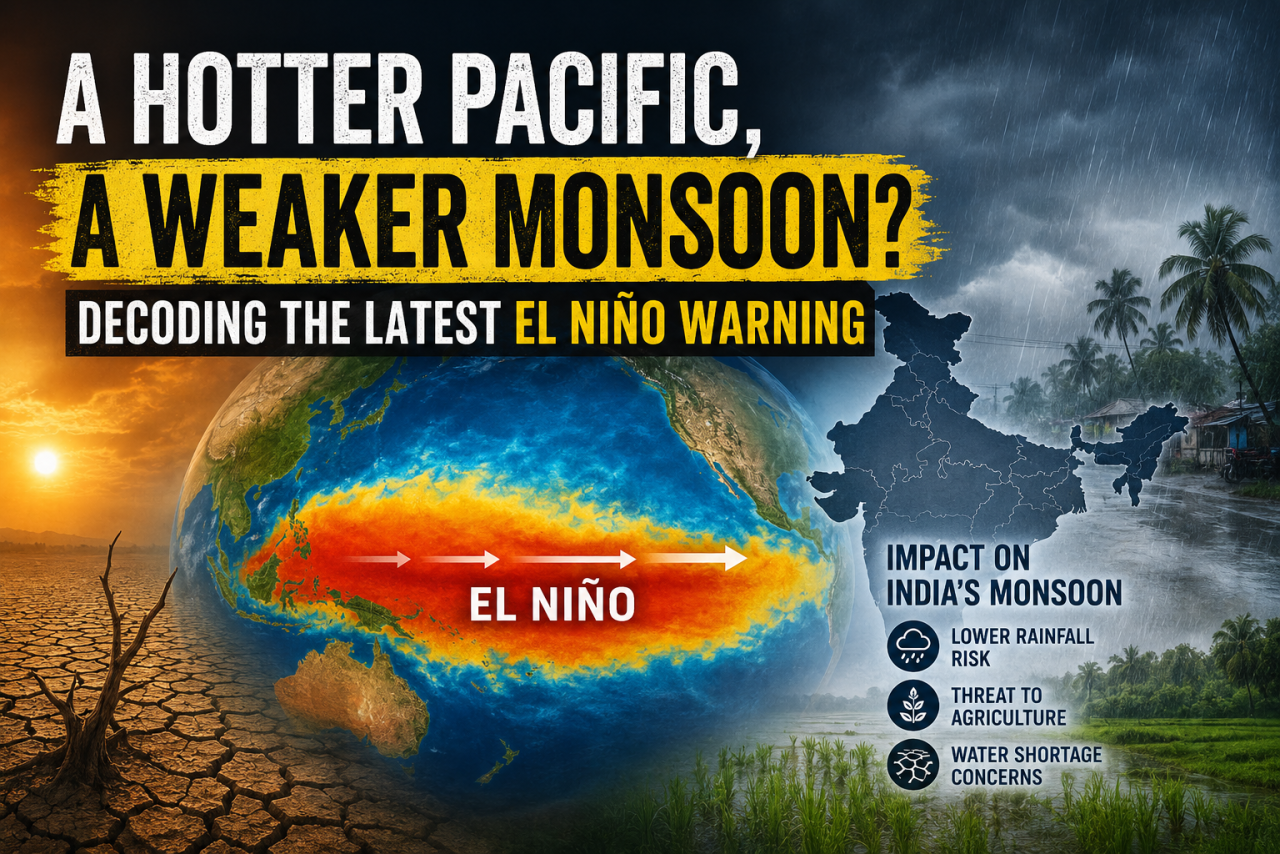
For decades, El Niño has been treated as one of the most powerful influences on the Indian monsoon. When the Pacific Ocean warms unusually, weather experts argue that it weakens the atmospheric conditions needed to pull rain-bearing clouds toward the Indian subcontinent. This theory has shaped climate discussions, agricultural planning, and public expectations for years.
However, the reality unfolding across India today suggests that these traditional climate models are no longer enough to explain the scale and intensity of the crisis. The current summer is exposing major weaknesses in older forecasting frameworks that rely too heavily on historical assumptions while overlooking rapidly changing regional climate conditions.
The Limits of the Conventional Monsoon Framework
Traditional monsoon models are based on the idea that the Indian monsoon behaves largely as a predictable interaction between ocean temperatures, atmospheric pressure systems, and upper-air thermal gradients. In this framework, the Pacific Ocean plays the role of a distant controller, while India simply reacts to those changes.
While this approach worked reasonably well in earlier decades, the climate system has changed dramatically. India is no longer dealing with isolated seasonal fluctuations. It is facing overlapping environmental pressures that older forecasting methods struggle to capture accurately.
Oversimplifying Ground-Level Heat
One major weakness of conventional forecasting lies in how it treats heatwaves. Standard meteorological models often focus on atmospheric conditions several kilometers above the Earth’s surface. Although these upper-air dynamics remain important, they fail to fully account for the extreme heating now taking place on the ground.
India’s cities are experiencing unprecedented heat retention because of expanding concrete infrastructure, shrinking green cover, and rising emissions. These ground-level heat conditions are no longer passive consequences of delayed rainfall. They actively shape local weather systems.
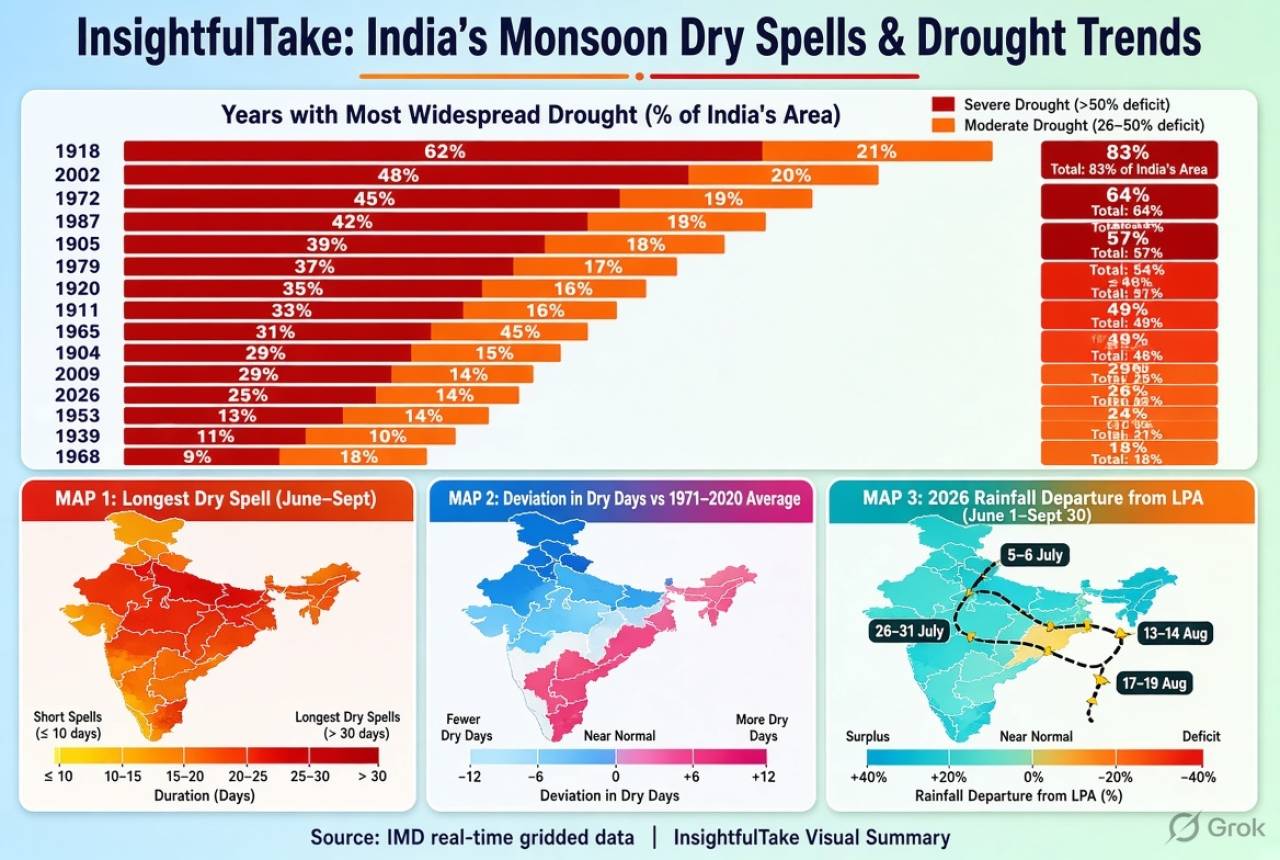
Intense surface heating creates localized low-pressure zones, disrupts regional wind flows, and changes rainfall behavior in ways that broad planetary-scale models often fail to predict. This is why many regions now experience sudden cloudbursts, highly uneven rainfall distribution, or long dry spells despite seasonal forecasts suggesting otherwise.
The Growing Role of the Indian Ocean
Another critical flaw in traditional monsoon models is their excessive focus on the Pacific Ocean while underestimating the impact of the Indian Ocean itself.
Over the past several decades, the Indian Ocean has warmed at an alarming rate. Scientists have increasingly observed that this regional warming is altering atmospheric circulation patterns across South Asia. Yet many older forecasting systems still treat Indian Ocean warming as a secondary background factor rather than a dominant force.
This shift matters because warmer Indian Ocean waters increase atmospheric moisture, intensify weather instability, and contribute to unpredictable rainfall patterns. In many cases, these regional effects are beginning to override the older El Niño-driven relationships that once shaped monsoon behavior.
As a result, relying only on Pacific Ocean indicators now provides an incomplete picture of India’s climate reality.
A Crisis Felt Beyond Weather Charts
The failure of outdated climate assumptions is not merely a scientific problem. Its consequences are being felt directly by millions of people and by the natural world around them.
Urban Heat Islands
Indian cities are becoming heat traps. Concrete surfaces absorb heat during the day and release it slowly at night, preventing temperatures from falling enough for recovery. This continuous exposure places enormous stress on the human body, especially for outdoor workers, elderly citizens, and low-income communities with limited access to cooling systems.
Urban wildlife is also suffering. Birds, stray animals, and small ecosystems that once adapted to seasonal rhythms are now struggling to survive prolonged heat exposure.
Ecological Disruption
Nature depends heavily on seasonal timing. Plants flower according to temperature cycles, insects emerge during specific periods, and migratory species follow long-established environmental signals. But extreme heat and irregular rainfall are disrupting these patterns.
Pollination cycles are being affected, water bodies are drying earlier than expected, and biodiversity is facing growing pressure. These ecological disruptions may create long-term consequences that extend far beyond a single summer.
Agricultural Uncertainty
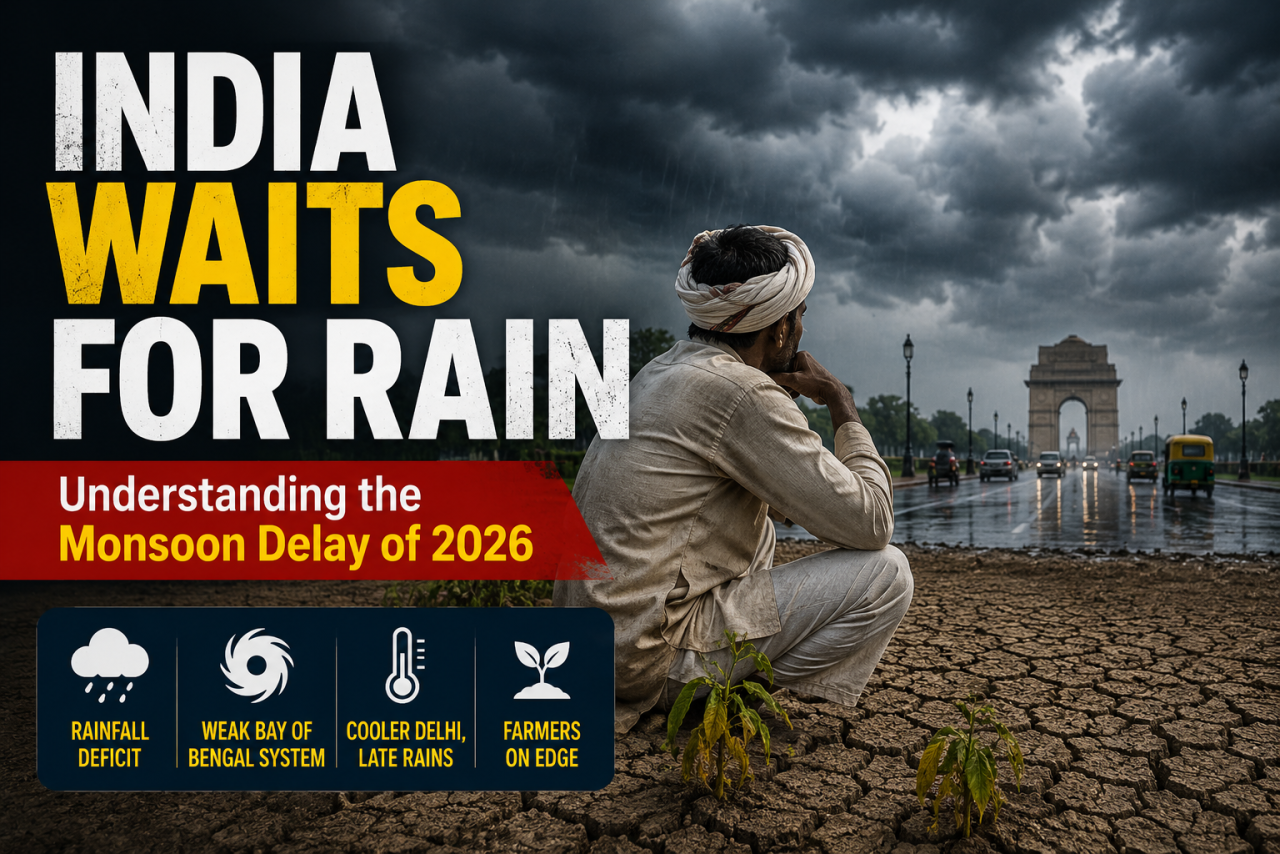
Farmers are among the worst affected by unreliable monsoon behavior. Traditional farming decisions are often based on seasonal rainfall expectations built around older climate patterns. But localized weather volatility is making those expectations increasingly unreliable.
Some areas experience intense downpours that damage crops and erode soil, while nearby regions remain dry for weeks. Such unpredictability makes agricultural planning far more difficult and increases economic vulnerability for rural communities.
Why India Needs a New Climate Approach
India’s climate challenge can no longer be understood through outdated formulas alone. The baseline conditions themselves have changed. Rising temperatures, expanding urbanization, disappearing green spaces, and warming regional oceans are collectively reshaping how the monsoon behaves.
This demands a shift in both climate science and public policy.
Instead of relying only on large-scale planetary indicators, India must invest more heavily in regional forecasting systems that account for local heat dynamics, urban temperature behavior, and Indian Ocean variability. Heatwaves should not be treated merely as temporary weather events but as structural climate risks requiring long-term planning.
Localized heat action plans, improved urban design, expanded tree cover, water conservation strategies, and stronger climate-resilient agriculture will all become essential in the years ahead.
Final Take
India’s extreme summer is exposing the growing gap between traditional monsoon theories and present-day climate realities. Older forecasting models, built around historical weather relationships, are increasingly unable to explain the complex environmental changes now unfolding across the subcontinent.
While El Niño still matters, it is no longer the only force shaping India’s climate future. Ground-level heat accumulation, rapid urban expansion, and the warming Indian Ocean are creating a far more volatile and unpredictable system.
The challenge ahead is not simply about forecasting rainfall more accurately. It is about recognizing that India has entered a new climate era where resilience, local adaptation, and updated scientific understanding are no longer optional—they are necessary for survival.
The blistering heatwaves sweeping across India this summer have pushed both people and ecosystems to their limits. From overcrowded cities trapped under layers of trapped heat to rural landscapes struggling with water shortages, the wait for the monsoon has become more desperate than ever. Traditionally, whenever India faces an extreme summer, meteorologists and climate analysts turn to established forecasting systems for answers. More often than not, the explanation points toward a familiar phenomenon: El Niño.
For decades, El Niño has been treated as one of the most powerful influences on the Indian monsoon. When the Pacific Ocean warms unusually, weather experts argue that it weakens the atmospheric conditions needed to pull rain-bearing clouds toward the Indian subcontinent. This theory has shaped climate discussions, agricultural planning, and public expectations for years.
However, the reality unfolding across India today suggests that these traditional climate models are no longer enough to explain the scale and intensity of the crisis. The current summer is exposing major weaknesses in older forecasting frameworks that rely too heavily on historical assumptions while overlooking rapidly changing regional climate conditions.
The Limits of the Conventional Monsoon Framework
Traditional monsoon models are based on the idea that the Indian monsoon behaves largely as a predictable interaction between ocean temperatures, atmospheric pressure systems, and upper-air thermal gradients. In this framework, the Pacific Ocean plays the role of a distant controller, while India simply reacts to those changes.
While this approach worked reasonably well in earlier decades, the climate system has changed dramatically. India is no longer dealing with isolated seasonal fluctuations. It is facing overlapping environmental pressures that older forecasting methods struggle to capture accurately.
Oversimplifying Ground-Level Heat
One major weakness of conventional forecasting lies in how it treats heatwaves. Standard meteorological models often focus on atmospheric conditions several kilometers above the Earth’s surface. Although these upper-air dynamics remain important, they fail to fully account for the extreme heating now taking place on the ground.
India’s cities are experiencing unprecedented heat retention because of expanding concrete infrastructure, shrinking green cover, and rising emissions. These ground-level heat conditions are no longer passive consequences of delayed rainfall. They actively shape local weather systems.
Intense surface heating creates localized low-pressure zones, disrupts regional wind flows, and changes rainfall behavior in ways that broad planetary-scale models often fail to predict. This is why many regions now experience sudden cloudbursts, highly uneven rainfall distribution, or long dry spells despite seasonal forecasts suggesting otherwise.
The Growing Role of the Indian Ocean
Another critical flaw in traditional monsoon models is their excessive focus on the Pacific Ocean while underestimating the impact of the Indian Ocean itself.
Over the past several decades, the Indian Ocean has warmed at an alarming rate. Scientists have increasingly observed that this regional warming is altering atmospheric circulation patterns across South Asia. Yet many older forecasting systems still treat Indian Ocean warming as a secondary background factor rather than a dominant force.
This shift matters because warmer Indian Ocean waters increase atmospheric moisture, intensify weather instability, and contribute to unpredictable rainfall patterns. In many cases, these regional effects are beginning to override the older El Niño-driven relationships that once shaped monsoon behavior.
As a result, relying only on Pacific Ocean indicators now provides an incomplete picture of India’s climate reality.
A Crisis Felt Beyond Weather Charts
The failure of outdated climate assumptions is not merely a scientific problem. Its consequences are being felt directly by millions of people and by the natural world around them.
Urban Heat Islands
Indian cities are becoming heat traps. Concrete surfaces absorb heat during the day and release it slowly at night, preventing temperatures from falling enough for recovery. This continuous exposure places enormous stress on the human body, especially for outdoor workers, elderly citizens, and low-income communities with limited access to cooling systems.
Urban wildlife is also suffering. Birds, stray animals, and small ecosystems that once adapted to seasonal rhythms are now struggling to survive prolonged heat exposure.
Ecological Disruption
Nature depends heavily on seasonal timing. Plants flower according to temperature cycles, insects emerge during specific periods, and migratory species follow long-established environmental signals. But extreme heat and irregular rainfall are disrupting these patterns.
Pollination cycles are being affected, water bodies are drying earlier than expected, and biodiversity is facing growing pressure. These ecological disruptions may create long-term consequences that extend far beyond a single summer.
Agricultural Uncertainty
Farmers are among the worst affected by unreliable monsoon behavior. Traditional farming decisions are often based on seasonal rainfall expectations built around older climate patterns. But localized weather volatility is making those expectations increasingly unreliable.
Some areas experience intense downpours that damage crops and erode soil, while nearby regions remain dry for weeks. Such unpredictability makes agricultural planning far more difficult and increases economic vulnerability for rural communities.
Why India Needs a New Climate Approach
India’s climate challenge can no longer be understood through outdated formulas alone. The baseline conditions themselves have changed. Rising temperatures, expanding urbanization, disappearing green spaces, and warming regional oceans are collectively reshaping how the monsoon behaves.
This demands a shift in both climate science and public policy.
Instead of relying only on large-scale planetary indicators, India must invest more heavily in regional forecasting systems that account for local heat dynamics, urban temperature behavior, and Indian Ocean variability. Heatwaves should not be treated merely as temporary weather events but as structural climate risks requiring long-term planning.
Localized heat action plans, improved urban design, expanded tree cover, water conservation strategies, and stronger climate-resilient agriculture will all become essential in the years ahead.
Final Take
India’s extreme summer is exposing the growing gap between traditional monsoon theories and present-day climate realities. Older forecasting models, built around historical weather relationships, are increasingly unable to explain the complex environmental changes now unfolding across the subcontinent.
While El Niño still matters, it is no longer the only force shaping India’s climate future. Ground-level heat accumulation, rapid urban expansion, and the warming Indian Ocean are creating a far more volatile and unpredictable system.
The challenge ahead is not simply about forecasting rainfall more accurately. It is about recognizing that India has entered a new climate era where resilience, local adaptation, and updated scientific understanding are no longer optional—they are necessary for survival.





















Leave a Comment