
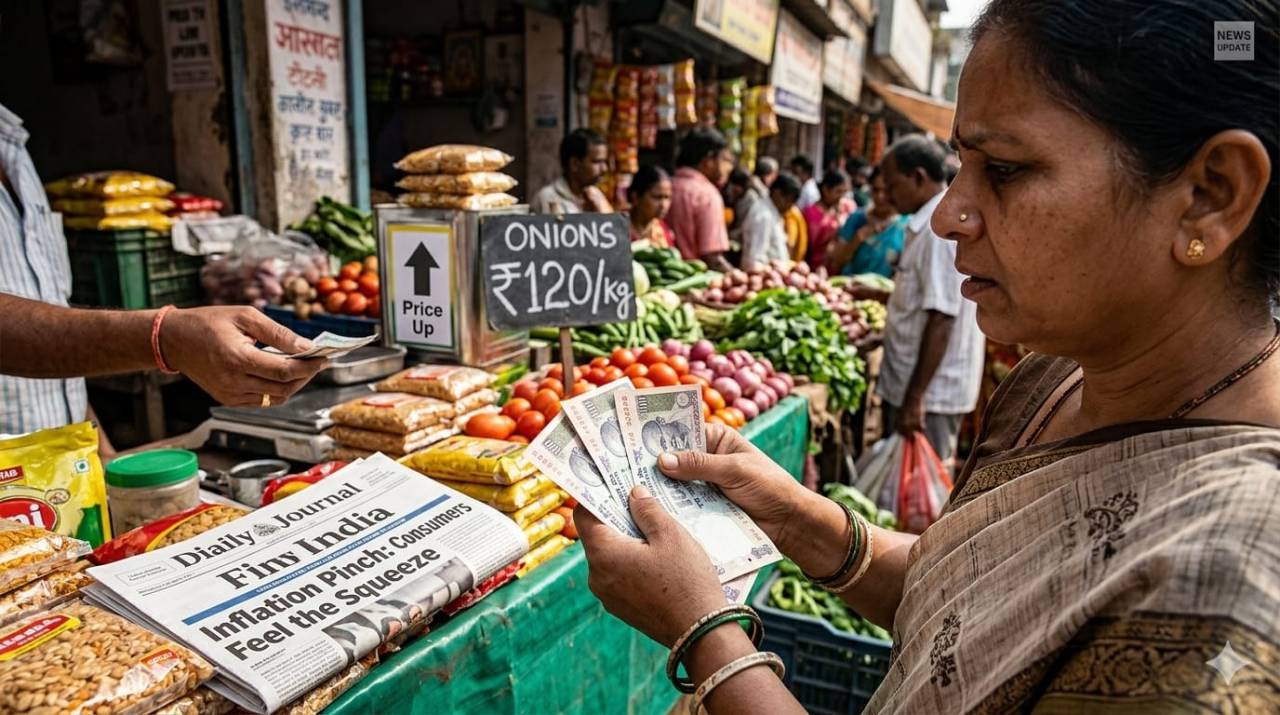
As inflation tightens wallets and uncertainty grows, India’s consumers are stepping back—revealing a divide that could reshape the economy.
The vibrant Indian marketplaces have long served as a barometer of the nation’s economic health. Today, that rhythm appears to be faltering. Recent data suggests that Indian consumer sentiment is weakening, caught between persistent inflation and a widening economic divide that is reshaping how households spend.
Findings from the Centre for Monitoring Indian Economy (CMIE) show that the Index of Consumer Sentiments (ICS) declined in March, interrupting a brief recovery. Beneath the headline numbers lies a deeper structural concern—a “K-shaped” recovery where higher-income households continue to spend cautiously, while lower-income groups are increasingly pushed into financial survival mode.
The Squeeze at the Bottom
For millions of Indian households, the issue is not a lack of willingness to spend but a shrinking capacity to do so. The pressure is most acute among families earning less than ₹2 lakh annually. Within this group, the Index of Current Economic Conditions dropped sharply by 15% in March.
The reason is straightforward: the rising cost of essentials.
When the price of a cooking gas (LPG) cylinder rises, even marginally, it triggers a chain reaction in household budgets. A ₹60 increase is not trivial for low-income families—it directly translates into less spending on food, clothing, or education. What may appear as a routine price movement at the macro level becomes a daily trade-off at the household level.
As noted by economists, such cost pressures force a shift in spending patterns—from discretionary purchases to essential consumption. In effect, households are moving from choice to compulsion.
The Affluent Also Feel the Chill
The slowdown is not confined to the economically vulnerable. Signs of caution are now visible among affluent households—those earning upwards of ₹10 lakh annually. This segment reported a 6% decline in consumer expectations, marking the third consecutive month of moderating optimism.
The drivers here are different but equally significant.
Concerns over job security, particularly in the technology and corporate sectors, are influencing spending decisions. Hiring slowdowns and global economic uncertainties have introduced a sense of caution among urban professionals.
At the same time, expectations about future business conditions have weakened. Only about 40% of households now anticipate improvement over the next year, down from over half just a month earlier. Climate-related uncertainties—especially the lingering effects of El Niño and fears of erratic weather—are also shaping expectations around food inflation.
From Aspirations to Adjustments
This shift in sentiment is beginning to reflect clearly in consumption patterns. Big-ticket purchases—cars, appliances, and other consumer durables—are increasingly being deferred.
In their place, a more pragmatic trend is emerging: substitution.
In rural and semi-urban areas, rising LPG prices have driven demand for alternatives such as induction cookers and electric kettles. These are not aspirational purchases but strategic adjustments—ways to manage rising costs while maintaining basic living standards.
Such behaviour signals a deeper transformation in consumption, where efficiency and necessity are replacing aspiration.
The Urban–Rural Spending Gap
The divergence between urban and rural consumption trends underscores the uneven nature of the recovery.
Rural markets have recorded stronger growth in consumer durable sales, driven largely by necessity-led purchases like electric cooking appliances. Urban markets, in contrast, are seeing more restrained growth, reflecting caution rather than compulsion.
This contrast reveals two parallel realities: a rural consumer adapting under pressure, and an urban consumer exercising restraint amid uncertainty.
Final Take
For an economy that relies heavily on domestic consumption, the weakening of consumer sentiment poses a significant challenge.
While there are early signs that inflation may be stabilizing, the recovery remains uneven. High living costs and job market anxieties continue to weigh on household confidence across income groups.
Until lower-income households regain financial breathing space—and higher-income groups recover confidence in future stability—consumer spending is likely to remain subdued.
For policymakers and businesses, the task ahead is clear: bridging this widening economic divide. Without a broad-based recovery in sentiment, the consumption-driven momentum that has long powered India’s growth risks losing its edge.
The vibrant Indian marketplaces have long served as a barometer of the nation’s economic health. Today, that rhythm appears to be faltering. Recent data suggests that Indian consumer sentiment is weakening, caught between persistent inflation and a widening economic divide that is reshaping how households spend.
Findings from the Centre for Monitoring Indian Economy (CMIE) show that the Index of Consumer Sentiments (ICS) declined in March, interrupting a brief recovery. Beneath the headline numbers lies a deeper structural concern—a “K-shaped” recovery where higher-income households continue to spend cautiously, while lower-income groups are increasingly pushed into financial survival mode.
The Squeeze at the Bottom
For millions of Indian households, the issue is not a lack of willingness to spend but a shrinking capacity to do so. The pressure is most acute among families earning less than ₹2 lakh annually. Within this group, the Index of Current Economic Conditions dropped sharply by 15% in March.
The reason is straightforward: the rising cost of essentials.
When the price of a cooking gas (LPG) cylinder rises, even marginally, it triggers a chain reaction in household budgets. A ₹60 increase is not trivial for low-income families—it directly translates into less spending on food, clothing, or education. What may appear as a routine price movement at the macro level becomes a daily trade-off at the household level.
As noted by economists, such cost pressures force a shift in spending patterns—from discretionary purchases to essential consumption. In effect, households are moving from choice to compulsion.
The Affluent Also Feel the Chill
The slowdown is not confined to the economically vulnerable. Signs of caution are now visible among affluent households—those earning upwards of ₹10 lakh annually. This segment reported a 6% decline in consumer expectations, marking the third consecutive month of moderating optimism.
The drivers here are different but equally significant.
Concerns over job security, particularly in the technology and corporate sectors, are influencing spending decisions. Hiring slowdowns and global economic uncertainties have introduced a sense of caution among urban professionals.
At the same time, expectations about future business conditions have weakened. Only about 40% of households now anticipate improvement over the next year, down from over half just a month earlier. Climate-related uncertainties—especially the lingering effects of El Niño and fears of erratic weather—are also shaping expectations around food inflation.
From Aspirations to Adjustments
This shift in sentiment is beginning to reflect clearly in consumption patterns. Big-ticket purchases—cars, appliances, and other consumer durables—are increasingly being deferred.
In their place, a more pragmatic trend is emerging: substitution.
In rural and semi-urban areas, rising LPG prices have driven demand for alternatives such as induction cookers and electric kettles. These are not aspirational purchases but strategic adjustments—ways to manage rising costs while maintaining basic living standards.
Such behaviour signals a deeper transformation in consumption, where efficiency and necessity are replacing aspiration.
The Urban–Rural Spending Gap
The divergence between urban and rural consumption trends underscores the uneven nature of the recovery.
Rural markets have recorded stronger growth in consumer durable sales, driven largely by necessity-led purchases like electric cooking appliances. Urban markets, in contrast, are seeing more restrained growth, reflecting caution rather than compulsion.
This contrast reveals two parallel realities: a rural consumer adapting under pressure, and an urban consumer exercising restraint amid uncertainty.
Final Take
For an economy that relies heavily on domestic consumption, the weakening of consumer sentiment poses a significant challenge.
While there are early signs that inflation may be stabilizing, the recovery remains uneven. High living costs and job market anxieties continue to weigh on household confidence across income groups.
Until lower-income households regain financial breathing space—and higher-income groups recover confidence in future stability—consumer spending is likely to remain subdued.
For policymakers and businesses, the task ahead is clear: bridging this widening economic divide. Without a broad-based recovery in sentiment, the consumption-driven momentum that has long powered India’s growth risks losing its edge.
























Leave a Comment