
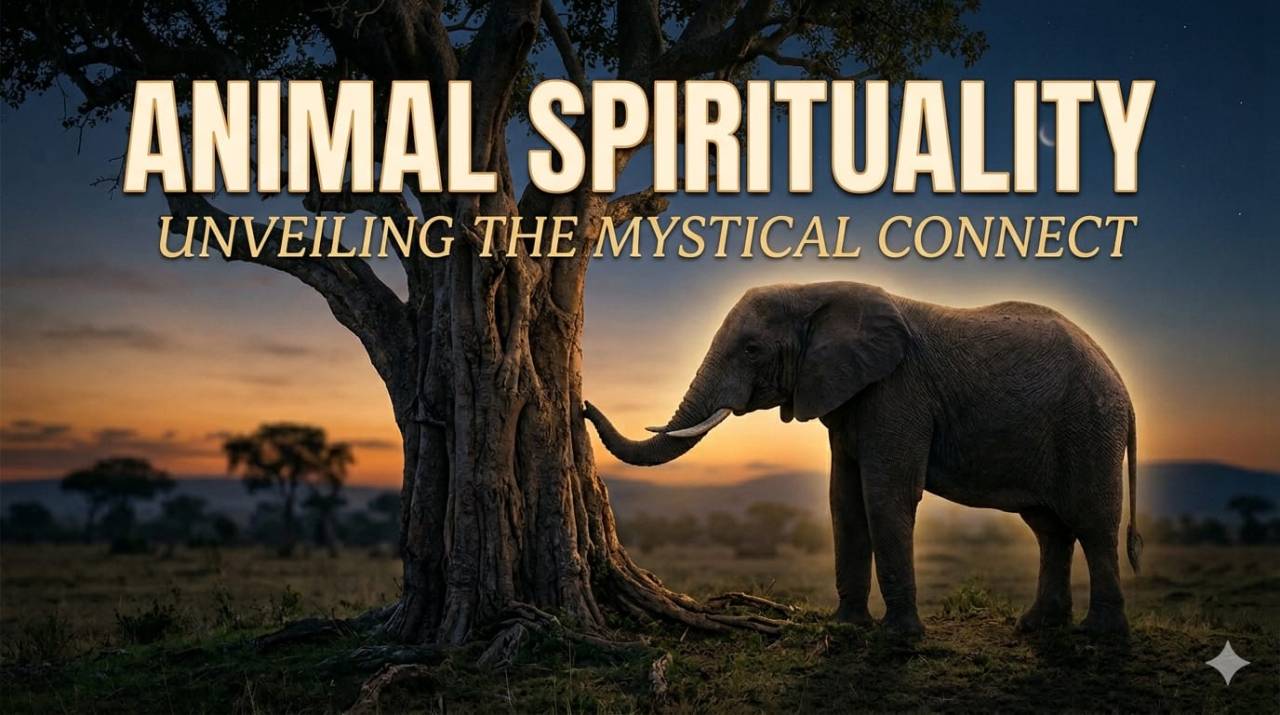
From elephants mourning their dead to dolphins refusing to let go, science is uncovering a profound truth—animals may experience something closer to spirituality than we ever imagined.
For centuries, the line between humans and the rest of the animal kingdom was drawn with a sharp, unforgiving pen. We were considered the “rational” beings—the only creatures capable of reflecting on existence, morality, and the divine. Animals, in contrast, were often reduced to biological machines, driven solely by instinct, hunger, and survival.
But modern research in Ethology and Neuroscience is challenging that long-held assumption. As scientists and observers look more closely, the boundary between human consciousness and animal experience is beginning to blur. If spirituality is understood not as organized religion but as a sense of awe, connection, or ritual beyond survival needs, then compelling evidence suggests animals may possess a spiritual dimension of their own.
Rituals and the Mystery of Awe
In human life, spirituality often begins with awe—that quiet, overwhelming feeling when faced with nature’s grandeur. This same sense of wonder may not be uniquely human.
Jane Goodall, one of the world’s leading experts on chimpanzees, documented what she described as “waterfall dances.” She observed chimpanzees approaching powerful waterfalls and entering trance-like states—swaying rhythmically, sometimes sitting in stillness as they watched the cascading water.
These actions served no immediate survival purpose. They didn’t lead to food, mating, or protection. Instead, they appeared to be responses to the raw power of nature—something strikingly similar to the awe that underpins early human spirituality.
Elephants, too, have been observed engaging in what some researchers call “moonlit gatherings.” During full moons, herds may stand in unusual stillness or move in coordinated, almost ceremonial ways. While skeptics attribute this to environmental or biological cues, long-term observers often describe these moments as carrying a profound, almost reverent atmosphere.
The Sacredness of Death
One of the strongest indicators of spirituality is how a being responds to death. Across species, certain animals display behaviors that resemble mourning rituals.
- Elephants have been seen revisiting the bones of deceased relatives, gently touching skulls with their trunks. In some cases, they cover bodies with leaves and branches in what appears to be a form of burial.
- Crows and magpies, members of the highly intelligent corvid family, often gather silently around a fallen companion. They may vocalize in specific ways or place small objects—twigs or grass—near the body before dispersing.
- Dolphins and whales (cetaceans) have been documented carrying dead calves for extended periods, displaying persistence and attachment that suggests deep emotional processing.
These acts go beyond instinctive reactions. They indicate an awareness that death is not merely absence, but a significant transition—one that invites pause, attention, and, perhaps, ritual.
Transcendent Connection
Spirituality is also rooted in connection—the ability to empathize, to act beyond immediate self-interest, and to recognize a shared existence.
Across species, there are striking examples:
- Dogs remaining by their owners’ graves for years
- Humpback whales intervening to protect seals from predators
- Rats in controlled experiments choosing to free trapped companions instead of immediately consuming food rewards
While evolutionary biology may explain these behaviors through cooperation or survival strategies, the emotional depth behind them suggests something more layered—a form of empathy that echoes the ethical foundations of human spirituality.
A Different Kind of Soul
It is essential, however, to avoid projecting human belief systems directly onto animals. A dog does not contemplate theology, and a cat does not worry about karma. Their experience, if spiritual, is likely pre-linguistic—rooted in sensation rather than doctrine.
In that sense, animals may embody a purer form of spirituality: one grounded in presence. They are not burdened by abstract anxieties about the future or rigid belief systems. Instead, they exist fully in the moment—engaged with their environment in a way that many human traditions strive to achieve through meditation and mindfulness.
Final Take
Do animals possess spirituality? If spirituality is defined as a bridge between the self and the greater mystery of existence, then the answer increasingly appears to be yes.
From chimpanzees swaying before waterfalls to elephants lingering over ancient bones, the natural world offers countless moments that feel deeply sacred. These behaviors challenge us to rethink not only animals, but ourselves.
Recognizing spirituality in animals does not diminish human uniqueness—it expands our perspective. It reminds us that we are not isolated observers in a lifeless universe, but participants in a vast, interconnected web of consciousness. In their own quiet, wordless ways, animals may be engaging in what can only be described as a silent prayer—an unspoken acknowledgment of the mystery of being alive.
For centuries, the line between humans and the rest of the animal kingdom was drawn with a sharp, unforgiving pen. We were considered the “rational” beings—the only creatures capable of reflecting on existence, morality, and the divine. Animals, in contrast, were often reduced to biological machines, driven solely by instinct, hunger, and survival.
But modern research in Ethology and Neuroscience is challenging that long-held assumption. As scientists and observers look more closely, the boundary between human consciousness and animal experience is beginning to blur. If spirituality is understood not as organized religion but as a sense of awe, connection, or ritual beyond survival needs, then compelling evidence suggests animals may possess a spiritual dimension of their own.
Rituals and the Mystery of Awe
In human life, spirituality often begins with awe—that quiet, overwhelming feeling when faced with nature’s grandeur. This same sense of wonder may not be uniquely human.
Jane Goodall, one of the world’s leading experts on chimpanzees, documented what she described as “waterfall dances.” She observed chimpanzees approaching powerful waterfalls and entering trance-like states—swaying rhythmically, sometimes sitting in stillness as they watched the cascading water.
These actions served no immediate survival purpose. They didn’t lead to food, mating, or protection. Instead, they appeared to be responses to the raw power of nature—something strikingly similar to the awe that underpins early human spirituality.
Elephants, too, have been observed engaging in what some researchers call “moonlit gatherings.” During full moons, herds may stand in unusual stillness or move in coordinated, almost ceremonial ways. While skeptics attribute this to environmental or biological cues, long-term observers often describe these moments as carrying a profound, almost reverent atmosphere.
The Sacredness of Death
One of the strongest indicators of spirituality is how a being responds to death. Across species, certain animals display behaviors that resemble mourning rituals.
- Elephants have been seen revisiting the bones of deceased relatives, gently touching skulls with their trunks. In some cases, they cover bodies with leaves and branches in what appears to be a form of burial.
- Crows and magpies, members of the highly intelligent corvid family, often gather silently around a fallen companion. They may vocalize in specific ways or place small objects—twigs or grass—near the body before dispersing.
- Dolphins and whales (cetaceans) have been documented carrying dead calves for extended periods, displaying persistence and attachment that suggests deep emotional processing.
These acts go beyond instinctive reactions. They indicate an awareness that death is not merely absence, but a significant transition—one that invites pause, attention, and, perhaps, ritual.
Transcendent Connection
Spirituality is also rooted in connection—the ability to empathize, to act beyond immediate self-interest, and to recognize a shared existence.
Across species, there are striking examples:
- Dogs remaining by their owners’ graves for years
- Humpback whales intervening to protect seals from predators
- Rats in controlled experiments choosing to free trapped companions instead of immediately consuming food rewards
While evolutionary biology may explain these behaviors through cooperation or survival strategies, the emotional depth behind them suggests something more layered—a form of empathy that echoes the ethical foundations of human spirituality.
A Different Kind of Soul
It is essential, however, to avoid projecting human belief systems directly onto animals. A dog does not contemplate theology, and a cat does not worry about karma. Their experience, if spiritual, is likely pre-linguistic—rooted in sensation rather than doctrine.
In that sense, animals may embody a purer form of spirituality: one grounded in presence. They are not burdened by abstract anxieties about the future or rigid belief systems. Instead, they exist fully in the moment—engaged with their environment in a way that many human traditions strive to achieve through meditation and mindfulness.
Final Take
Do animals possess spirituality? If spirituality is defined as a bridge between the self and the greater mystery of existence, then the answer increasingly appears to be yes.
From chimpanzees swaying before waterfalls to elephants lingering over ancient bones, the natural world offers countless moments that feel deeply sacred. These behaviors challenge us to rethink not only animals, but ourselves.
Recognizing spirituality in animals does not diminish human uniqueness—it expands our perspective. It reminds us that we are not isolated observers in a lifeless universe, but participants in a vast, interconnected web of consciousness. In their own quiet, wordless ways, animals may be engaging in what can only be described as a silent prayer—an unspoken acknowledgment of the mystery of being alive.


























Leave a Comment